Australian TSO plans 5 GW of grid-forming batteries

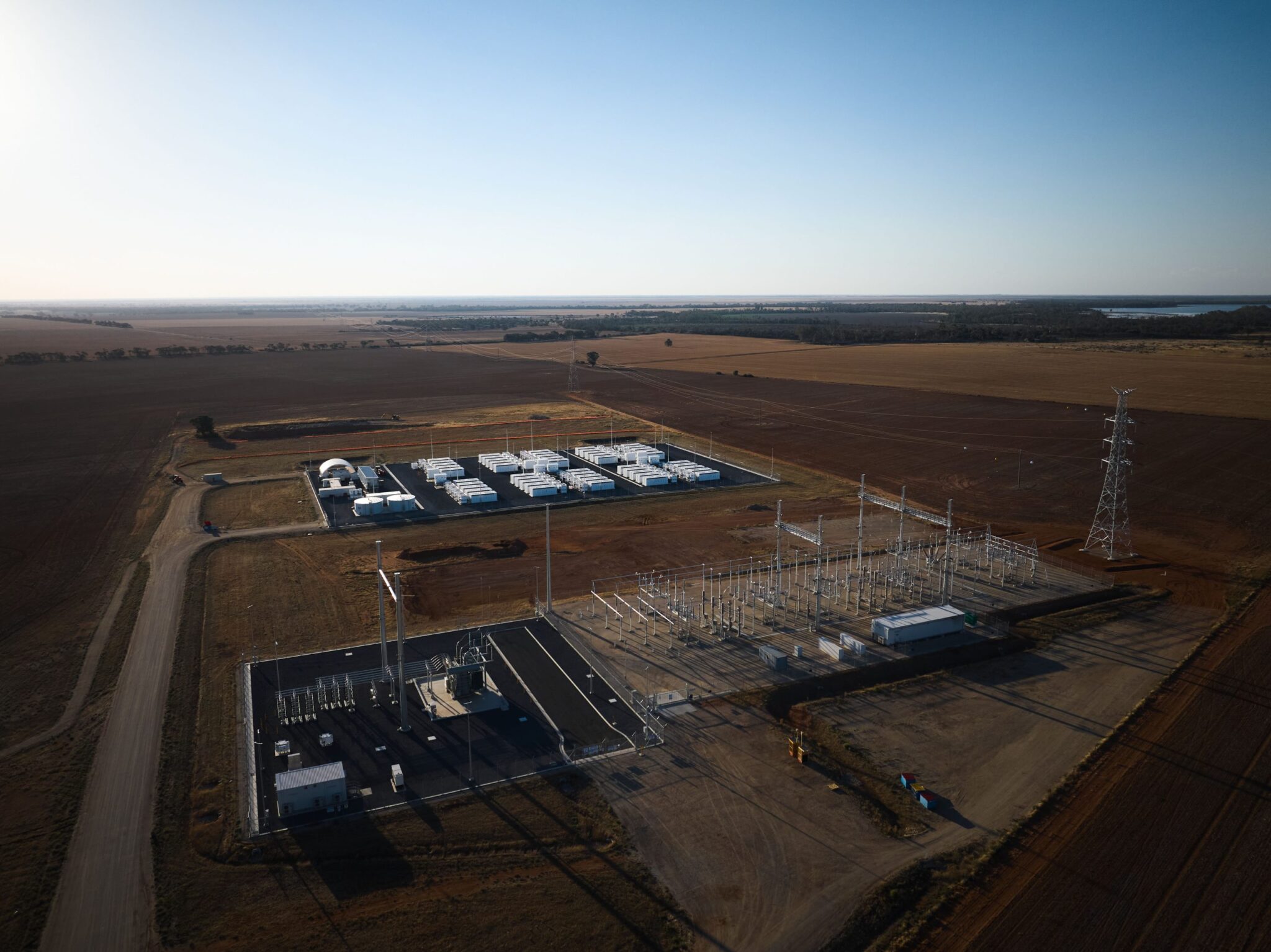
With the key role of grid-forming batteries in Australia underlined by Transgrid’s decision to prioritize the technology to provide network system strength, developer Edify Energy has announced the start of operations at its 185 MW/370 MWh Koorangie grid-forming BESS.
Australian company Edify said the Koorangie energy storage system is importing and exporting electricity to the grid in northwest Victoria at its full nameplate capacity.
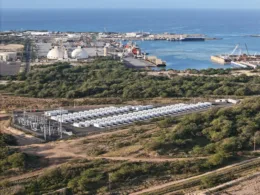
Designed and developed by Edify but owned by Italian energy infrastructure investor Sostoneo Infrastructure Partners, the Koorangie battery has been installed next to Edify’s existing 50 MW Gannawarra solar farm and 25 MW/50 MWh battery, west of Kerang, in Victoria’s Murray River region.
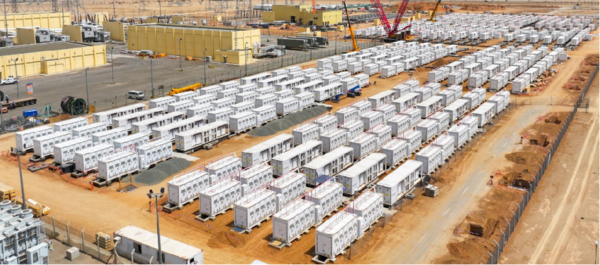
The Koorangie battery, constructed by Consolidated Power Projects, features 100 Tesla Megapacks equipped with grid-forming inverters that operate in “virtual machine mode.” Edify said the technology will allow the battery to play a dual role, providing both energy storage and system strength services in the Murray River region, that has faced grid constraints that limit renewable energy exports.
The Koorangie battery has secured a 20-year system support agreement with the Australian Energy Market Operator (AEMO) to provide 125 MW of system strength services to improve the network stability in the region. The battery is also supported by a 15-year-term offtake agreement with Shell Energy Australia.
Edify said, at full operation, the Koorangie battery will be capable of powering the equivalent of 350,000 homes for two hours while boosting the amount of inverter-based resources, such as solar and wind power, that can be hosted in the region by up to 300 MW.
“This system seamlessly delivers critical system strength services to AEMO while dispatching clean, green electrons to the grid,” Edify Executive Chairman John Cole said.
“It’s a powerful example of how advanced grid-forming inverter and battery storage technologies can combine to solve some of the most complex challenges in Australia’s energy transition.”
Victoria Energy Minister Lily D’Ambrosio said the facility will play a vital role in unlocking the Murray River region’s full renewable energy potential and supporting the state’s clean energy transition.
“This project is a great example of the Victorian government partnering with energy industry leaders to deliver the infrastructure we need for the transition to clean and affordable renewable energy,” she said.
“The grid-forming inverters will allow the battery to replace the type of system strength services that were once only provided by fossil-fuel generators.”
The Koorangie facility is one of 12 projects funded through the Victorian government’s Renewable Energy Zone Fund, an initiative to strengthen and modernize the state’s energy grid. The state has legislated targets of at least 2.6 GW of energy storage by 2030, and at least 6.3 GW by 2035.
Edify said the Koorangie project is the company’s 12th major energy infrastructure development to reach commercial operation.
The Sydney-based company said it has developed and financed more than 1 GW of utility-scale solar farms and battery energy storage systems and, in addition to projects currently in construction, is managing the operations of six solar farms and four BESS that it has developed, financed and constructed.
Grid-forming batteries
News of Australia’s latest grid-forming battery comes a week after it emerged NSW transmission network operator system strength service provider Transgrid had chosen grid-forming batteries and synchronous condensers as its preferred technologies to underpin the company’s portfolio of system strength solutions.
From a potential 100 individual solutions considered, it now plans to roll out 10 synchronous condensers to support system strength, inertia and system voltage, and 5 GW of grid-forming BESS, providing the equivalent strength to another 17 synchronous condensers.
Transgrid also intends to modify 650 MW of synchronous generators to enable synchronous condenser-mode, and will consider additional targeted solutions to support new renewables within the New England and Hunter-Central Coast renewable energy zones.
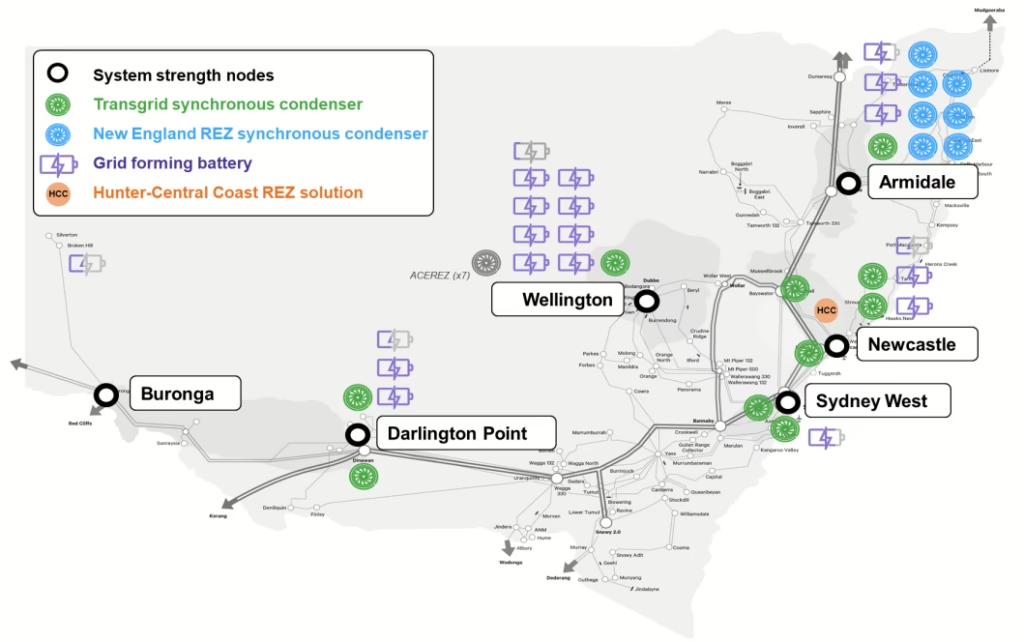
Transgrid Acting Executive General Manager of Network Jason Krstanoski said the preferred portfolio utilizes “innovative grid-forming batteries to provide almost half of NSW’s system strength requirements, with synchronous condensers providing the other half.”
“Together, these solutions are expected to deliver AUD 8.8 billion ($5.75 billion) in net market benefits by ensuring the safe and reliable operation of the grid and accelerating the transition to more affordable, cleaner renewable energy,” said Krstanoski.
Krstanoski said the report also demonstrates that additional net market benefits of AUD 1.2 billion could be delivered if Transgrid accelerates deployment of synchronous condensers, and added the company is currently investigating options to fast-track the project.
Transgrid published its preferences in a Project Assessment Conclusions Report (PACR), which is the final step in a three-stage regulatory process to ensure the best outcome for the market and consumers.
PACR is part of Transgrid’s System Security Roadmap, a 10-year plan to transform the state’s power system and ensure the secure operation of the grid at up to 100% instantaneous renewable energy feed-in.
From pv magazine Australia.
Written by








Popular Posts