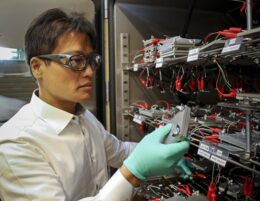
Battery recycling centre launched at University of Adelaide, Australia

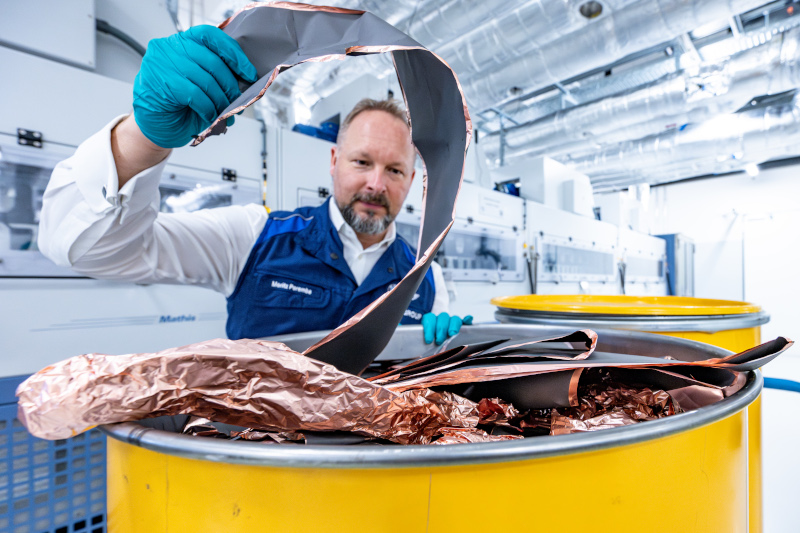
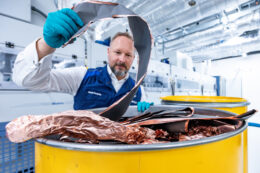
The Australian Research Council (ARC) said the new Training Center for Battery Recycling, based at the University of Adelaide in Australia, will address the environmental and strategic challenges associated with lithium-ion battery waste management.
The market for energy storage and lithium batteries is rapidly rising in Australia but as the demand increases so too does the waste. Data from the CSIRO shows that lithium-ion battery waste is growing by 20% per year in Australia and could exceed 136,000 tonnes by 2036.
ARC Training Centre for Battery Recycling Director Professor Shizhang Qiao said the new center aims to advance sustainable battery technologies to support a circular economy and turn the growing end-of-life battery challenge into a resource opportunity.
“Outcomes are expected to shape a distinctive battery recycling model that shifts Australia to zero battery waste to landfill, establish a profitable and self-sustaining onshore industry chain, and help ensure the future of Australia’s energy security,” he said.
The University of Adelaide will serve as the administering body and the main hub for center while the University of New South Wales and the University of Wollongong are also part of the collaboration, along with partner organisations Iondrive Technologies, Gravitas Technologies, PCI Green Technologies, Benan, Pure Power and the Australian Nuclear Science and Technology Organisation.
Qiao said the new facility will operating across multiple nodes and will focus on five key research themes including pre-treatment and second-life management; recycling spent batteries to materials; resynthesising materials for new batteries; design of new battery materials and cells for ready recycling; and industrial standards to empower the next generations of sustainable battery practice and technology.
“By fostering close collaboration between government, academia and industry the center will develop skills and IP to enable successful commercial outcomes that will contribute to a zero-waste future,” he said.
With a budget of about $14.92 million (USD 9.65 million) in cash and in-kind, the center will operate over the next five years.
The ARC is a Commonwealth entity established as an independent body to help shape Australian research for the nation’s economic, social, environmental and cultural benefit.
Written by





Popular Posts