Brazil approves regulatory sandbox for energy storage in Amazon

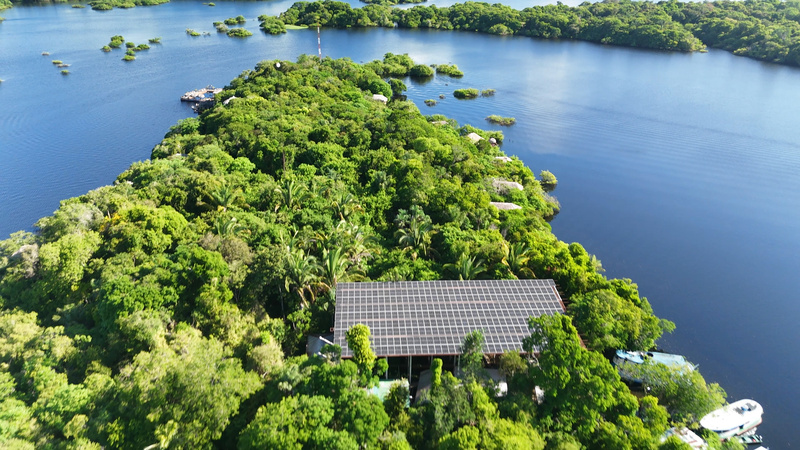
Brazil’s National Electricity Regulatory Agency (Aneel) has approved the Energias da Floresta regulatory sandbox, an initiative to test innovative approaches to expanding electricity access in isolated and remote regions, with a priority focus on the Legal Amazon.
Around 3.5 million Brazilians who remain disconnected from the National Interconnected System are currently served by isolated systems, costing approximately BRL 15 billion ($2.9 billion) a year through the Energy Development Account (CDE), which is funded by electricity consumers. Overall, public electricity service reaches 99.8% of Brazilian households.
Aneel said many communities in the Amazon currently access electricity through isolated initiatives led by civil society, outside the existing regulatory framework.
The approved sandbox follows Public Consultation No. 2/2026, which received 338 contributions from 53 participants. Aneel said 82% of the proposals were incorporated into the initiative’s principles, definitions, governance and safeguards.
The initiative will test sociotechnical, sustainable and innovative solutions to expand access to electricity in the Legal Amazon and other vulnerable regions. It will also generate evidence for future regulatory decisions, improve planning for isolated systems and inform changes to public policies on energy access.
The sandbox will support the development of energy communities with decentralized management of generation, storage and distribution assets. It will also test models for the gradual expansion of isolated systems and their transition to conventional electricity distribution networks.
Pilot projects may cover electricity access, management and tariff models, new grid operation technologies, energy communities, hybridization and decarbonization of isolated systems, energy efficiency and microgrids.
The program may also assess rules for expanding Individual Electricity Generation Systems Using Intermittent Sources (SIGFI) and Isolated Generation and Distribution Microsystems (MIGDI), as well as pathways for transitioning these systems to conventional grids.
Evaluation criteria will include the degree of electricity exclusion and energy poverty, unmet demand, technical and financial feasibility, potential reductions in fossil fuel use and emissions, reduced supply risks, development of local capabilities and the potential for replication.
For energy community projects, generation, storage, distribution and electricity trading activities should preferably use renewable energy sources.
From pv magazine Brazil
More about
Written by
Popular Posts