Italy cuts capacity market ratings for four-hour batteries in south

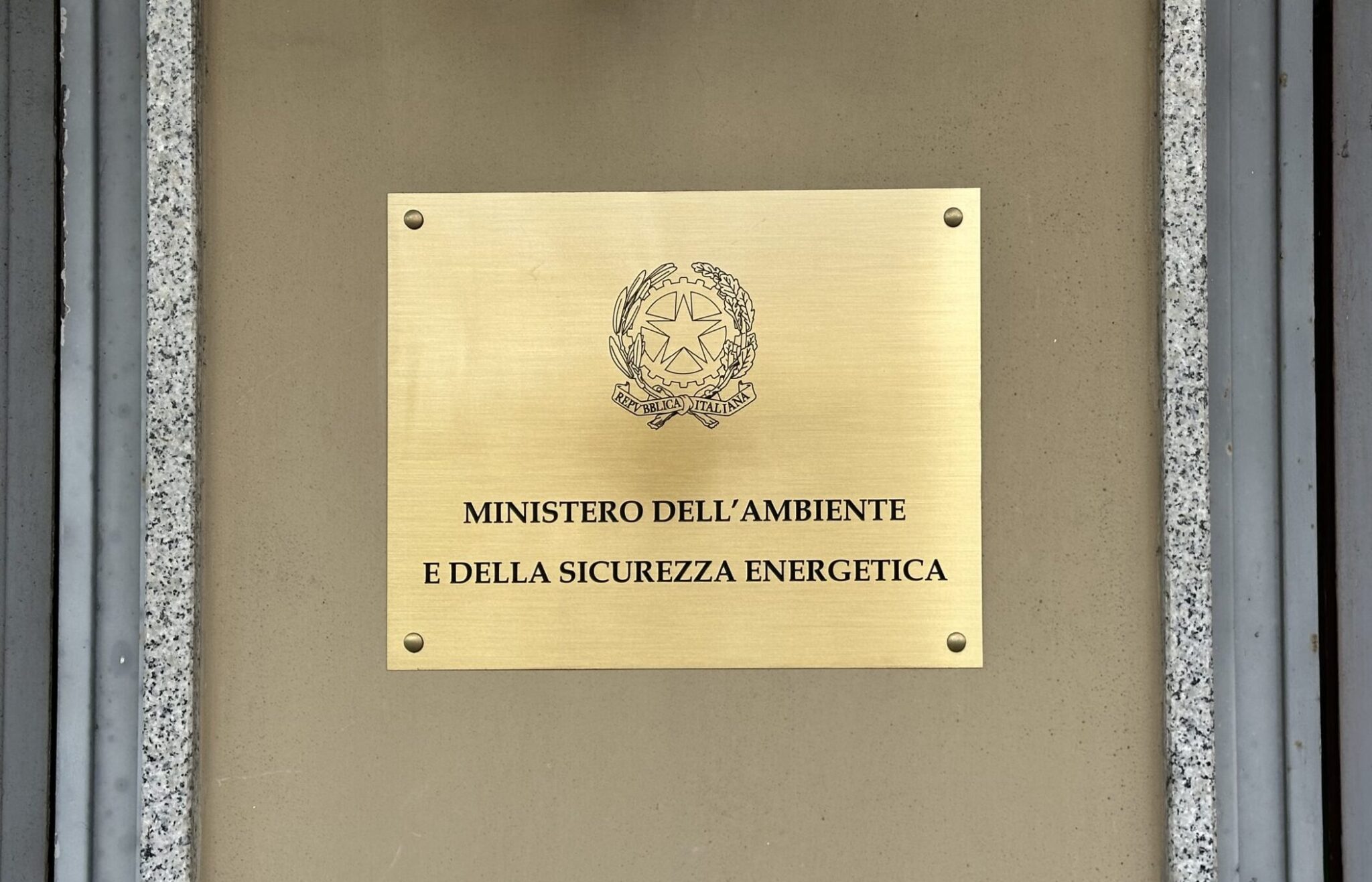
Italy’s Ministry of Environment and Energy Security has approved revised technical rules for the 2028 capacity market auction, lowering the derating factors applied to battery energy storage systems (BESS) in several regions.
Decree No. 327, dated Oct. 16, adopts a proposal submitted by transmission system operator Terna in September, which received a positive opinion from the Italian energy regulator ARERA in Resolution 370/2026/R/eel on Oct. 14.
The changes update battery storage derating coefficients and the import limit between the northern foreign virtual area and the northern market area. The ministry said Terna’s data showed a significant increase in authorized or pending authorization storage capacity compared with the figures used in its June 25 proposal.
For a battery with a four-hour energy-to-power ratio, recognized capacity for the auction will equal 40% of nominal power in the north and north-central regions, 51% in the south-central region, and 21% in both the south and Calabria and the islands of Sicily and Sardinia. An analysis by Aurora Energy Research found that the corresponding values in the version approved in August were 51%, 54%, 40%, and 31%, respectively. In the 2027 auction, a single national derating factor of 67% applied.
The largest reduction affects long-duration storage in the south and Calabria. The recognized capacity of an eight-hour battery falls to 29%, from 52% under the August rules. In Sicily and Sardinia, it drops from 47% to 33%, while the reduction in the south-central region is smaller, from 73% to 71%.
The new coefficients apply only to storage capacity that was absent from the 2027 auction supply curve or was offered but not selected. Existing capacity, capacity already contracted in previous auctions, and lithium-ion batteries awarded in the MACSE auction for delivery in 2028 will instead retain the 2027 auction derating factors.
The import limit from the northern foreign virtual area, which includes France, Switzerland, Austria, and Slovenia, is set at 1,700 MW. The decree says the figure reflects more precise analysis of imports during periods of greatest system stress in 2025. The other import limits are 113 MW for the south-central area, covering Montenegro, and 52 MW for the southern area, covering Greece. The limits for the remaining areas are zero.
National requirements for probabilistic available capacity range from 66.2 GW at point B to 67.8 GW at point D, including approximately 39.7 GW in the north. New solar plants have a derating factor of 91.7%, wind power 84%, and run-of-river hydropower 67%. New thermal power plants have a derating factor of 10%, rising to 20% for combined-cycle plants cooled exclusively with water.
From pv magazine Italia
More about
Written by


Popular Posts