R&D
Advertisement
Advertisement
Advertisement
Latest News
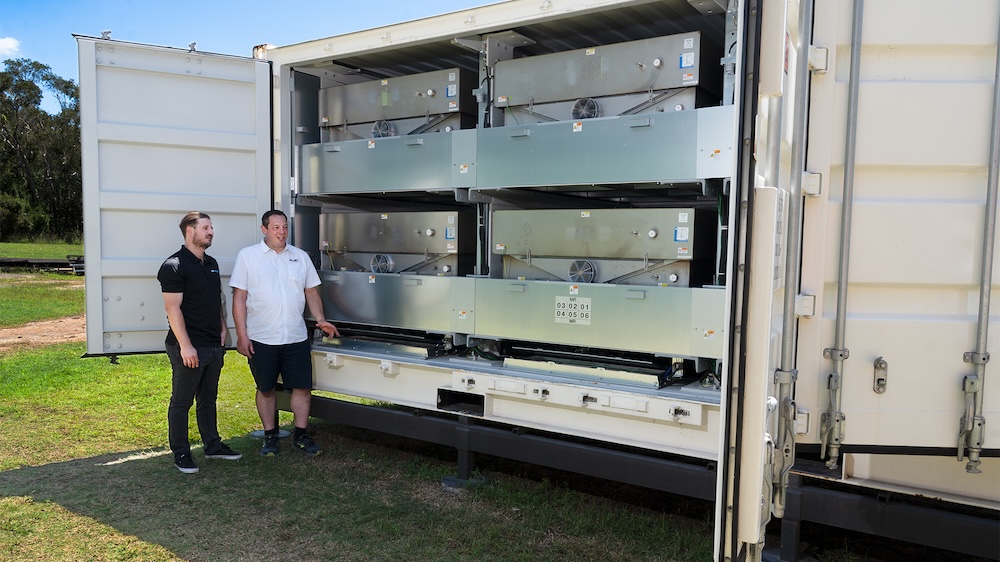
Lava Blue hosts Australia’s first grid-connected sodium-sulfur battery
Australia’s first grid-connected sodium-sulfur battery system has commenced operations in Queensland, helping power a critical minerals processing facility and providing a real-world demonstration of the long-duration energy storage technology.
Sep 23, 2026
Advertisement



Iron-mediated cathode enables 206 Wh/kg sodium-ion pouch cell
Chinese researchers have developed an iron-mediated strategy that improves the reversibility and stability of lattice-oxygen redox reactions in sodium-ion battery cathodes. A 15.8 Ah pouch cell using the cathode achieved an energy density of 206 Wh/kg, with lattice-oxygen redox reversibility reaching 99%.

New electrode design by German institutes increases battery energy density by up to 15%
Fraunhofer ISE and its partners have developed thicker electrodes that could increase battery cell energy density by 10% to 15% without adding weight. The PFAS-free, solvent-free concept has been demonstrated in lithium-ion, sodium-ion, and zinc-ion cells and is designed for cost-effective mass production.


UNSW launches grid protection project for grid-forming BESS and inverters
Researchers at the University of New South Wales have launched a three-and-a-half-year project to examine how inverter-based resources interact with grid protection systems. The AUD 12.9 million initiative will use modeling, simulation and hardware-in-the-loop testing to assess fault-current behavior and protection requirements.



Advertisement
All R&D news

Fraunhofer IEE develops simulation tools for hybrid storage systems design
The researchers have created a degradation model that experts can use to determine battery aging in hybrid systems made up of lithium-ion batteries and supercapacitors. This makes it possible to determine whether it makes sense to combine the two technologies in individual cases. The tools should also help with the design of a hybrid system.


Advertisement

New approach for sizing large ESS as virtual synchronous generators, grid-forming inverters
New research has outlined a novel methodology to determine the minimum power rating of energy storage systems (ESSs) used for emergency under-frequency response. The aim is to maintain the frequency within a standard operating range.

Faster, cleaner way to extract lithium from battery waste
The microwave-based process developed by researchers at Rice University in Texas, US, can retrieve as much as 50% of lithium from spent cathodes in as little as 30 seconds, overcoming a significant bottleneck in lithium ion battery recycling.

Safe, long-cyclable lithium metal battery for high temperatures
A research team at the University of Hong Kong (HKU) has developed a new generation of lithium metal batteries, representing a significant advancement in the field. The innovation centers on microcrack-free polymer electrolytes, which promise extended lifespan and enhanced safety at temperatures as high as 100 degrees Celsius.
Advertisement
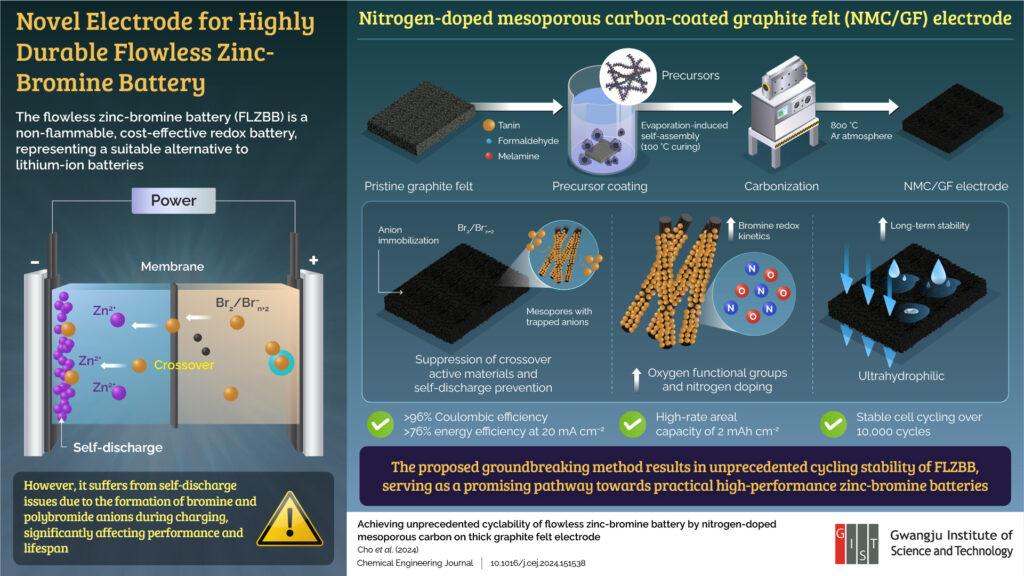
Achieving unprecedented cyclability of flowless zinc-bromine battery
Researchers at the Gwangju Institute of Science and Technology in South Korea have developed a novel electrode that effectively suppresses the harmful self-discharge phenomenon in flowless zinc-bromine batteries and enables long-term operation of more than 10,000 cycles.

New cathode material for high energy density sodium-ion batteries
Researchers at Karlsruhe Institute of Technology (KIT) in Germany have successfully synthesized, for the first time, a new cathode active material with a specific capacity of 190 mAh/g, potentially paving the way to high energy density sodium-ion batterieies.
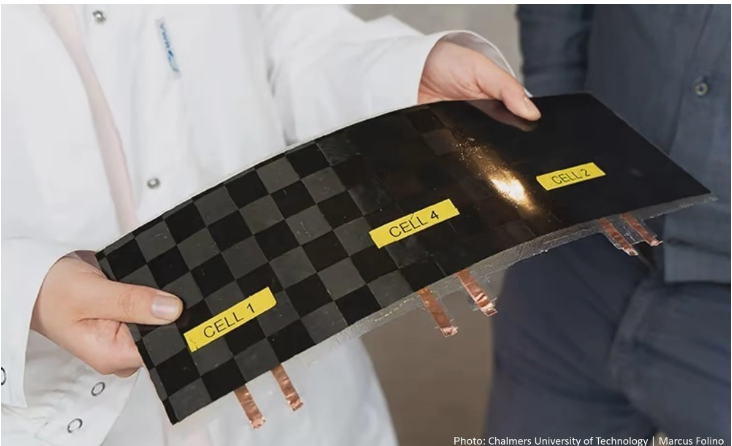
Energy-storing carbon fibre composites pave the way to weightless batteries
Building on research work at Sweden's Chalmers University of Technology, Sinonus has developed carbon fiber-based structural batteries that not only store energy but also become an integral part of a product's structure. Their possible span of energy density is said to be around 25-50% of a conventional lithium-ion battery at current technology level.
Advertisement