Spotlight on Ireland: Waiting for market maturity

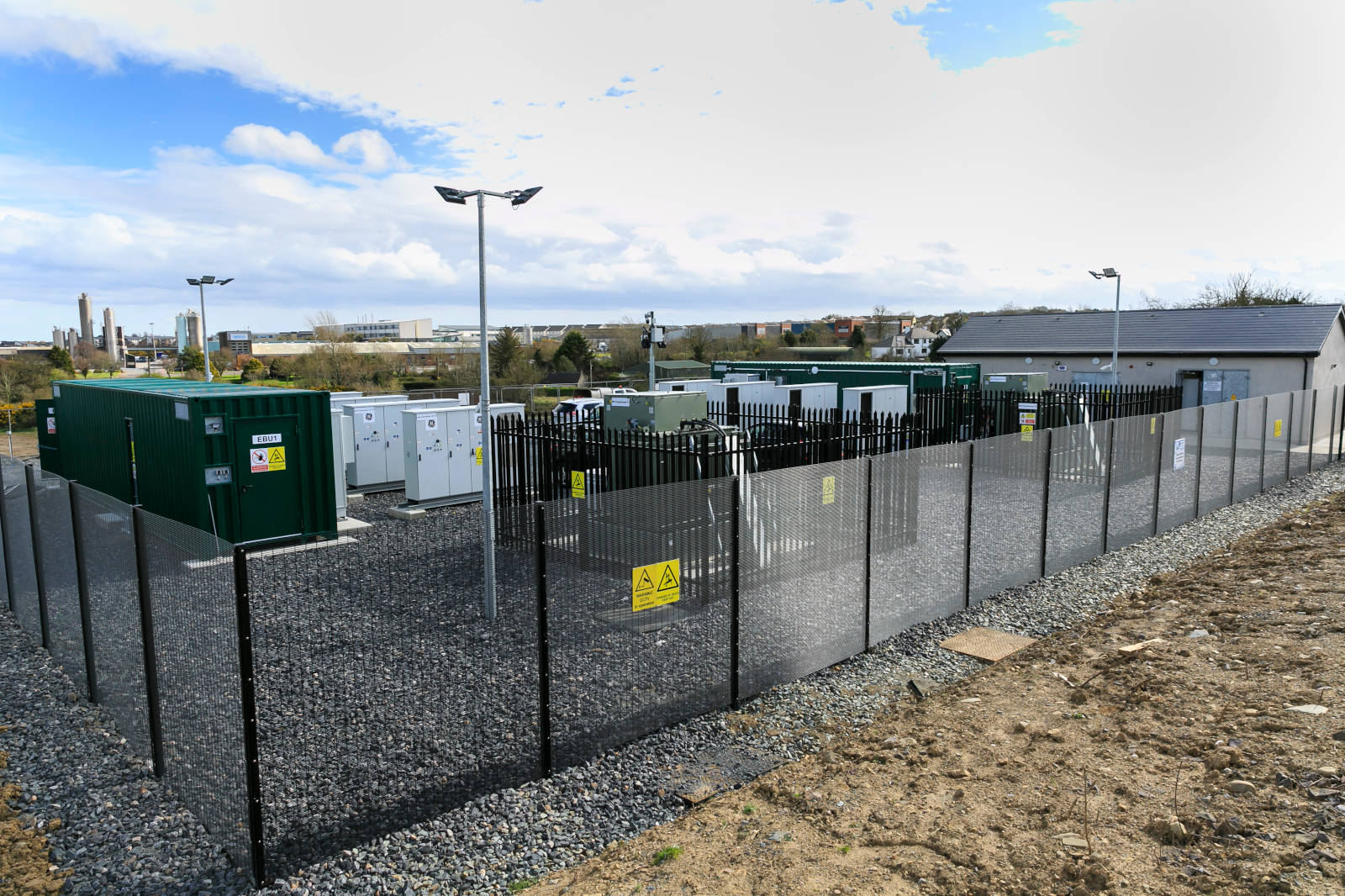
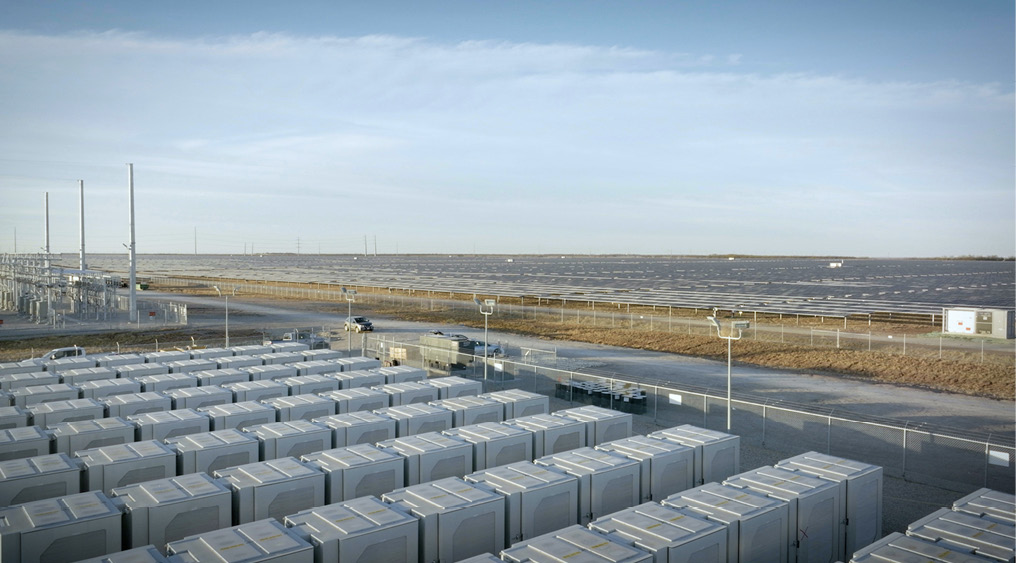
Ireland’s weather, governed by the mighty Atlantic Ocean, has delivered the island some of the world’s highest levels of wind penetration. Battery storage is already playing a role in the Republic of Ireland, particularly, boosting a grid that’s often fighting wind and rain. And across both the Republic and Northern Ireland, more batteries are needed, but struggling to find a path to clear revenues.
The widespread blackouts during Storm Éowyn in late January of 2025 served as a reminder of Ireland’s unique grid vulnerabilities. The events saw some in the Republic of Ireland go without power for more than a week, which has, anecdotally, led to a growth in residential solar plus storage installations, according to professionals who spoke with ESS News. But utility-storage hasn’t followed with the same enthusiasm after an initial sprint in previous years.
Ambitions falter
That said, Ireland’s ambition to build a resilient grid powered by renewables remains immense, but the utility-sized battery storage market has reached a key moment. While the long-term fundamentals and a government target of 3.2 GW of batteries by 2030 still stand, the rapid deployment seen in recent years has stalled.
A healthy development pipeline is being held back by significant market uncertainty, creating a paradox: the need for storage is clear, but the route to market has become clouded.
The issue lies in a major shift in revenue sources. The initial wave of Ireland’s nearly 1 GW of operational batteries was primarily built to serve the lucrative DS3 ancillary services framework. According to Bobby Smith, head of Energy Storage Ireland (ESI), who spoke to ESS News previously, this scheme offered attractive, fixed payments for the fast, short-duration services that early (0.5-1 hour) batteries excelled at providing. After fueling a rapid buildout, the DS3 scheme is set to expire at the end of 2026, to be replaced with a more uncertain competitive auction model.
“The revenue certainty that existed under DS3 is no longer there,” Smith said, explaining that the development pipeline is now “looking less certain.”
Uncommon hurdles
This uncertainty has created an imbalance that’s fairly stark: while the pipeline of BESS projects under some kind of development is a colossal 10 GW, the construction pipeline was comparatively tiny at just 83 MW, back in April. A survey conducted by ESI in June 2025 showed 3,948 MW “With Planning”, 1,602 MW “In Planning”, and 4,419 MW “Pre-Planning”. Total duration was around 50 GWh, roughly enough energy to power
every home in Ireland twice over for a day. (Note, the developments are Northern Ireland and Republic of Ireland combined)
Of that development pipeline, 4 GW already has planning permission and over 2.2 GW have even secured grid connection offers. The planning requirements and grid access hurdles, often significant in many other regions of the world, are not primary obstacles.
“A lot of energy storage has crept under the radar so far in Ireland,” said Smith. “Developers secure planning quite easily but the route to market is a challenge.” The majority of the pipeline is now “holding fire until the market becomes a bit clearer.”
The market’s key players, many of whom rode the initial DS3 wave, are now adapting to this new reality. State-owned ESB remains the largest operator, with a portfolio that includes the 150 MW Aghada 2 project, the 73 MW Poolbeg battery, and several other 30 MW sites.
The next-largest operator is VPI, the majority owner of the 100 MW Lumcloon and Shannonbridge batteries. Other major players include UK investment firm Gore Street Capital, which owns two 50 MW projects in Northern Ireland and plans for more. The Norwegian utility Statkraft added batteries to its Cushaling wind-farm project, which used the largest turbines to be installed in Ireland to date via Vestas V162m 6.4MW units, and is claimed as Ireland’s first four-hour grid-scale BESS at 20 MW / 91.2MWh.
Positive frameworks
Another positiv sign for the energy market was the Republic of Ireland’s 2024 Electricity Storage Policy Framework, which aimed to provide strategic clarity for the market. The 2024 Framework was designed to ensure batteries have access to multiple revenue streams, from energy arbitrage to capacity payments and ancillary services, and aimed to fast-track development by designating large projects as ‘Strategic Infrastructure,’ streamlining permitting. The policy, specific to the Republic of Ireland, was backed by EirGrid, the grid operator in the Republic (and system operator for Northern Ireland under SONI), which, for the first time, treated batteries not as an optional extra, but as a core assumption for all future grid planning.
That said, ESI’s Smith noted that progress on turning these actions into bankable market mechanisms has been slow, partly due to resource constraints within state bodies. We need something to make up that difference to make storage investments bankable,” Smith says. He hopes that in the next year or two, as new market structures are clarified, the development backlog will begin to clear, but warns that deployment will likely remain low until 2027.
Written by



Popular Posts