SK On secures 7.2 GWh battery storage supply deal in US

South Korea’s SK On has signed a multi-year battery energy storage system (BESS) supply deal with utility-scale energy storage developer, owner and operator Flatiron Energy, marking its entry into the US stationary storage market.
Under the agreement, SK On will be able to supply up to 7.2 GWh of BESS for Flatiron’s projects in New England and other states through 2030. The parnership will kick off with a delivery of 1 GWh of containerized lithium iron phosphate (LFP) BESS units for a project in Massachusetts, with shipments scheduled to begin in the second half of 2026.
Valued at approximately $1.5 billion, the agreement represents SK On’s first major supply contract focused exclusively on stationary storage batteries since its spin-off from SK Innovation in 2021. The shift toward energy storage systems using LFP chemistry reflects the company’s broader strategy to diversify its product portfolio, hedge against slowing electric vehicle (EV) demand, and ensure stable long-term growth.
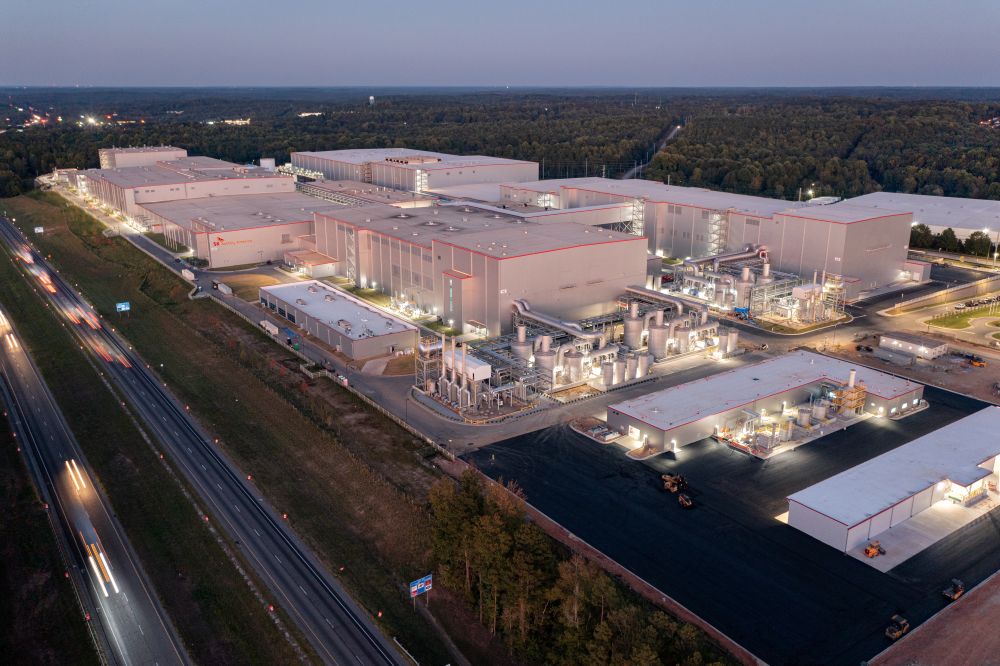
To fulfill the contract, SK On will repurpose part of its EV battery production lines at SK Battery America (SKBA) – its wholly owned subsidiary in Commerce, Georgia – for mass production of LFP batteries dedicated to stationary storage applications.
“This deal is significant as it expands both our product and business portfolio,” said Daejin Choi, Head of ESS Business at SK On. “We will continue to strengthen our presence in the BESS sector by leveraging our advanced technologies and production capabilities.”
Building on its partnership with Flatiron, SK On plans to continue delivering American-made LFP batteries to meet the nation’s growing BESS demand. SK On has been strengthening its US presence with SKBA serving as its key hub since 2022. Built at a cost of $2.6 billion, SKBA currently employs over 2,600 people and has an annual production capacity of 22 GWh.
The manufacturer says that it will levarage its EV battery making expertise to deliver “a modular design for flexible, scalable solutions, along with advanced safety measures such as heat propagation prevention and electrochemical impedance spectroscopy(EIS)-based battery diagnostics for reliable operation.”
Written by






Popular Posts