Poland: PGE breaks ground on 981 MWh battery, Fluence supplies 622 MWh project

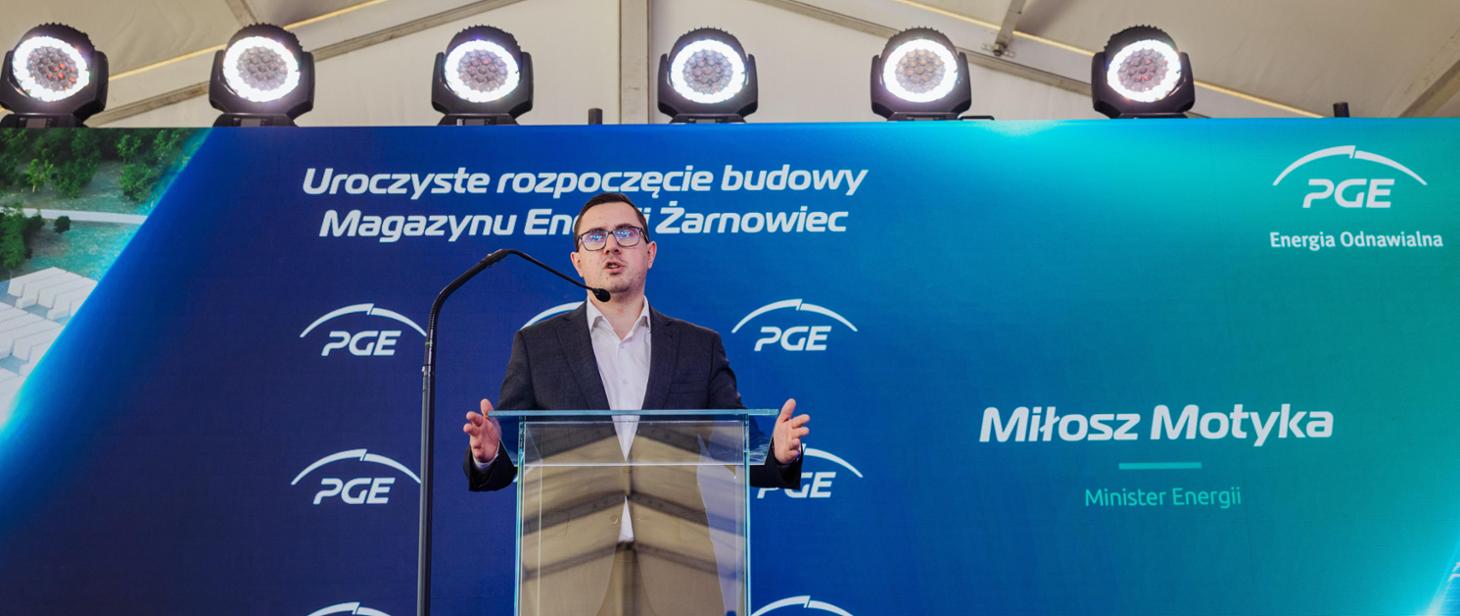
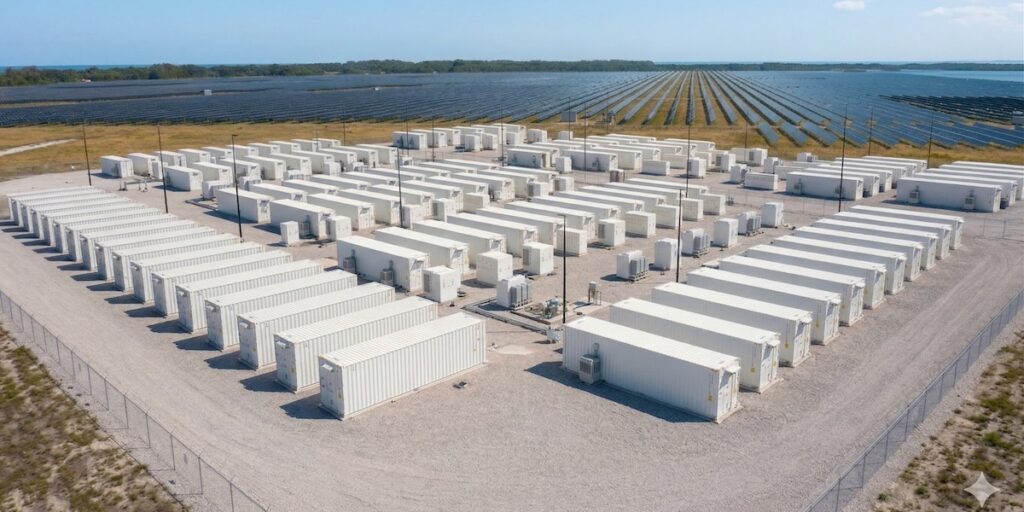
Polish utility PGE Group has begun construction of a 262 MW/981 MWh battery energy storage facility in Żarnowiec, marking one of the largest projects of its kind in Europe.
The project comes with a price tag of PLN 1.5 billion ($345 million), and the PGE Group has submitted an application for financing through Poland’s the National Power System (KPO).
LG Energy Solution Wrocław, the Polish subsidiary of the Korean battery giant, won the public tender with a bid of PLN 1.555 billion ($384 million). The company will supply the project with locally manufactured grid-scale lithium iron phosphate (LFP) batteries produced at its Biskupice Podgórne facility near Wrocław.
In addition to supplying batteries, LG Energy Solution will be responsible for design, engineering, and construction on a turnkey basis, while PGE Energia Odnawialna will oversee the project.
Commissioning is scheduled for the second quarter of 2027. The facility has already secured a grid connection and a 17-year capacity market contract for 2029. It will be located adjacent to the Żarnowiec Pumped Storage Power Plant, also owned and operated by PGE.
“This investment will strengthen Poland’s energy security, lowering energy costs for Polish families and domestic businesses, and ensuring stable electricity supplies regardless of weather conditions,” Miłosz Motyka, Minister of Energy, said at the construction launch ceremony held last Friday.
“Combined with the dynamically developing energy investments in Pomerania, such as the first Polish nuclear power plant and offshore wind farms, the energy storage facilities will become the foundation of a stable and environmentally friendly energy system. A system that—and this is absolutely crucial—will help Poland become independent from foreign supplies of raw materials and electricity.”
PGE is steadily expanding its energy storage portfolio and already holds nearly 90% of Poland’s pumped-storage capacity. By 2035, it plans to grow its total storage capacity to over 18 GWh, including: 8 GWh of battery storage, 10 GWh of pumped hydro power plants and 0.5 GWh of thermal storage with a total budget of PLN 14 billion.
In other news, Fluence has agreed to supply battery storage units for the 133 MW/622 MWh project in Trzebinia, southern Poland.
The deal signed with DRI – the EU renewables arm of Ukraine’s DTEK Group – marks Fluence’s first energy storage project in the country. The development is backed by a 17-year capacity market contract, starting in 2027.
Fluence, the joint venture between Siemens and AES Corporation, will deliver to Trzebinia its Smartstack product – a highly modular 7.5 MWh AC-based BESS platform, which entered production earlier this month at an automated contract manufacturing facility in Vietnam.
“We are confident that the Trzebinia BESS project will make a real difference, contributing to Poland’s energy transition and enhancing the grid’s ability to integrate renewable energy sources, while strengthening energy independence not only for Poland, but for the entire European Union. For DRI, this project marks another important step in the development of a portfolio of solar, wind, and BESS projects in fast growing markets in the energy sector, such as Poland, Croatia, Italy, and Romania,” said Murat Cinar, CEO of DRI.
Just a couple of weeks before the Trzebinia announcement, Fluence and DTEK energised a 200 MW/400 MW project in Ukraine. Compleated in just six months and commissioned entirely remotely due to the war, this project spans spans six sites ranging from 20 MW to 50 MW across the Kyiv and Dnipropetrovsk region.
Poland is quickly emerging as one of Europe’s energy storage hotspots. According to S&P Global, Poland’s installed energy storage capacity is projected to grow from just 25 MWh at the end of 2024 to over 20 GWh by 2030. Poland aims to reach more than 50% renewables in its energy mix by the end of the decade.
Written by


Popular Posts