Base Power hauls in $1 billion to take its distributed home battery model beyond Texas

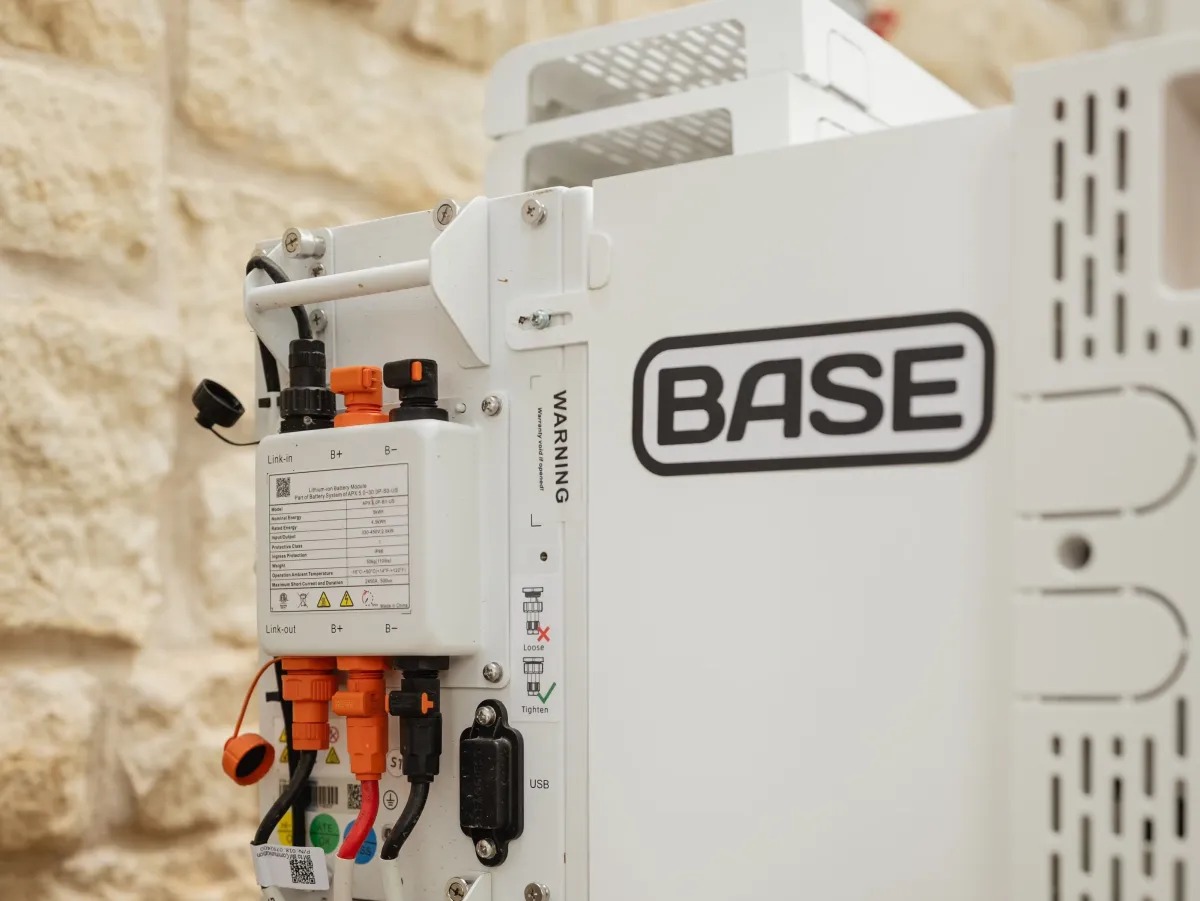
Base Power announced it has raised $1 billion in new funding to expand its residential battery network, currently located across Texas, into more regions in the US and even internationally.
The company, founded in 2023, raised a Series C funding round, which saw it valued at around $3 billion, according to reporting from The New York Times. The investment round was led by Addition, a venture firm in New York, while existing and new backers included CapitalG, Lowercarbon, Andreessen Horowitz, and Valor Equity Partners.
The financial backing serves to boost the rollout of the distributed energy platform, which is built from individual homes and operates in a virtual power plant-controlled manner or VPP.
Base Power leases residential batteries at below-market cost, requiring homeowners to pay between $695 and $995 upfront to install a 25 kWh or 50 kWh-sized battery.
The systems provide backup power for homeowners while feeding into a managed network that trades electricity when grid prices fluctuate. Base’s software charges batteries when power is cheap and discharges when it’s expensive, sharing part of the margin with customers. Those customers also pay a monthly fee of $19 or $29, depending on the battery size, and commit to buying electricity from Base Power for three years at 8.5 cents per kWh plus delivery fees.
The upfront capital expenditure of a battery is therefore mitigated, which is one reason Base Power needs significant capital to buy and supply batteries outright.
Consider a 13.5 kWh Tesla Powerwall 3. At the time of writing, a single standalone Tesla Powerwall 3, when purchased directly from Tesla and delivered and installed with a gateway, is priced at a total cost of $16,400 in California.
The costs are broken down as follows by Tesla:
- 1 x Powerwall 3, $8,200
- Gateway, $900
- Accessories, $200
- Installation, $7,100
- Total: $16,400
100 MWh in Texas
In less than two years, Base Power has deployed more than 100 MWh of capacity, or about an hour of supply for 33,000 homes. The company says this makes it one of the fastest-scaling distributed storage platforms in the United States, and one of the bigger overall batteries in Texas that’s operational.
“We’re building domestic manufacturing capacity for fixing the grid,” said Justin Lopas, Base Power’s co-founder and COO. “The only way to add capacity is by physically deploying hardware, and we need to make that here in the U.S., ourselves.”
The company is also constructing its first battery and power-electronics plant on the former Austin American-Statesman printing site, with a second factory already planned. Base Power also recently qualified for Texas’s Aggregated Distributed Energy Resource (ADER) program, allowing fleets of home batteries to participate directly in grid markets.
The model has been tested in California, Australia – including Tesla’s own VPP – and in Japan.
Zach Dell is the CEO and co-founder of Base Power, and is Michael Dell’s son, the PC and server maker entrepreneur. Michael Dell is not an investor in the company, but supports his son’s work.
Written by







Popular Posts