Legal reform brings positivity and concerns for battery storage in Brazil

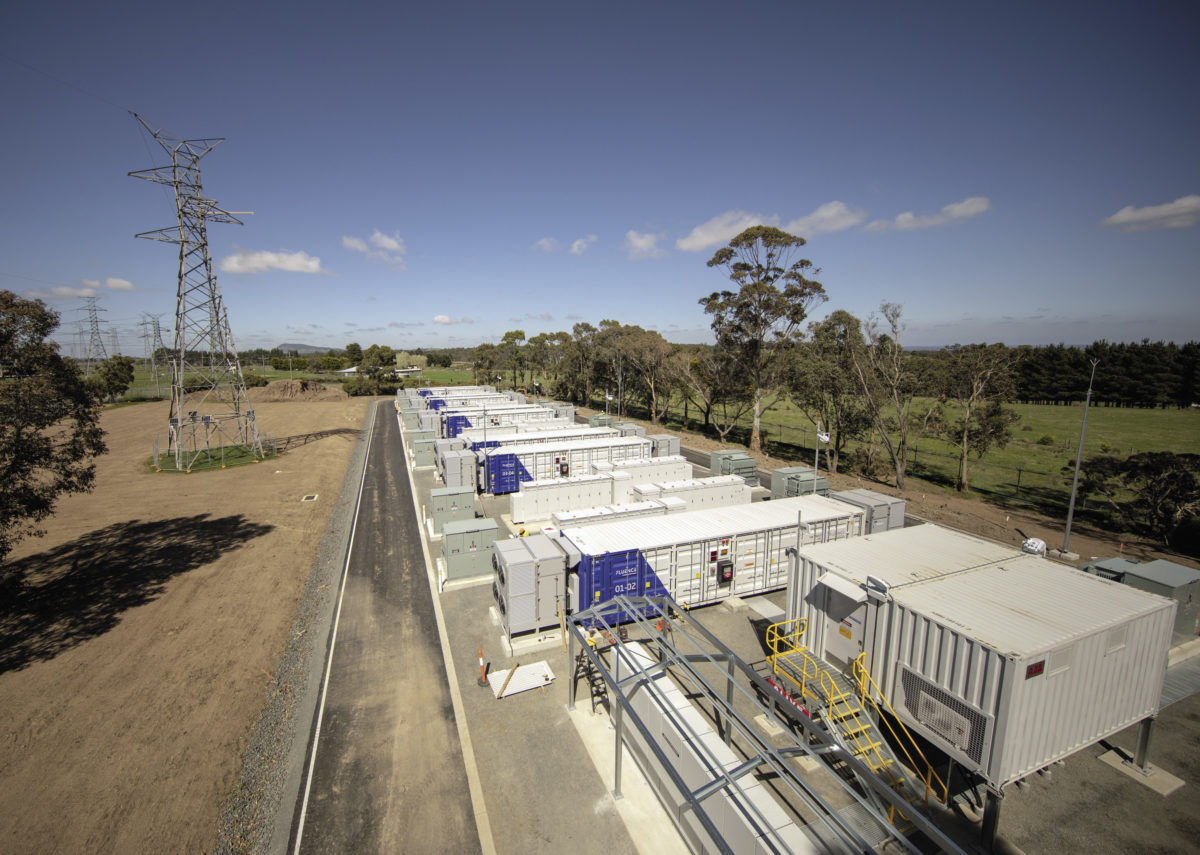
The approval of the Conversion Bill No. 10, originated from Provisional Measure 1.304, represents a decisive milestone for the development of the energy storage sector in Brazil. According to the executive director of the Brazilian Association of Storage and Stationary Batteries (ABSAE), Fábio Lima, the approved text gives the storage industry an unprecedented legal basis, consolidating its role as a transversal activity in all stages of the electrical system – from generation to distribution and consumption.
“The report by Senator Eduardo Braga recognizes storage as a central element of the modernization of the electricity sector,” Lima said in an interview with pv magazine Brasil. “We now have a law that strengthens [Brazilian energy regulator] Aneel’s competence to regulate and supervise storage, establishes rules of access, use and remuneration, and allows its performance on multiple fronts – from flexibility and power to auxiliary services.”
A public consultation dealt with the regulation of storage, during which there was doubt about “whether the storage system should be treated as a generator and consumer simultaneously or whether it could have its own network usage tariff,” Lima said. “Now, the law makes it clear that Aneel can create specific rules,” he added.
This point about the framework of storage as a consumer or as a generator generated disagreement among the directors of Aneel and postponed, in August, the vote on the result of the public consultation which discussed the rules for access and remuneration of batteries.
Tax incentives and cost reduction
Another point highlighted by Lima is the inclusion of storage in the Special Regime of Incentives for Infrastructure Development (Reidi), which reduces the tax burden on infrastructure equipment and projects. The measure should reduce costs and increase the viability of new projects, especially in the commercial and industrial segment.
“The cost reduction increases the number of cases where storage makes economic sense,” said the executive. “But it is essential that the regulation of Reidi is simple and speedy. If it’s too bureaucratic, the positive effect can be lost.”
For the director of ABSAE, “the legal recognition of storage is a victory for the sector. It gives clarity to investors and reinforces that the government – executive, legislature and agencies – is committed to the insertion of batteries in the Brazilian electric matrix.” The next challenge, he said, will be to adjust any distortions in the text during the veto period and work for the clear and efficient regulation of the new rules.
Legal framework and new markets
PLV 10 introduces changes in different laws of the electricity sector, including the one that governs the performance of the National Electric Energy Agency (Aneel) and the rules of use of transmission and distribution systems. Storage is recognized as a transmission, distribution asset and also as an instrument of direct use by consumers and generators, which expands the possibilities of application and investment.
Another important point is the opening of new markets. The batteries can participate in capacity reserve auctions, in which they are expressly included as eligible technology. In addition, the proposal creates a competitive mechanism – to be regulated by Aneel – that will allow the remuneration of generation and consumption units that inject energy into the grid at times of higher demand.
“This mechanism will generate revenue for those who adopt flexibility solutions, and of course this includes storage,” explained Lima. “While it still needs to be detailed, it creates a new source of compensation for generators and consumers who invest in batteries.”
Allocation of auction costs
Despite the advances, the approved text brings a change that worries the sector. The new paragraph of article 3 of Law 10.848 establishes that, in the auctions of capacity reserve with the use of batteries, the costs of contracting will be prorated only among the generators – and not among all consumers, as is currently the case.
“We do not understand this distinction as positive,” said Lima. “Other capacity systems, such as thermal and hydroelectric dams, have their costs prorated among all consumers. The batteries provide the same safety and flexibility service, and this differentiation has no technical basis. It is a point that can be questioned and that we hope to see revised, possibly via presidential veto.”
With the definition of the legal framework, the sector is now awaiting the publication of the guidelines for the auction of capacity reserve via batteries, considered “urgent and necessary” by ABSAE. According to Lima, the Ministry of Mines and Energy already recognizes the importance of the modality and should publish, later this year, a new public consultation to define the rules of the event.
“Minister Alexandre Silveira included in his international agenda meetings with battery manufacturers to attract investment. The expectation is that the ordinance of guidelines of the auction will come out soon,” he says. “The auction is the most efficient way to bring new power to the system at the lowest cost to the consumer.”
From pv magazine Brazil
Written by






Popular Posts