Waratah Super Battery transformer failure raises complex insurance, procurement questions

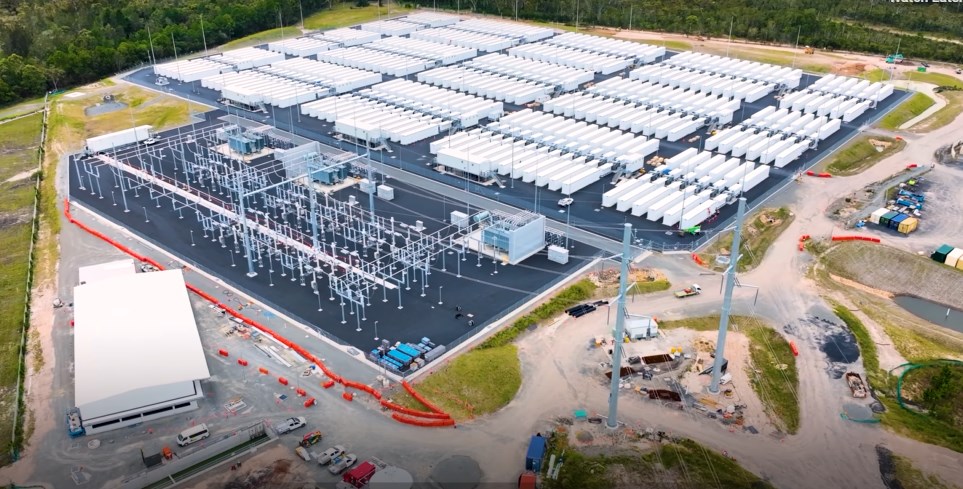
The major failure of a transformer at the Waratah Super Battery is still causing ripples across industries more than a week later, and ongoing questions about the exact causes remain, for now, unanswered.
The role of the New South Wales (NSW) state government and Australian Energy Regulator in the procurement and delivery of the Waratah Super Battery may mean that investigations into the transformer failure are made public and provide useful and detailed information to dissect.
For now, the issue for the owner Akaysha Energy remains fairly clear: one 350 MVA unit is assumed very badly impacted given the ‘catastrophic failure‘ mentioned by the company, while the second de-energized transformer requires inspection and remains, for now, an unknown. Akaysha said officially that one transformer is active and “the battery’s remaining capacity is expected to come online during 2026,” without providing clear dates.
For the wider industry, the incident has shifted into a live test of how insurance, procurement, redundancy and long-lead equipment risk collide on a project of this size and importance.
Ironically, the Waratah Super Battery was intended to act as insurance for the grid, with state network operator Transgrid and its executive general manager of delivery, Jennifer Hughes, saying back in August this year that the Waratah Super Battery was “like an insurance policy for NSW,” as part of its role in the grid’s System Integrity Protection Scheme (SIPS).
Real insurance
For those involved in the actual insurance for the project, Tom Harries, Partner at NARDAC, which isn’t an insurer on the project, told ESS News that the financial implications will be defined by the duration of the outage.

“The claim could reasonably fall anywhere between AUD 10 million and AUD 50 million, depending on the extent of transformer damage and how much revenue loss is ultimately sustained.” Repairability versus full replacement sits at the core of that spread. “If the developer has access to inventory from other projects, full rectification may be possible in six months. Without that option, delivery timelines may be 12 months or more.”
The picture worsens if the second transformer encounters extended downtime. “In that scenario, Waratah’s exposure would extend beyond the cost of replacing a single transformer to include a much longer delay in achieving full commissioning and revenue generation. Total claims under Delay in Start-Up cover could exceed AUD 90 million.” With transformer lead times of 24 to 36 months now common, depending on many factors, the possibility is there.
“Outside of renting a replacement transformer,” Harries explained, “the only other route the developer may have for truncating the timeline would be to swap in a replacement from other projects it may have in development.”
Replacement realities
One of the more interesting questions is whether the supplier can be forced to accelerate a replacement. But the 2026 delay reflects a hard reality for the BESS sector: physical manufacturing constraints cannot be bypassed by legal mechanisms. Despite the urgency, Harries notes that the developer cannot simply compel the supplier, Wilson Transformer Company, to skip the queue.
“The project owner will not be able to contractually enforce a shorter replacement timeframe with the transformer supplier,” said Harries. “High-voltage transformer supply remains one of the tightest areas in the global power equipment market.”
Redundancy also plays a major role. “If a project’s design allows other transformers to absorb the lost capacity and reroute power export, revenue losses can be reduced dramatically. Many BESS and solar projects, however, are designed with limited redundancy, so a single-point-of-failure event can quickly become a multi-million-dollar loss.”
On the insurance structure itself, Harries notes that the dividing line between commissioning and operation will matter for coverage. “An incident like this would typically be covered under a Construction All Risks and Delay in Start-Up [DSU] policy if it occurred during commissioning. In operation, it would fall under an all risks property policy with business interruption cover.” Most developers still buy 12-month indemnity periods because lenders specify that minimum, although 18- and 24-month periods are becoming more common as the transformer supply chain lengthens.
Syndicated risk
The incident is expected to trigger a complex claim across the London insurance market, where the risk is known to be shared or syndicated among underwriters holding majority or minority percentages. Even a modest percentage becomes meaningful when the affected asset is an 850 MW battery tied to grid stability services.
Written by




Popular Posts