Sodium-ion battery cells already near lithium-ion cost parity, set to get cheaper

Any technology aiming to compete with lithium-ion batteries (LIBs) faces the challenge of rapidly declining costs for this already ubiquitous technology. As LIBs continue to expand their market dominance, sodium-ion batteries (SIBs) are still waiting for their moment to shine.
However, a new study led by researchers at Finland’s LUT University, in cooperation with Germany’s Karlsruhe Institute of Technology and Spain’s University of Alcalá, finds that, although SIBs have yet to achieve widespread market adoption, their cells are already approaching cost parity with LIBs.
“Sodium-ion batteries (SIBs) are not yet in full roll-out for electric vehicle applications, as energy density remains a limiting factor. While SIBs are already cost-competitive with lithium-ion batteries (LIBs), their gravimetric energy density still lags behind. This gap may close once solid-state SIBs enter the market,” Dominik Keiner, junior researchers at LUT School of Energy Systems, tells ESS News.
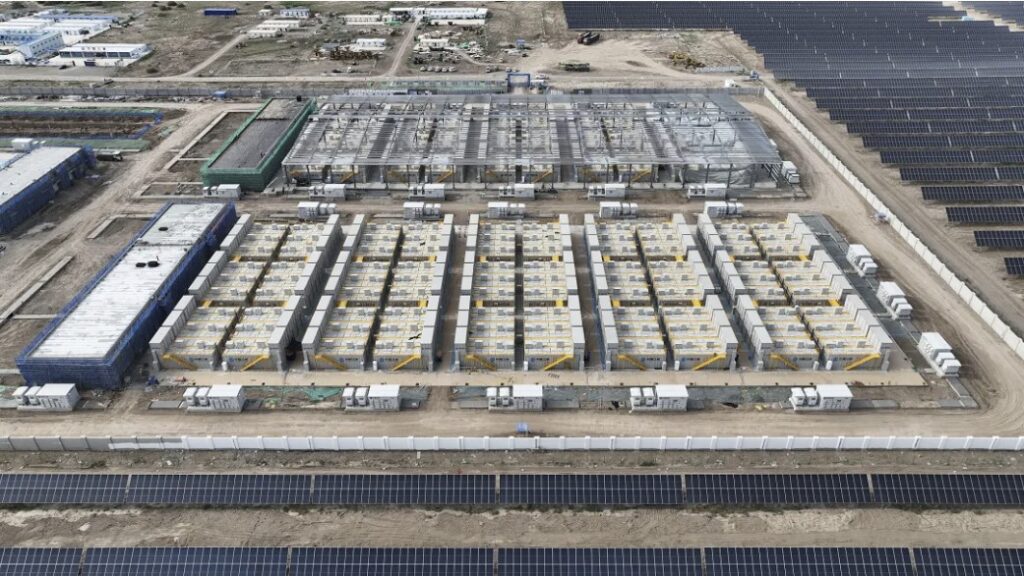
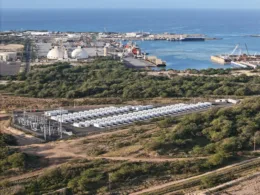
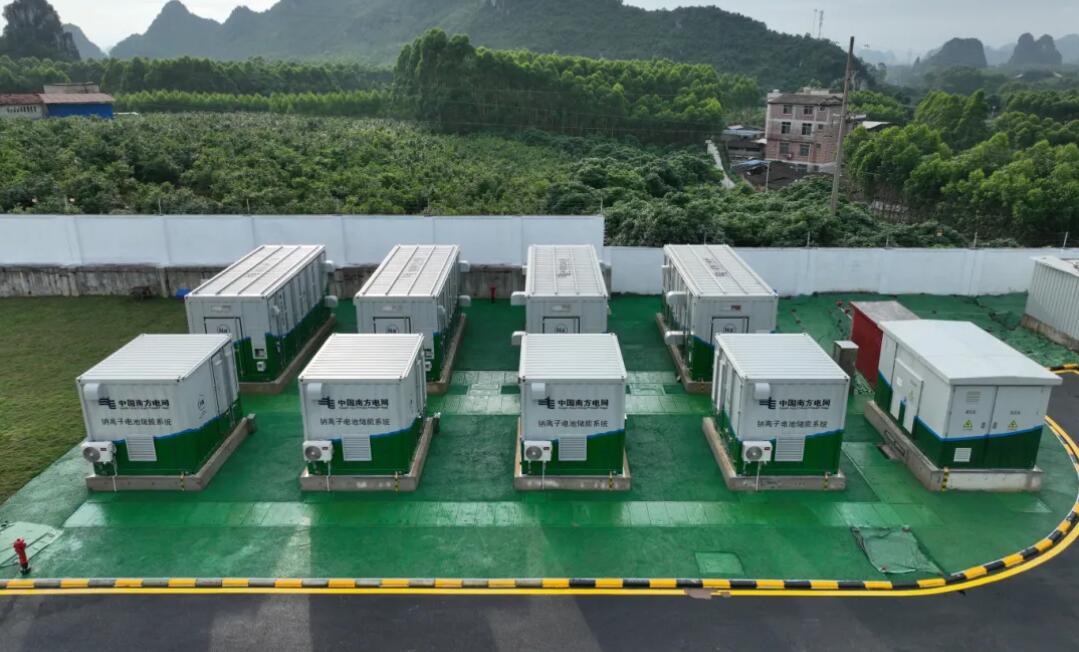
However, the first commercial utility-scale battery energy storage facilities are now being constructed and commissioned, including projects at the 100 MWh scale. “This demonstrates that SIBs are on the verge of full-scale market entry. Once supply chains are established and economies of scale take effect, there is essentially nothing to prevent sodium-ion batteries from fully taking over the market, provided that existing LIB lock-ins are manageable,” he says.
While previous assessments have come to controversial results regarding SIBs economic competitiveness, and left the potential impacts of SIB on the wider energy system unexplored, the new study combines a bottom-up cost modelling including future performance developments on material level for SIB with a global energy system model through to 2050.
The results show that with recent cost developments and learning curves, batteries are no longer a cost-critical component in the energy system with projected utility-scale battery system capex of €28.5–51.9/kWh by 2050. Near cost parity today, SIB potentially outperform LIB on the medium term and are less prone to price spikes and supply shortages.
Being a so-called drop-in technology, sodium-ion batteries (SIBs) could be manufactured on existing lithium-ion battery (LIB) production lines with only minor modifications. As a result, concerns over supply shortages or price spikes are largely alleviated, since any disruption in LIB supply could simply trigger a shift to SIB, the researchers note.
Furthermore, the study finds that lower battery costs primarily drive an increase in battery capacity rather than additional solar PV deployment. Overall, the energy system structure remains largely unchanged, with similar shares of solar photovoltaics, although higher battery capacity enables greater operation of power-to-X processes under increased load. In this context, electrochemical energy storage does not constitute a limiting factor for the global energy transition. Accordingly, the study projects potentially the highest stationary battery demand reported to date – ranging from 67.9 to 106.5 TWh by 2050 – surpassing estimates from previous cost-optimized energy system analyses.
“In summary, in terms of cost and performance, SIBs are already mature and can even outperform LIBs in certain aspects, such as operational temperature range. Energy density remains the final hurdle, but cost parity has already been reached. Outperforming LIBs at scale depends primarily on the establishment of robust supply routes – a matter of time and investment,” Keiner says.
By 2050, the levelized cost of storage (LCOS) is projected to be lower for sodium-ion batteries with high learning ratesthan for lithium-ion batteries with low learning rates, with both outperforming literature reference values, and lower-cost scenarios also feature higher energy-to-power ratios while maintaining high cycle numbers.
“Looking toward 2050, we estimate the levelized cost of storage (LCOS) to range from 11.2–13.6 €/MWh in the MIN-Sh scenario (SIBs only, with high learning rates) to 15.8–22.1 €/MWh in the MAX-Ll scenario (LIBs only, with low learning rates). For comparison, our LUT-LitRef literature reference scenario gives 19.5–29.4 €/MWh. These figures include interface costs (identical for SIBs and LIBs) but exclude electricity costs. Notably, the lower-cost scenarios also feature higher energy-to-power ratios (6–7 h vs. 4–6 h), while the number of full cycles remains high across all cases (300+),” Keiner says.
Further findings are discussed in “Sodium‑ion battery cost projections and their impact on the global energy system transition until 2050” published in Journal of Energy Storage.
Written by
Comments


Popular Posts