Ore Energy completes 100-hour iron-air storage system for EDF in France

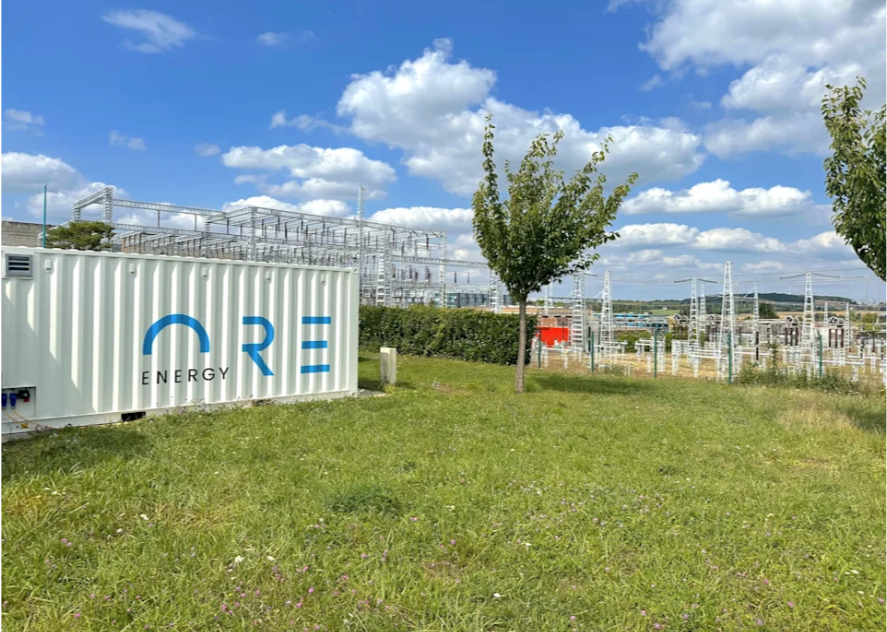
The Netherlands-based startup Ore Energy has announced the successful completion of a grid-connected technical pilot of its 100-hour iron-air long-duration energy storage (LDES) system at EDF Lab les Renardières in Écuelles, France.
Delivered under the European Union’s Storage Research Infrastructure Eco-System (StoRIES) programme, the project is described as the first of its kind in Europe. According to the company, the pilot demonstrates that iron-air LDES can deliver multi-day energy storage under real-world utility operating conditions.
As part of the EDF pilot deployment, Ore Energy installed its modular iron-air battery system to gather operational data under live grid conditions. Over several months, the system was cycled across varying load profiles and seasonal conditions, demonstrating the ability to store and discharge energy for up to approximately four days (100 hours). Testing focused on charge-discharge behavior, system responsiveness, and compatibility with standard grid management practices.
The technical data generated through the pilot contributes to StoRIES’ broader mandate of evaluating long-duration storage technologies capable of addressing multi-day renewable energy balancing needs across Europe.
“This pilot allowed us to evaluate iron-air performance under European operating profiles and real-world grid conditions,” said Aytaç Yilmaz, co-founder and CEO of Ore Energy. “The data generated through StoRIES provides valuable insight into how multi-day storage behaves in utility environments, helping us refine the technology and better understand its role alongside other storage solutions.”
The EDF pilot was deployed over a relatively short timeframe, running from August 1 to November 30, 2025. While the system size was not disclosed, Ore Energy confirmed it was in the MWh-range. The project was not intended to represent a full-scale commercial installation; rather, by validating the system design and underlying chemistry in a real utility setting, the pilot demonstrated the technical feasibility of scaling the technology to larger deployments.
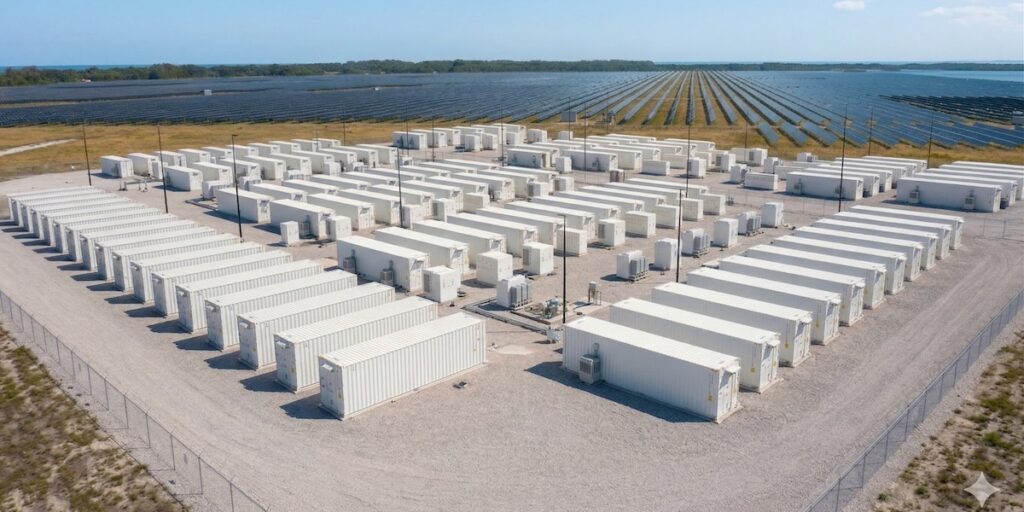
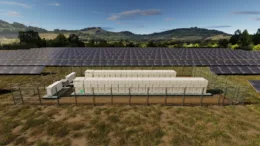
The system uses a modular architecture, assembling iron-air cells into electrically connected strings housed within a standard 40-foot (12-meter) container. The container integrates DC modules, power electronics, a battery management system, and auxiliary equipment, enabling plug-and-play operation in a utility environment.
The pilot evaluated real-world performance across several criteria, including performance stability over repeated charge-discharge cycles, system-level energy efficiency, reliability and recovery from interruptions, adherence to dispatch setpoints and ramp rates, and sensitivity to environmental conditions such as temperature, humidity, and renewable intermittency. Performance consistency was also assessed across deep-cycling, accelerated-cycling, and wind co-location simulation profiles.
Ore Energy reported that the system met or exceeded expectations across these metrics, completing several thousand hours of combined charging and discharging during the pilot period.
How it works
Ore Energy’s iron-air system uses iron, water, and air to drive a reversible oxidation process. During charging, surplus renewable electricity converts iron oxide back into metallic iron, storing energy in a stable solid form for up to four days. During discharge, the iron re-oxidizes when exposed to air and water, releasing electricity as it “rusts” again.
The technology relies exclusively on safe, abundant materials, avoiding rare earths or critical minerals and enabling a fully European supply chain from manufacturing through end-of-life. Ore Energy’s commercial systems use modular 40-foot containers, each capable of delivering multiple megawatt-hours of multi-day energy storage.
The EDF pilot follows Ore Energy’s earlier grid-connected installation in Delft, the Netherlands, which demonstrated the integration of iron-air storage into existing European distribution networks. That project, also supported by the EU’s Horizon 2020 programme through the StoRIES Transnational Access initiative, was announced as the first fully operational, grid-connected iron-air long-duration storage system in the world and the first of its kind built in the European Union.
Founded in 2023 as a spin-out from Delft University of Technology (TU Delft), Ore Energy has raised more than €25 million in funding and plans to scale production to the gigawatt-hour level by 2030.
More about
Written by

Popular Posts