Big battery capacity jumps globally 12-fold in four years: IEA

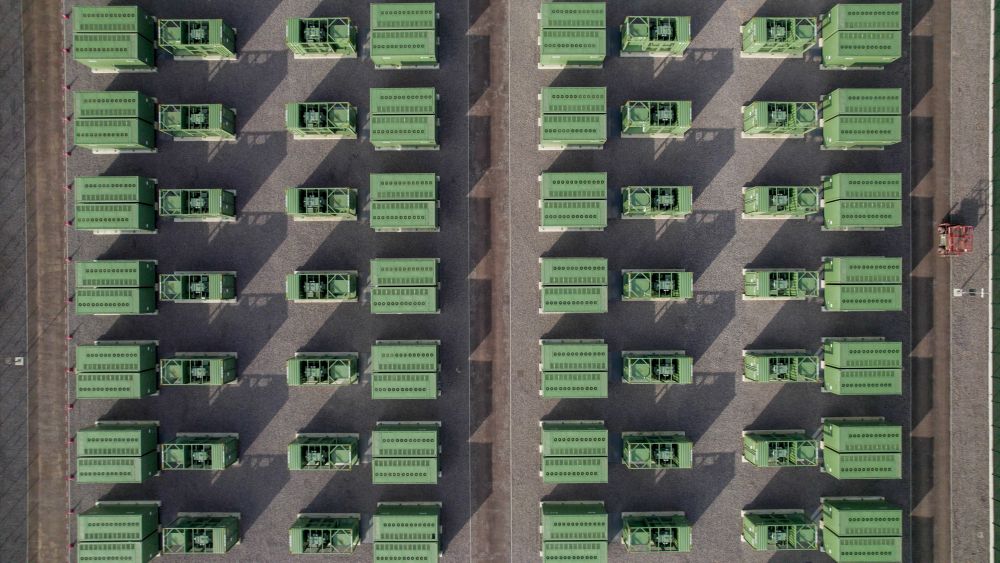
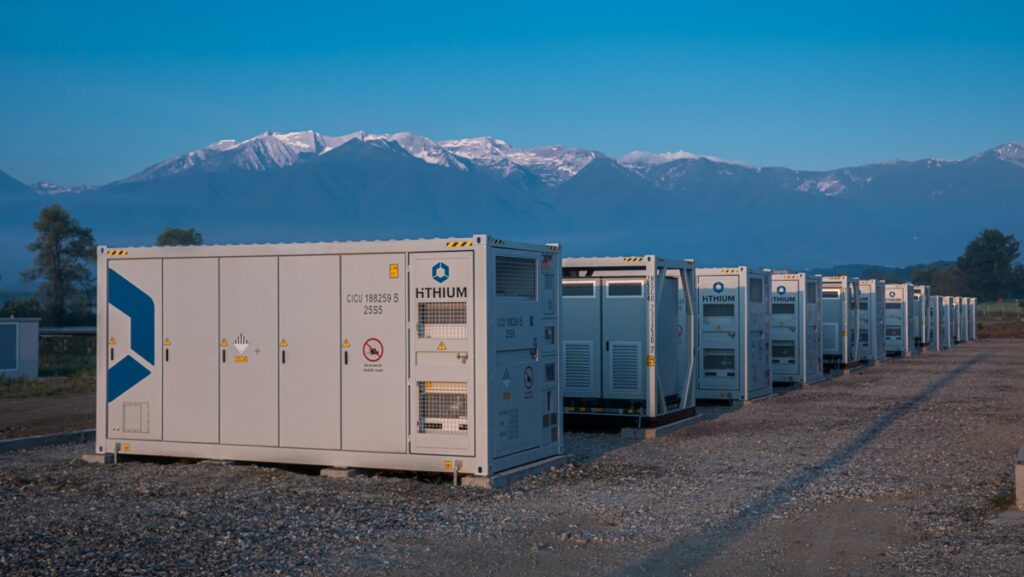
The power capacity of utility-scale batteries increased by more than 12 times between 2020 and 2024, according to the Paris-headquartered International Energy Agency (IEA) Electricity 2026 report.
From a clear rise in 2019 when recorded capacity was below 10 GW, within two years capacity had almost doubled, by 2023 trebled, and in 2024, exceeded 120 GW.
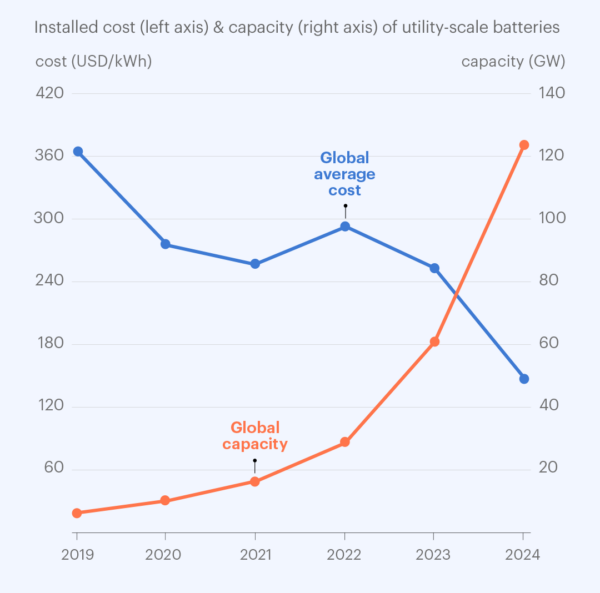
At the same time, the global average cost of batteries was also falling, from $511.2 (USD 360) / kWh in 2019, to just below $213 / kWh in 2024, an overall drop of some 58%.
The IEA says batteries with higher storage durations are seeing the most rapid cost declines, including in the National Electricity Market (NEM), where 95% of capacity post-2024 is designed for 2 hours or more, and increasing to an average duration from 1.5 hours in 2024, to 2.5 hours in 2027.
“In China, the average duration of cumulative new-type energy storage installations increased from about 2.1 hours in 2021, to around 2.6 hours in 2025,” the report says.
“California stands out for its concentration of battery storage with a 4-hour duration, in part due to Resource Adequacy rules, that assign capacity value based on sustained output over this period.”
South Australia
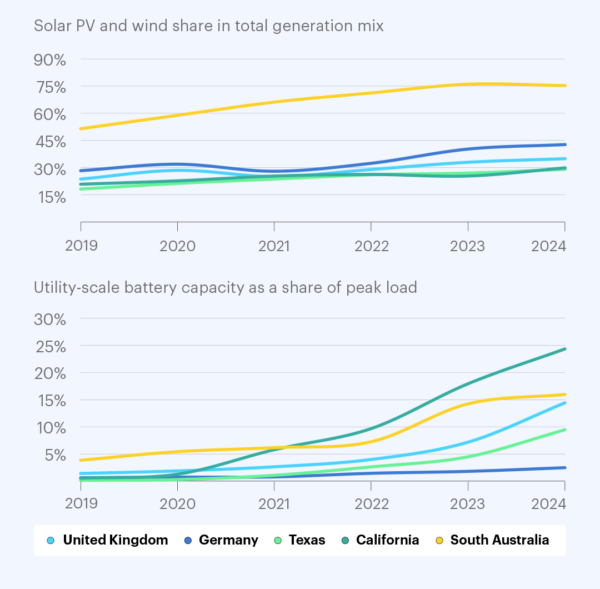
The Electricity 2026 report says the strong growth in BESS is especially notable in regions with rapidly rising shares of solar and wind in electricity generation.
“Markets such as California, Germany, South Australia (SA), Texas and the United Kingdom have all seen robust deployment of utility‑scale battery storage in recent years. In these places, batteries are increasingly available to meet demand when it peaks.”
The report notes, SA’s solar and wind share in the total generation mix far exceeds the latter four states but is bested by California’s capacity as a share of peak load from 2021, when both were at 6%, forward to 2024, when SA was 16% and California well ahead at 25%.
“In 2024, utility-scale battery storage additions reached 63 GW, marking another record year and bringing total installed capacity to 124 GW,” the report says.
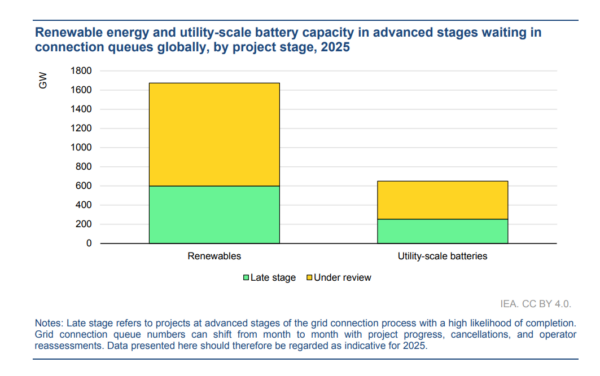
The IEA says as battery costs continue to fall a large pipeline of announced projects is set to meet a global goal of tripling renewable energy capacity by 2030, with global energy storage capacity needing to increase again sixfold to 1,500 GW by 2030.
Ancillary service markets
The report says, as battery penetration expands, ancillary service markets can become increasingly competitive.
“This reduces revenues and narrowing profit margins for new battery projects. Prices for fast-frequency services, which rose sharply when new products were first introduced and supply was limited, have declined as battery capacity has increased,” the report says.
“For example, for the Electric Reliability Council of Texas (ERCOT) the total cost of ancillary services per MWh fell by 74% in 2024. In Australia’s NEM, total Frequency Control Ancillary Services (FCAS) costs were $13 million in Q1 2025, a 55% decline compared with the same quarter the previous year, driven by lower FCAS prices.
Challenges ahead
Multi-year delays in securing grid connection and permissions remain universal challenges, the report says, along with uncertain or volatile revenue streams and access to affordable financing.
“At the same time, much of the world’s battery supply chains are concentrated in China. Such high geographic concentration creates considerable risks in terms of supply security, given the growing role batteries play across energy systems and the wider economy, calling for greater efforts to diversify supply chains and to boost innovation,” the IEA Electricity 2026 report says.
From pv magazine Australia.
Written by





Popular Posts