Brazil’s energy storage regulation delayed again

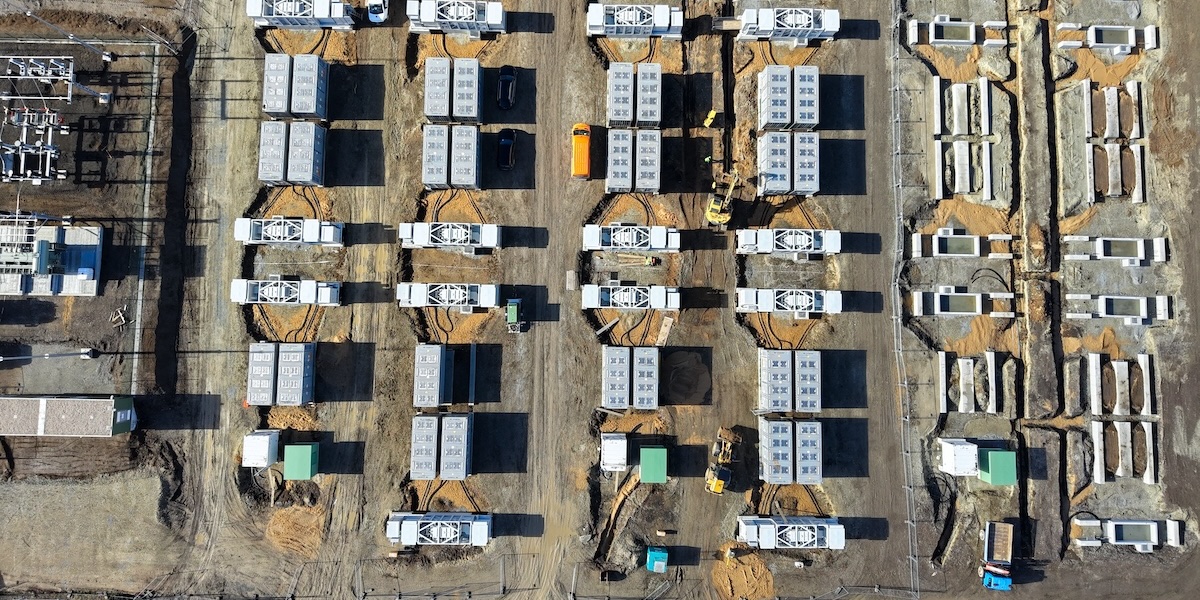
Brazil’s electricity regulator Agência Nacional de Energia Elétrica (Aneel or National Electric Energy Agency) has again postponed approval of a long-awaited regulatory framework for energy storage systems, following a request for further review during its 7 April board meeting.
Director Fernando Mosna presented his formal opinion after previously requesting additional time to assess the case and consult the federal legal advisory body attached to the regulator. However, director Willamy Frota subsequently requested his own review of the proceedings, citing the need to examine legal implications linked to recent legislation and its interaction with future storage rules. Under regulatory procedures, this allows up to 60 days to submit a revised opinion.
Industry response has been critical. The Brazilian Association of Energy Storage Solutions (ABSAE) said it is “deeply concerned” by the renewed delay, noting that storage regulation has been under discussion since 2019 and formalized through a draft proposal in public consultation in 2023. The regulator has also indicated it may reopen the consultation process.
ABSAE executive director Fabio Lima said there is no technical justification for further delays, warning that reopening consultation at this stage would create “irreparable damage” to the power sector.
Tariff treatment and grid access
Mosna’s opinion addresses several contested issues. On network tariffs, he proposes removing so-called “double charging” by applying transmission and distribution network charges only to energy injected into the grid during discharge, and not to electricity consumed during battery charging. This approach would apply to both standalone storage systems and those co-located with independent power producers.
For storage systems paired with self-consumption assets, however, any energy drawn from the grid and later used to serve on-site load would remain subject to consumption-side network charges.
The opinion also supports allowing generators to reduce contracted grid capacity by up to 30% when integrating storage, with immediate implementation and no additional charges, subject to existing notification rules.
In addition, the proposed regulatory review period would be shortened to three years, from a previously suggested six.
Investment uncertainty
The latest delay prolongs uncertainty for a technology increasingly viewed as necessary to address structural issues in the power system. Industry stakeholders argue that without a defined regulatory framework, storage investment remains largely constrained to pilot or hybrid projects.
ABSAE said storage is critical to managing renewable curtailment, system inflexibility, and peak capacity risks, as well as limiting rising system costs. Without regulatory clarity, however, deployment is unlikely to scale beyond its current experimental phase.
From pv magazine Brazil.
Written by
Comments



Popular Posts