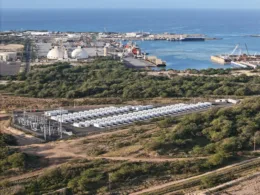
Indonesia announces bold 320 GWh distributed battery storage plan


The Indonesian government has revealed a new initiative aiming to deploy 100 GW of solar. The initiative is an official mandate from President Prabowo Subianto, referred to as the ‘100 GW Solar Power Plant Plan for Village Cooperatives’.
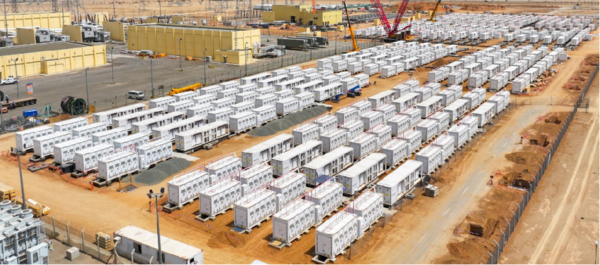
The distributed solar for energy self-sufficiency program encompasses 80 GW of PV that will be deployed as 1 MW solar arrays with 4 MWh of accompanying battery energy storage systems (BESS) totaling 320 GWh. These solar-plus-storage mini grids are set to be installed in 80,000 villages across Indonesia and will be managed and operated by village cooperative Merah Putih. A target of 10,000 becoming operational by August 2025 has been set.
The initiative also includes plans for 20 GW of centralized solar power plants, featuring both on-grid and off-grid installations. It is envisaged the project will support household energy demand and promote productive economic activities in rural areas.
Fabby Tumiwa, Chief Executive Officer of the Jakarta-based Institute for Essential Services Reform (IESR), told pv magazine that solar-plus-BESS generates cheaper electricity than the diesel power plants that power villages and remote islands in Indonesia. “The estimated levelized cost of electricity (LCOE) for this system is about $0.12 to $0.15/kWh over the next 25 years, compared to $0.20 to $0.40/kWh for a diesel generator,” Tumiwa explained.
“If implemented effectively, this project will become the largest rural electrification initiative and distributed renewable energy generation program in Southeast Asia, addressing the challenges of providing quality, equitable, and affordable energy for all Indonesians,” Tumiwa added.
Tumiwa also said that building 100 GW of solar in five years is going to be “very challenging”. He told pv magazine the institute has several recommendations for supporting the project, including developing skilled workers for solar installations by collaborating with universities and vocational schools in each province, offering training for operations and maintenance and bulk procurement activities, and providing blended finance to fund the program.
The initiative is still under development, with Indonesia’s Ministry of Energy and Mineral Resources, Coordinating Ministry of Economic Affairs and Coordinating Ministry of Food responsible for its preparation.
IESR has estimated Indonesia has a potential solar energy capacity ranging from 3,300 GW to 20,000 GW. The country’s National Energy Policy 2025-2060 targets up to 108.7 GW of solar by 2060.
Written by






Popular Posts