California home batteries replacing gas plants, saving hundreds of millions of dollars

Battery manufacturing has scaled into terawatt-hour annual output, a breathtaking pace that could soon support multi-day backup of electricity systems. For now, though, US installations fall far short of what would be required for grid-scale backup, and 80% to 90% of batteries are tied up in vehicles or homes and rarely connected to the grid.
That imbalance is beginning to shift. The Connected Solutions, program in the northeast US, already links more than 70,000 residential and commercial batteries while China is weighing a nearly 1 TWh vehicle-to-grid network. If the United States tapped its 300 million passenger vehicles, averaging 100 kWh each, the result would be about 30 TWh of mobile storage. With US annual electricity use at roughly 4.3 PWh, that’s almost three days of backup power parked in driveways and parking lots.
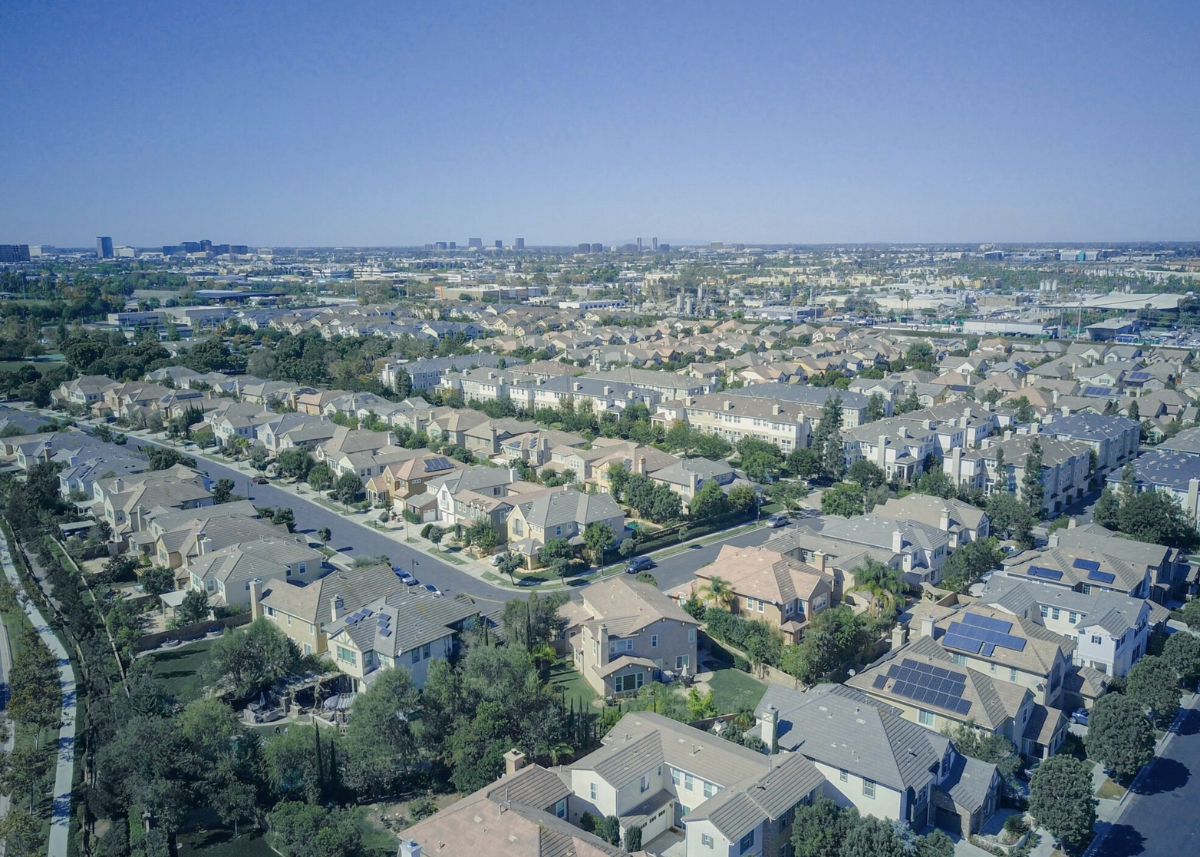
California’s residential batteries are projected to reach nearly 4 GW of power capacity by the mid-2030s. Since residential batteries average about 2.5 hours in duration, that translates to roughly 10 GWh of stored energy, a scale comparable to multiple gas plants. State regulators have taken notice.
The Demand-side Grid Support (DSGS) program, launched in 2022, pays households to share part of their behind-the-meter storage during high-price hours and emergencies. According to the Brattle Group’s new analysis, “The Demand Side Grid Support Program: An Assessment of Scale and Value,” DSGS has already enrolled 700 MW of battery capacity, comparable to a large gas plant, and could nearly double, to 1.3 GW by 2028.
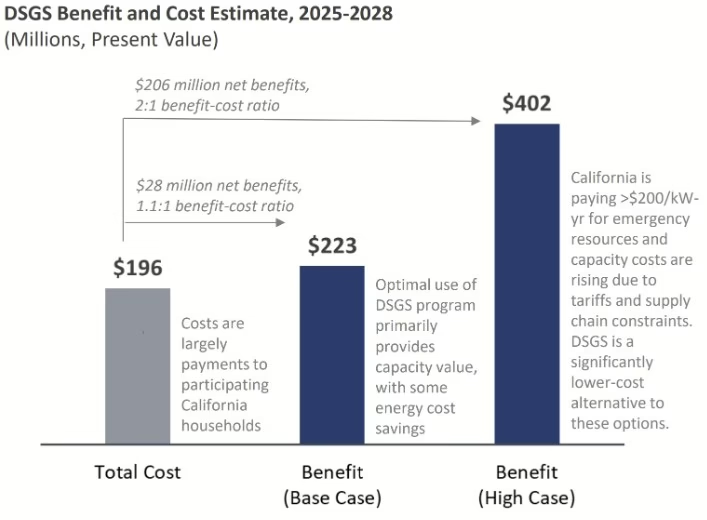
Brattle’s modeling shows that between 2025 and 2028 the program will cost about $196 million but deliver $223 million to $402 million in benefits, producing net savings of up to $206 million. The benefits come from capacity and energy supplied during the 35 highest-priced “energy events” on California’s grid – hours that would otherwise be met by expensive, high-emission gas peaker plants.
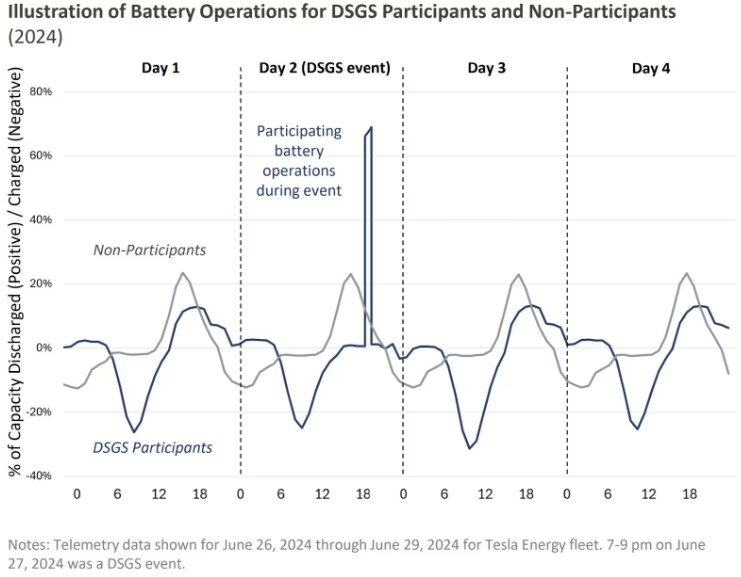
One such event occurred on June 27, 2024, when a peak grid emergency triggered the Tesla Energy distributed battery fleet. Output jumped from zero to nearly 70% of enrolled capacity in just two hours, highlighting the responsiveness of residential batteries.
Beginning in 2025, defined DSGS events will be triggered when the California Independent System Operator day-ahead energy price exceeds $200/MWh, or during systemwide emergencies. Households that participate earn annual capacity payments of $62.10 to $82.80 per kilowatt, based on actual capacity delivered to the grid. Roughly 90% of total program costs are these payments to participants, with the remainder covering administration.
In total, Brattle estimates that $178 million in homeowner payments will offset $220 million to $399 million that would otherwise go to gas plant operators.
On July 29, 2025, California conducted its largest virtual power plant test – possibly the largest in the world. More than 100,000 distributed batteries sustained an average output of 539 MW over a two-hour period. Tesla units supplied 459 MW and other manufacturers 81 MW. Sunrun managed 68% of the fleet, Tesla Energy another 174 MW, with the rest spread across smaller aggregators.
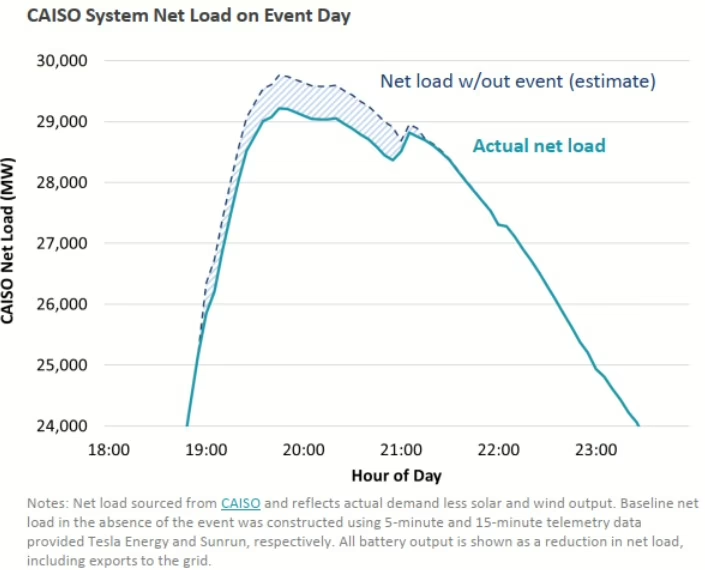
The combined output shaved about 1.9% of California’s peak demand during the event. This is capacity typically supplied by gas peaker plants which often cost several hundred dollars per megawatt-hour, and at times thousands, compared to average wholesale prices of $20/MWh to $80/MWh.
The first virtual power plants were launched by sonnen in 2018 in Germany, and later recognized in the US when the New England Independent System Operator approved Sunrun for a 5 MW facility.
From pv magazine USA.
Written by



Popular Posts