Fourth Power makes the case for thermal storage as it raises $20 million

Thermal energy storage (TES) has been proposed in many forms over the years. The logic is simple: store heat when electricity is plentiful and release it when demand rises. But commercialization of this concept shows a graveyard of companies, even when fairly simply, cheap materials and ideas.
Utilities remain cautious, investors have seen failures, and the industry has struggled to bridge the gap between promising ideas and proven, bankable technology.
Yet the sector is a long way from being an also-ran. Aspirants are progressing along the benchmark or the ladder of technology readiness, moving from research phases and development to pilot-scale demonstrations, and to the establishment of dedicated manufacturing facilities, such as from Antora Energy and RayGen, and the deployment of commercial-scale projects, with example companies including Rondo Energy and Kyoto Group.
The broad recognition is that longer-duration storage will be required to support renewables-heavy grids. Lithium-ion dominates the short-duration space, and while scaling can be possible, it has limits in safety, duration, and cost. Other options, such as pumped hydro, are geographically constrained and can be both expensive and slow to build.
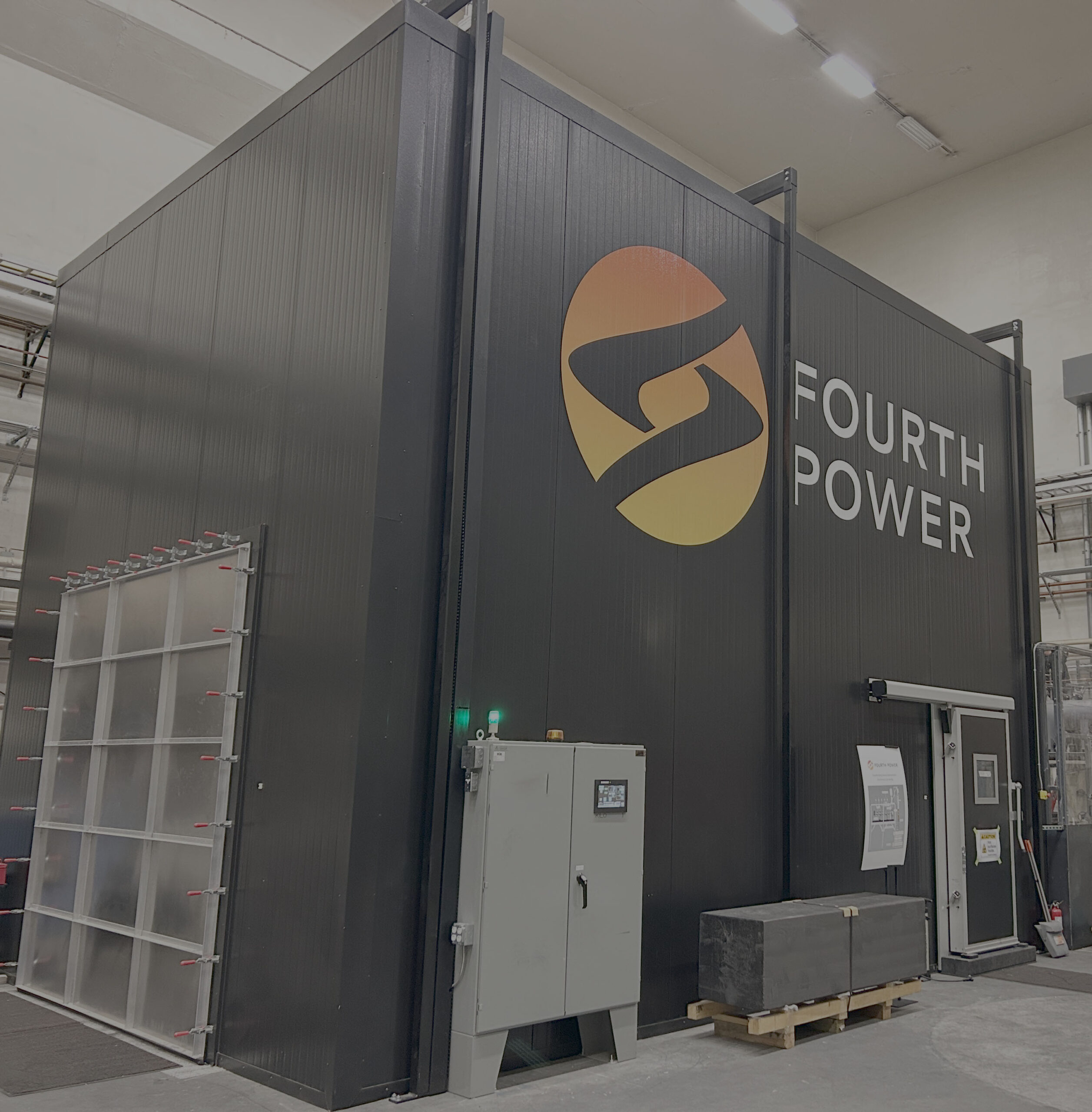
Against that backdrop, Boston-based Fourth Power is seeking to position its technology as a key player as it stores heat in carbon blocks and generates electricity when it is required, with up to 100 hours of storage in a modular design.
Fourth Power recently announced it has raised $20 million in a Series A plus round, with Munich Re Ventures leading investors, and follow-on investments from DCVC and the well-funded Breakthrough Energy Ventures. It previously raised a $19 million Series A in 2023, and the company said the funding will “support commissioning of an integrated 1 MWh-e demonstration using full-scale commercial components and is the company’s final step before customer deployments.”
The company has previously told ESS News that metrics such as effective load carrying capability (ELCC), which measures whether storage can deliver electricity at the right time, are too often missing from industry debate.
In another discussion, more focused on the general TES sector, Fourth Power chief executive Arvin Ganesan says the company is working to correct some common misunderstandings.
“The biggest misconception is that thermal storage is just about providing high-temperature heat for industrial processes. At Fourth Power, we’re doing something fundamentally different—we’re storing electricity as heat and then converting it back to electricity for the grid.”
He also points to safety, which he believes is often overlooked in conversations about storage technologies.
“People hear ‘thermal’ and assume a fire risk, but our system is actually far safer than lithium-ion batteries, because no electrochemical reaction is taking place. We operate in a completely inert environment with no risk of thermal runaway, no pressurization, and no explosion risk. If there’s ever a leak, our liquid metal tin simply solidifies as soon as it cools. Meanwhile, we’re seeing continued safety concerns with lithium-ion installations.”
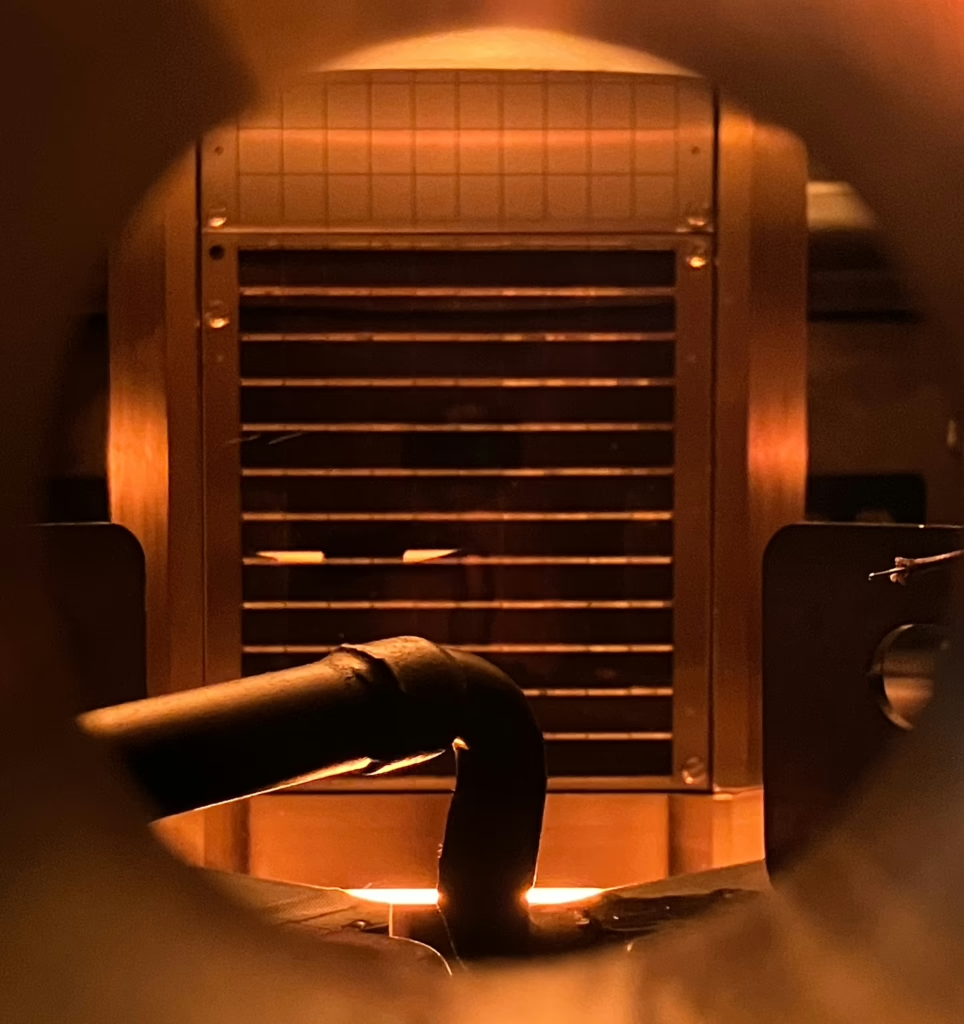
Efficiency is another sticking point. For years, round-trip efficiency has been treated as the leading measure of performance, but Ganesan argues that narrow definition misses the point.
“The obsession with round-trip efficiency as the ultimate metric will prove to be shortsighted. As our grid becomes more diverse and complex, utilities will need a portfolio of storage technologies, each optimized for different applications,” he said.
“Our system has a lower round-trip efficiency than lithium-ion. But when you’re looking at reliability, duration flexibility, safety, supply chain security, and overall system costs, round-trip efficiency becomes just one factor among many. Utilities are starting to realize they need to optimize for total cost of ownership and grid reliability, not just a single efficiency metric.”
Utilities themselves, he said, are well aware that none of the current options are perfect.
“Utilities don’t feel like there’s a perfect storage technology available today. Pumped hydro is geographically constrained and extremely expensive to build. Lithium-ion is costly, has limited duration, faces supply chain risks, and poses safety concerns.
“What they really want is technology that grows with their needs, doesn’t lock them into a single duration, and doesn’t force them to choose between overpaying now or being stuck with inadequate capacity later. They’re tired of being told to just ‘build more batteries’ when what they need is solutions that adapt to changing grid conditions. They’re waiting for that next generation of storage technology, and that’s exactly what Fourth Power delivers.”
Looking at the wider landscape, Ganesan said the difficulty is not just about proving the technology, but also about how the industry is structured.
“It’s neither technical challenges nor industry acceptance … it’s the mismatch between the speed of change and the speed of adaptation. The need for firm, reliable power is driving a fundamental shift in how we think about grid management, but our existing paradigms, market structures, and planning processes aren’t evolving as quickly as the underlying reality.
“We’re seeing utilities face capacity shortfalls, aging infrastructure, and rapidly growing demand from electrification and AI. The technical solutions exist, but the frameworks for evaluating, procuring, and deploying flexible-duration storage haven’t caught up. The gap between what the grid needs and how the industry is structured to respond to those needs is a growing concern,” said Ganesan.
Written by