Large-scale energy storage gets a boost in Germany with surprise regulation support


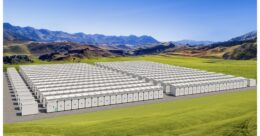
Germany policy has become easier for large-scale storage projects with new laws supporting easier planning regulations for non-urban areas. The German Parliament (Bundestag) has now approved a legal amendment that would classify battery, heat, and hydrogen storage as privileged developments in non-urban areas under Paragraph 35 of the Federal Building Code.
The change is designed to simplify zoning and accelerate deployment. Though the measure have passed a crucial legislative vote in the Bundestag, there’s still a step of consent before it can enter into force required by the second legislative chamber of Parliament, the Bundesrat.
The reform is part of an “omnibus package” amending the Energy Industry Act (EnWG) and several related statutes. The governing parliamentary groups — CDU, CSU, and SPD — introduced the provision, arguing that large battery systems depend on access to substations and high-voltage nodes that are rarely located within built-up zones.
According to the German Solar Association (BSW-Solar), the new zoning category would remove a major procedural bottleneck for utility-scale batteries. “This will significantly simplify planning approvals for battery and heat storage and provide greater legal certainty,” said Carsten Körnig, the association’s CEO. “It removes an important barrier to the rapid scale-up of storage needed for an efficient and cost-effective energy transition.”
A Bundestag statement on the vote describes the move as an explicit recognition that battery systems of at least one megawatt-hour are “by their nature” typically located outside urban areas. Granting privileged status under the BauGB is intended to give developers a clearer, faster permitting pathway.
The German Energy Storage Systems Association (BVES) welcomed the decision, saying the legal clarification would finally provide a stable framework for siting “flexibility projects” in appropriate locations. BVES CEO Urban Windelen said the amendment reflects a broader shift in understanding: flexibility and resilience requirements in the modern power system can no longer be managed with rules designed for older infrastructure. “With this revision, lawmakers are taking a clear and pragmatic step in that direction, which we, as the storage sector, strongly welcome,” he said.
Alongside the zoning change, the legislative package includes a separate amendment that ends a long-standing disadvantage for mixed-use storage — systems that can charge from both renewable generators and the grid. Until now, only storage that charged exclusively from the grid and fed all electricity back into the grid qualified for a network charge exemption. The updated rule will extend the exemption to multi-use systems, improving the business case for batteries paired with PV plants or customer-side installations. “Multi-use storage is particularly useful because it makes very efficient use of grid-connection capacity and reduces export and consumption peaks,” Körnig said.
Udo Hemmerling, Managing Director of the Federal Association of Non-Profit Land Companies (BLG), reportedly said, with a positive surprise, “For wind, biogas and ground-mounted PV plants, it is now possible to add battery storage to the plant with less planning effort and improve revenues on the electricity market.”
The law will take effect once the Bundesrat grants approval and the final text is published in the Federal Gazette (Bundesgesetzblatt).
From pv magazine Germany.
Written by




Popular Posts