At least 78 GW of large battery storage already approved in Germany

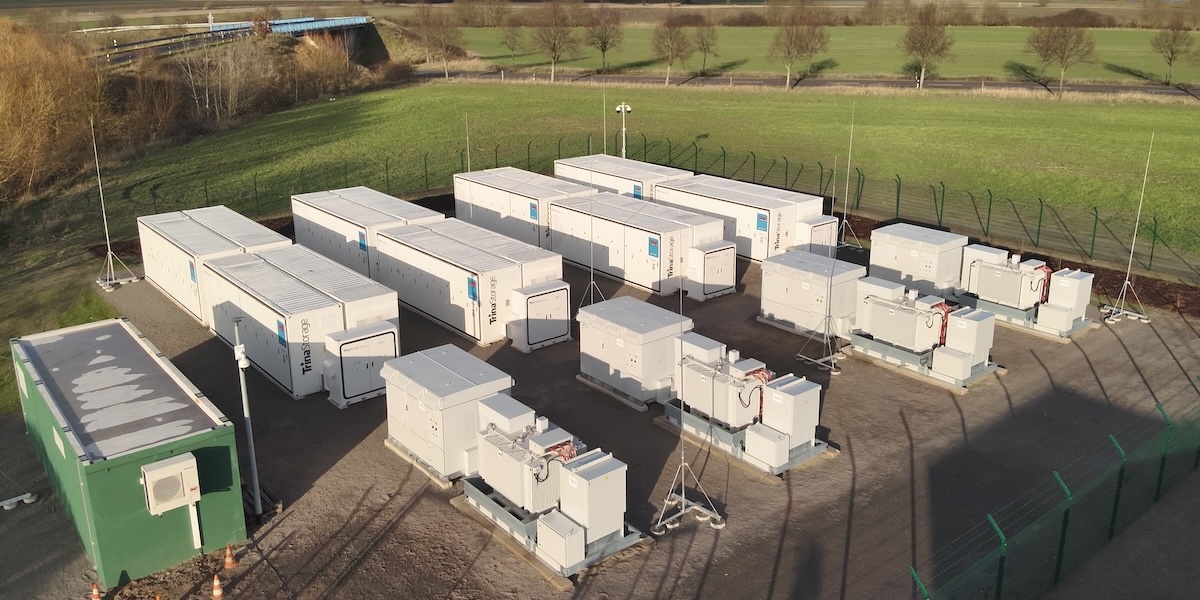
The Federal Network Agency recently published figures for the first time on approved grid connections, reporting a total of 46 GWh of storage capacity (from systems of 1 MW or more) connected to the medium-voltage network. Now, the German Association of Energy and Water Industries (BDEW) has supplemented these findings with additional data from a survey of the four transmission system operators and 17 distribution system operators.
BDEW found that there are currently pending grid connection applications for large battery storage systems (≥1 MW) totaling more than 720 GW. Grid connections for an additional 78 GW have already been approved.
“The number of grid connection requests for large-scale battery storage systems has increased so dramatically that new regulations are needed,” says Kerstin Andreae, CEO of BDEW. She emphasizes that sufficient grid access must remain available for all customer groups. “At high and medium voltage levels, grid capacity has become a scarce resource given the high demands of large consumers such as data centers, large heat pumps, EV charging infrastructure, and industry.” Germany needs storage technologies for a modern energy system, she adds, but they must be integrated coherently into the overall system.
BDEW also compares the volume of applications and commitments with the current electricity system. The more than 720 GW of pending applications correspond to more than two and a half times Germany’s installed generation capacity of 263 GW – which includes all renewable and conventional power plants. For further context, the current annual peak load on the transmission grid is around 80 GW.
A look at the scenario framework for the electricity grid development plan (NEP), prepared by the transmission system operators, further highlights the scale of oversubscription: Scenarios A and B for 2037 and 2045 forecast significantly less large-scale battery storage capacity than the 78 GW already approved today.
“In light of these enormous challenges, it is now crucial to set the political and regulatory course promptly,” Andreae says. A first step, she notes, should be a swift amendment to the Power Plant Grid Connection Ordinance (KraftNAV) to exempt large-scale battery storage systems with a nominal capacity of 100 MW or more. Federal Minister for Economic Affairs Katherina Reiche (CDU) had already hinted at such changes at an Eon event earlier this week. At a 50Hertz event on Wednesday, Arne Genz, a department head at the ministry, outlined how the amendment could be implemented quickly.
“We expressly welcome Minister Reiche’s announcement of swift action,” Andreae continues. At the same time, she calls for transparent grid connection procedures that better reflect current grid constraints than the existing first-come, first-served system. Overbuilding, flexible grid connection agreements, and reservation procedures should play a greater role in the future. According to BDEW, it is currently developing concrete proposals to support the rapid expansion of battery storage while keeping grid bottlenecks at an economically manageable level.
From pv magazine Germany
Written by