EDF wins decentralized, dual-use grid booster battery project in Germany

EDF Power Solutions has won a decentralised grid booster battery storage project in Germany, aimed at relieving grid congestion while also providing services in the wholesale and ancillary markets. Awarded under a flexibility tender run by German transmission system operator (TSO) Amprion GmbH, the project marks the French utility’s renewables arm’s first grid-scale battery deployment in the country.
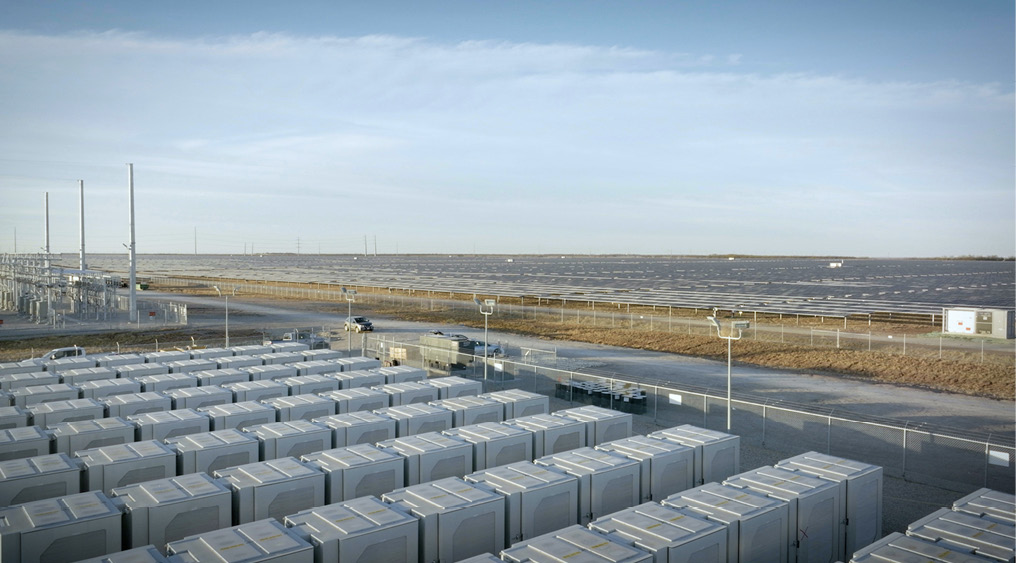
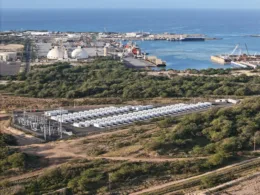
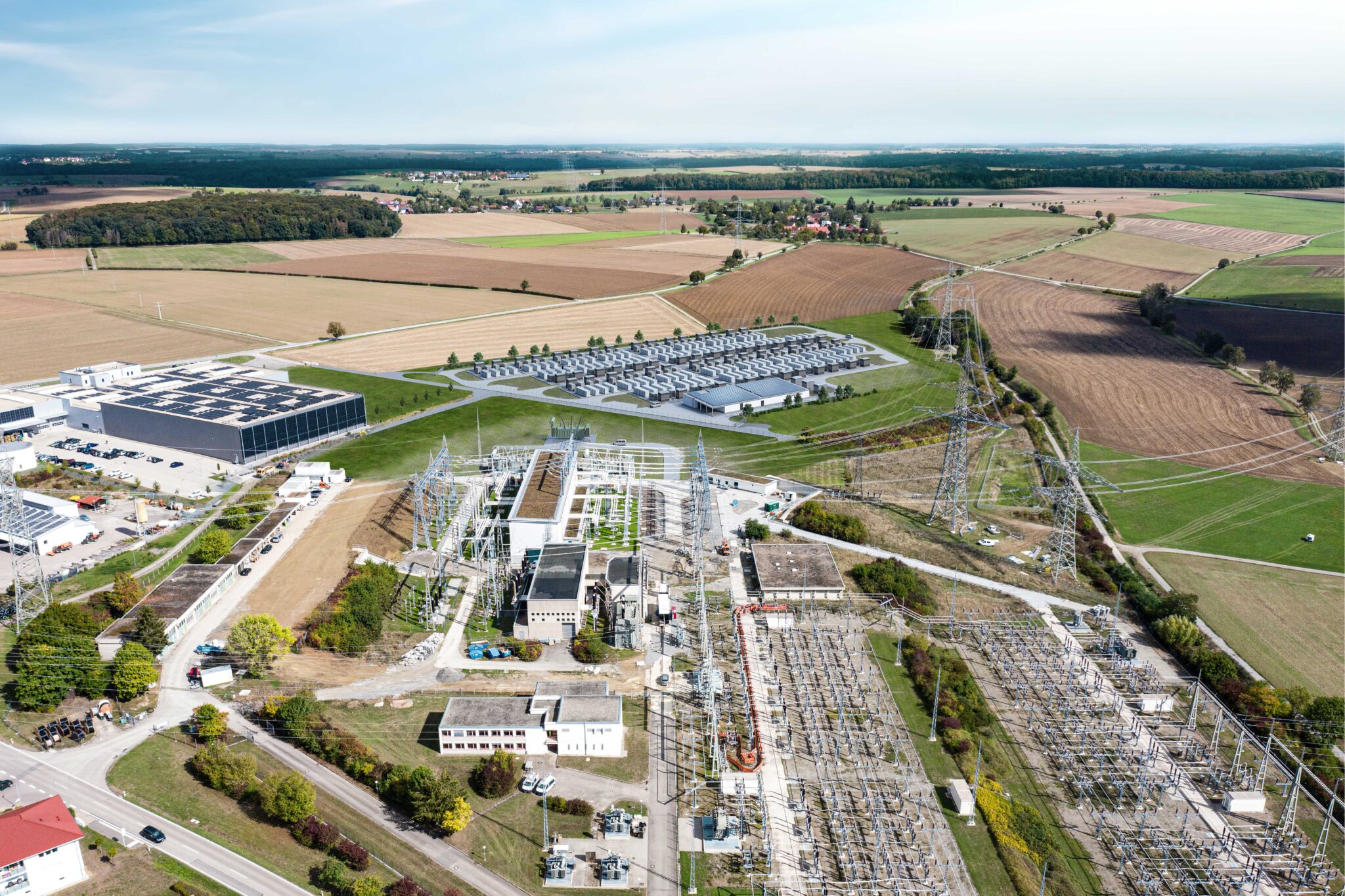
The system will have a total capacity of 250 MW and is designed to support the transfer of electricity from wind and solar parks in the north to demand centres in the south, helping to alleviate grid imbalances and congestion. Five 50-MW battery units will be installed at key grid nodes to optimise power flows, with sites selected to allow use by the distribution system operator LVN, enhancing the system’s overall economic value. The Grid Booster will be constructed near existing substations in Gersthofen, Irsingen, Memmingen, Oberottmarshausen, and Vöhringen, with all five projects connected to LVN’s regional 110-kilovolt distribution network.
With this, Amprion introduces a unique use case for such projects in Germany: when the grid booster is not needed to stabilise the transmission grid, it can be used to relieve the regional power grid.
Unlike conventional large-scale batteries, grid boosters operate by injecting and absorbing power to mimic transmission line flows. This enables them to reinforce – or in some cases substitute for – physical grid infrastructure, offering TSOs a new tool for managing the energy transition without immediately resorting to costly and time-consuming grid expansion.
Germany’s TSOs regularly rely on redispatch measures – curtailing generation in some regions while increasing it elsewhere – to avoid network overloads. These interventions cost several billion euros annually. With network expansion often taking many years, grid boosters are increasingly viewed as a way to raise the threshold at which redispatch becomes necessary.
Other German TSOs are pursuing similar projects. Last year, TransnetBW, the TSO in the German state of Baden-Württemberg, broke ground on a 250 MW grid booster near Kupferzell. In 2023, TenneT announced two 100 MW systems located in Audorf Süd in Schleswig-Holstein and Ottenhofen in Bavaria. All three projects are delivered by Fluence.
Amprion’s decentralised approach sets its project apart. “This modular concept reduces connection costs, increases the availability of the Grid Booster, and minimises landscape impacts at individual sites,” the TSO said in the tender announcement last year.
Furthermore, Amprion will operate the batteries during the winter months. During the summer months, EDF Power Solutions will be able to offer the storage capacity to the German electricity market, providing system services – an innovative arrangement in the relationship between TSOs and market participants. EDF Power Solutions will remain responsible for the operation and maintenance of the batteries throughout their lifespan in addition to detailed planning of the battery sites, securing the required permits, and overseeing the construction of the battery modules.
By allowing limited market participation alongside grid-serving use, Amprion aims to increase utilisation rates and improve the economic efficiency of the asset. Traditionally, grid boosters have been treated as fully integrated network components owned by TSOs and were therefore not permitted to stack revenues.
Amrpion decided in favour of this “double use” after a technical and economic evaluation of the bids submitted under the tender launched in December 2024. According to the TSO’s original timeline, the contract – covering the construction, management and operation of the energy storage facility – was expected to be awarded in the summer of 2025, with the project scheduled to come online in 2027. Now, Amprion confirmed that it expects the project to go into operation on January 1, 2028.
“We are delighted to have reached another important milestone in the project with the awarding of the grid booster contract. The multiple use of battery storage – in the market, in distribution, and in the transmission grid – is unique in Germany to date,” says Amprion CEO Christoph Müller. “With this project, we are gaining valuable experience for future operating concepts of battery storage systems. Furthermore, the grid booster offers economic benefits, as it contributes to cost savings in congestion management.”
While the use of battery storage systems as transmission assets is still in its fledgling stage, analysts see strong potential. S&P Global forecasts 17 GW/50 GWh of energy storage systems to be deployed globally through 2030 to enhance or defer investment into upgrading existing electricity network infrastructure.
Written by


Popular Posts