Poland allocates subsidies to 14.5 GWh of energy storage projects

The Polish government has announced the final list of energy storage projects to receive support under its PLN 4.15 billion ($1.15 billion) subsidy program.
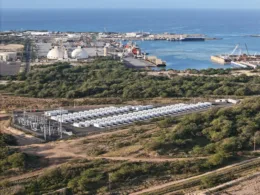
The ranking published by the National Fund for Environmental Protection and Water Management (NFOŚiGW) includes 172 energy storage facilities scheduled for construction across Poland by the end of 2028. Together, the projects are expected to deliver a total power output of approximately 3,900 MW and an energy storage capacity of around 14,500 MWh – equivalent to the average daily electricity consumption of roughly 3 million households.
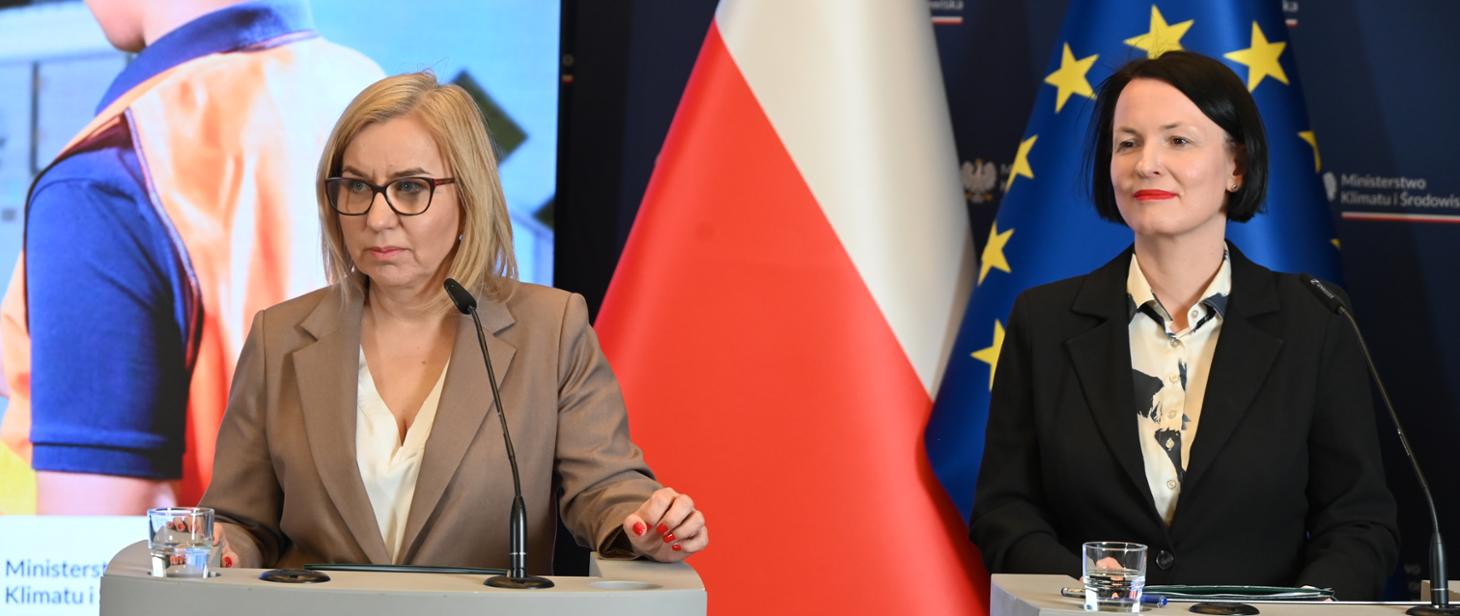
On December 16, the Polish Ministry of Climate and Environment held a briefing on support measures for large-scale energy storage facilities. During the event, Minister of Climate and Environment Paulina Hennig-Kloska highlighted the role of storage in stabilizing energy prices.
“Our energy storage activities are directly correlated with energy prices. Thanks to storage, we can extend the use of the cheapest renewable energy sources to periods when energy prices rise, such as in the evening,” she said.
Earlier in December, NFOŚiGW said that it had shortlisted 183 energy storage projects for grants and loans. The call for proposals attracted strong interest, underscoring robust market demand for energy storage support among businesses outside the financial sector. The total value of submitted projects exceeded PLN 70 billion, while requested funding for facilities with a combined power output of more than 20 GW and storage capacity of 122 GWh reached nearly PLN 28 billion – almost seven times the program’s available budget.
“The reality exceeded our wildest expectations. The call for proposals for the Electricity Storage and Related Infrastructure to Improve the Stability of the Polish Power Grid program generated enormous interest,” said Dorota Zawadzka-Stępniak, President of the Management Board of NFOŚiGW. “This demonstrates the enormous need for energy storage construction in Poland.”
With the announcement of the final project list, funding under the program –launched in April – has now been fully allocated.
Eligible investments include energy storage systems with a minimum power output of 2 MW and a minimum capacity of 4 MWh. Mandatory investment components cover the installation of battery containers, inverters, transformers, battery module assembly, support systems, as well as testing and commissioning of storage facilities. Subsidies may also optionally cover grid connections, related infrastructure, and the configuration or adaptation of warehouses.
Of the total funding envelope, PLN 3.735 billion has been allocated to grants, while PLN 415 million is earmarked for loans. Grants may cover up to 45% of total investment costs, rising to 55% for medium-sized enterprises and 65% for small businesses. Loans may cover up to 100% of eligible costs.
Investment aid provided under the program may be combined with capacity market support, as explicitly stated in the program’s priorities. Under current regulations, however, any investment aid granted for the same capacity market unit results in a corresponding reduction in capacity market remuneration, regardless of the contract date or tender outcome.
This principle – designed to prevent excessive public aid in line with national and EU regulations – has been in place since the introduction of the capacity market and is rooted in Article 62 of the Capacity Market Act.
Written by
Comments





Popular Posts