Hithium pushes into long-duration storage and AI data centres with 1,300Ah cell, 6.9 MW/55.2 MWh system, and lithium-sodium hybrid

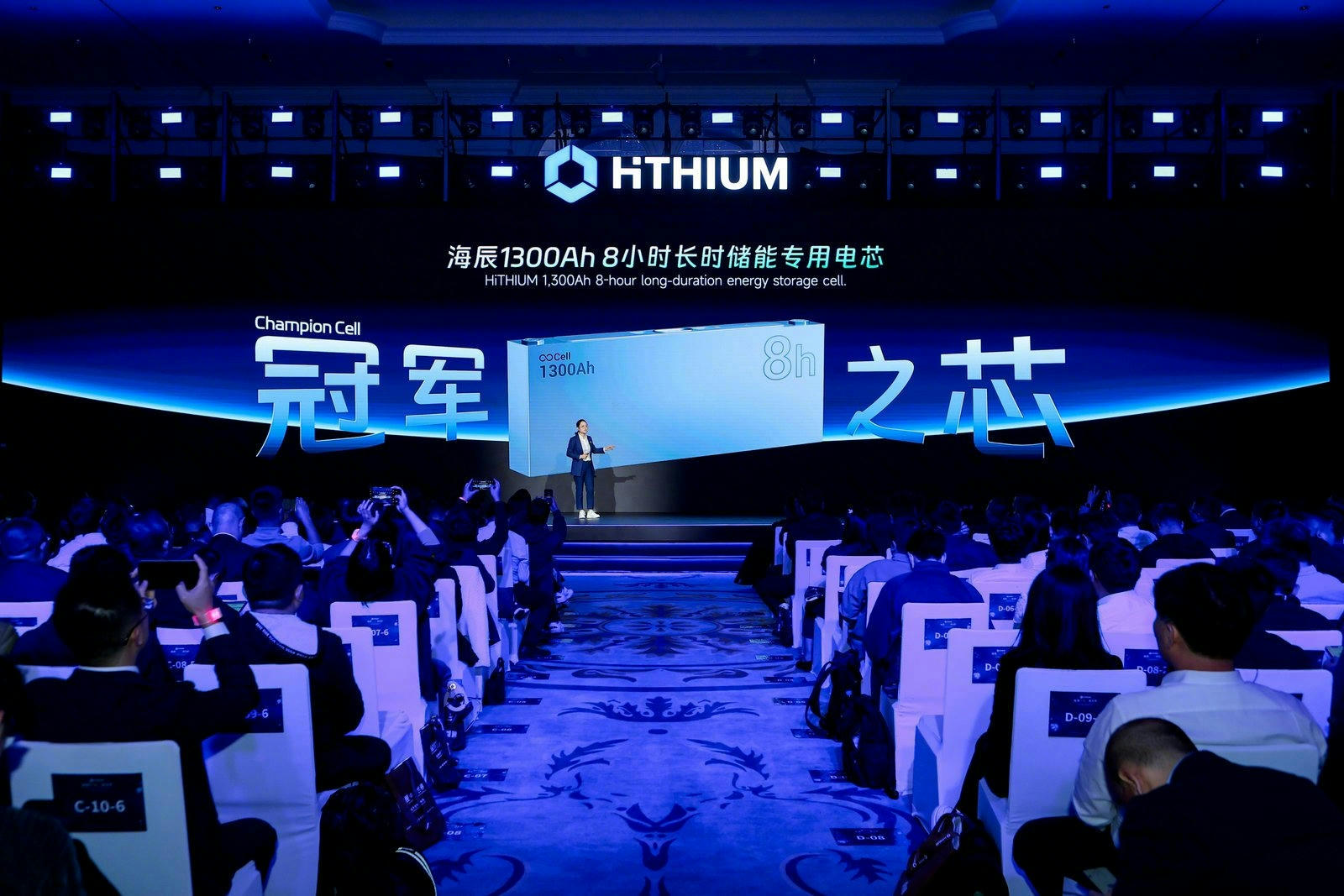
At its annual Ecosystem Day on December 12, Hithium Energy Storage signaled a strategic improvement beyond conventional four-hour batteries, positioning long-duration storage as both a grid asset and a foundation for energy-intensive artificial-intelligence infrastructure.
The company introduced three interlinked products with a clear hierarchy: a purpose-built eight-hour battery cell, a native eight-hour storage system designed around that cell, and a lithium-sodium hybrid solution aimed at AI data centres. Together, Hithium framed the portfolio as a response to two converging pressures on power systems: the intermittency of renewable generation and the rapidly rising, highly volatile electricity demand of digital infrastructure.
From cell to system: a native eight-hour architecture
At the base of the stack is the ∞Cell 1300Ah 8h, a battery cell developed specifically for eight-hour applications rather than adapted from shorter-duration designs. With a single-cell capacity of 1,300Ah, more than four times that of mainstream cells, Hithium said the design reduces system component counts by over 30%, lowering upfront capital costs for long-duration projects.
The cell’s defining feature is what the company calls “ultra-thick electrode technology”, developed to overcome three bottlenecks associated with large-format cells: electrode cracking, slow ion and electron transport, and electrolyte wetting. By substantially increasing electrode thickness, Hithium claims to cut the cost of current-carrying components such as foils by more than 50% compared with two-hour cells, while maintaining safety and durability.
The company said the cell is designed for 25 years or more of service life, supported by a multi-layer safety architecture that prevents thermal runaway from propagating between cells.
Built around this cell is the ∞Power8 6.9 MW/55.2 MWh system, described as the world’s first “native” eight-hour lithium battery solution. Each standardised unit delivers 6.9MW of power and 55.2 MWh of energy, using a highly integrated configuration combining one medium-voltage module with eight battery modules.
Hithium said structural simplification and redesigned lifting and cabling arrangements increase on-site deployment efficiency by 18% and reduce land use by 23% compared with its previous generation. Relative to mainstream six-megawatt-hour systems, overall integration is more than 10% higher, with assembly efficiency improved by over 30%.
Operationally, the system relies on intelligent control and end-to-end active balancing. The company said auxiliary power consumption is cut by more than 30%, temperature-control accuracy improves by 50%, and response speed rises by 20%. Balancing efficiency exceeds 97%, which Hithium estimates could save more than $1mn over the life of a 1GWh long-duration project.
Safety has been a central theme of the design. The system incorporates mass-produced high-strength steel banding, a dual-vent rapid pressure-relief structure, and next-generation thermal insulation capable of withstanding 800°C and 300kPa without failure. Hithium said it is the first battery manufacturer to pass an “open-door combustion” test, demonstrating extreme heat resistance. Commercial deliveries of ∞Power8 are scheduled for the fourth quarter of 2026.
Extending to AI data centres: lithium meets sodium
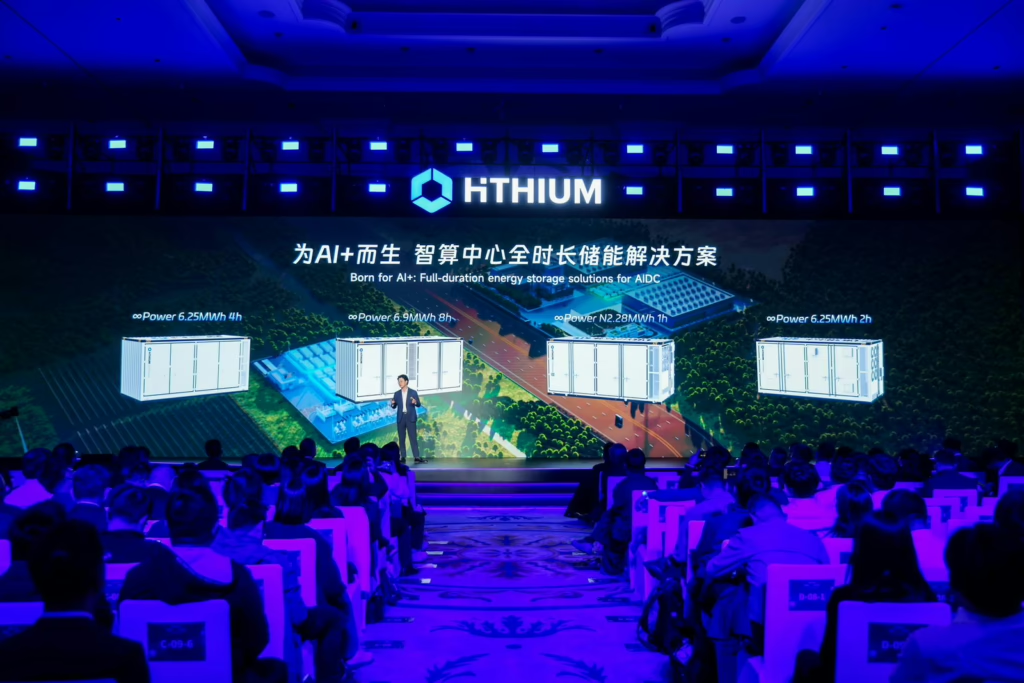
The most application-specific layer of the launch was the ∞Power Solutions for AI Data Centers, which combines lithium-ion and sodium-ion technologies to cover both long-duration energy supply and ultra-fast power response.
The solution integrates multiple subsystems, including four-hour and eight-hour lithium storage units alongside high-rate sodium-ion systems rated at 1–2 hours. Hithium positions the architecture as a “full-duration” energy backbone, spanning generation, grid interaction and load-side stability.
The rationale is tied to the electrical characteristics of AI data centres, which can experience power swings of up to 70% within tens of milliseconds. According to Hithium, sodium-ion batteries provide millisecond-level response to absorb these shocks, acting as a first line of defense for the grid and on-site equipment, while lithium systems deliver sustained backup power.
The company said its in-house sodium-ion cells offer more than 20,000 cycles and a service life exceeding 25 years, raising overall system efficiency by more than 3%. In backup applications of up to four hours, Hithium estimates the lithium-based system reduces costs by more than 20% compared with diesel generators, enabling what it describes as “silent, zero-carbon backup power”.
On the supply side, pairing eight-hour storage with renewables could shorten power-infrastructure build-out for data centres from five to ten years to one to two years, helping address what the industry increasingly calls the problem of “computing waiting for power”.
Taken together, the three launches underline Hithium’s ambition to anchor lithium batteries in long-duration storage while extending their relevance into the fast-growing AI data center market. By layering cell chemistry, system design and application-specific architectures, the company is attempting to move storage from a supporting role to a core enabler of both renewable grids and AI-driven electricity demand.
Written by


Popular Posts