HyperStrong connects 7.4 GWh of energy storage projects in Inner Mongolia

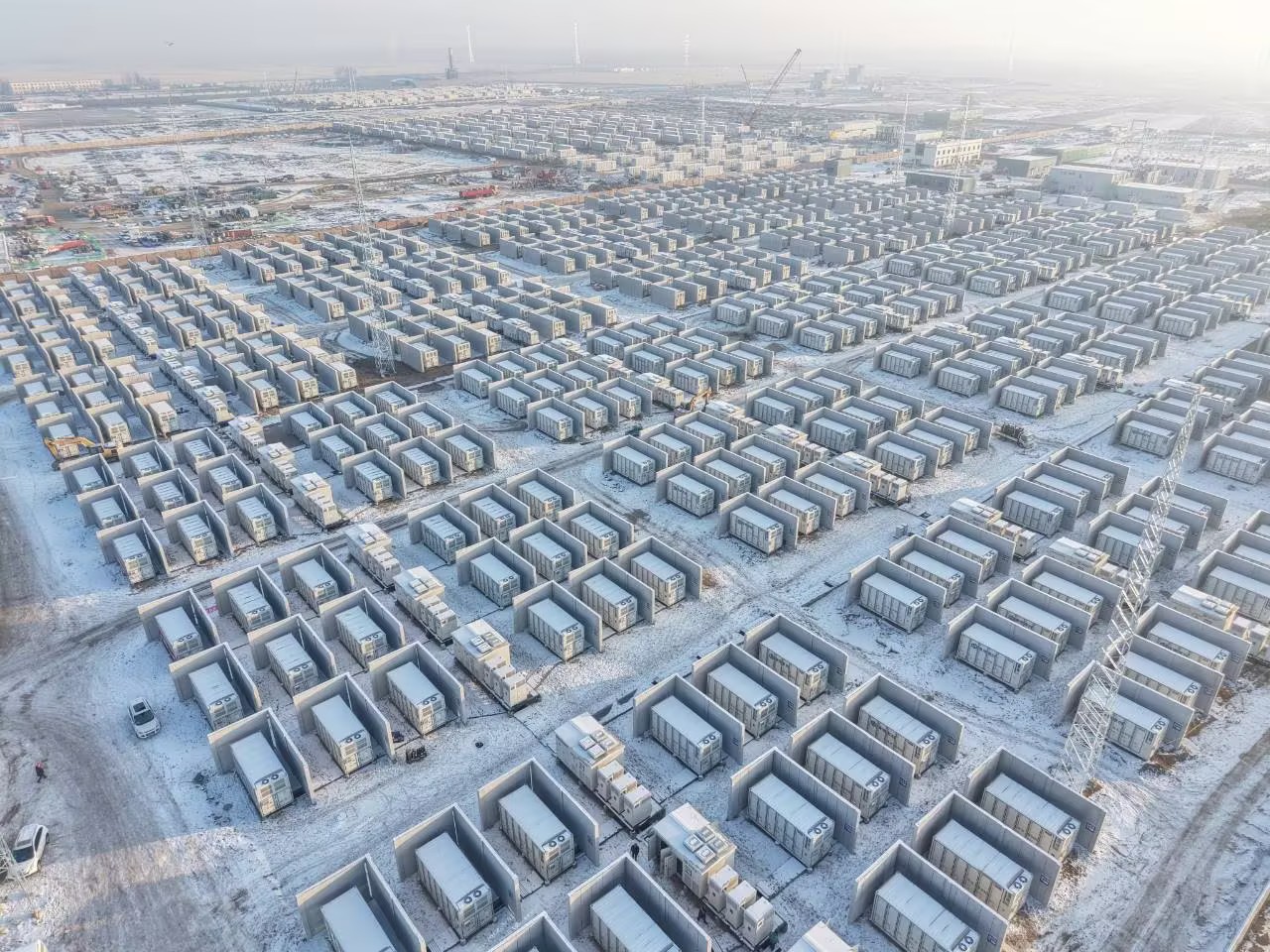
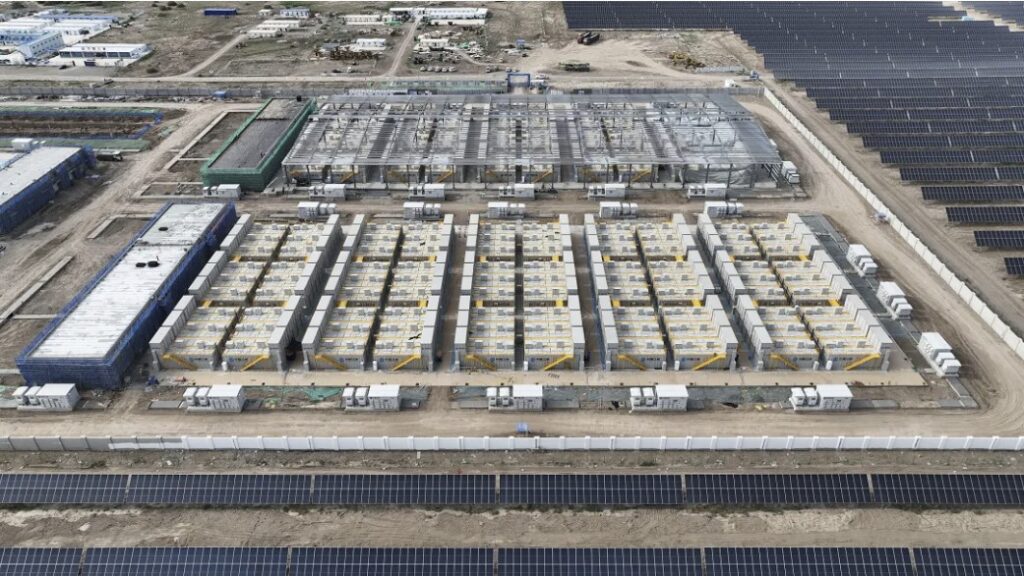
HyperStrong has announced the successful grid connection of three major standalone energy storage projects with a combined capacity of 7.4 GWh located in Baotou and Ordos, Inner Mongolia. These projects include 500 MW/2,000 MWh Ordos Gushanliang, 500 MW/3,000 MWh Baotou Weijun, and the 400 MW/2,400 MWh Baotou Boerhantu developments.
From groundbreaking to grid connection, all three projects were completed in just over five months, with the shortest construction cycle achieved within industry-leading three months, the Chinese integrator said. This achievement demonstrates the feasibility of deploying ultra-large-scale GWh systems even in extreme climates such as the one in Inner Mongolia characterized by low temperatures, high winds and sandstorms.
HyperStong’s 2 GWh Ordos Gushanliang Project is part of a landmark utility-scale battery energy storage initiative designed to support renewable energy integration and strengthen grid stability in the region. With a total capacity of up to 3 GW / 12.8 GWh across multiple technologies- including lithium-ion, molten-salt, and vanadium-flow batteries – the project spans approximately 73 hectares and represents an investment of around ¥11.2 billion ($1.6 billion).
The Baotou Weijun Project is another multi-project development in Inner Mongolia. The cluster features five projects for a total of 1.5 GW /9 GWh, including HyperStrong’s 3 GWh single-site development as its largest part. In a separate announcement this week, Gotion High-Tech said it connected to the grid another portion of the Baotou Weijun Project – a 1.2 GWh development. This project utilizes 120 sets of Gotion’s 10 MWh lithium iron phosphate battery storage units.
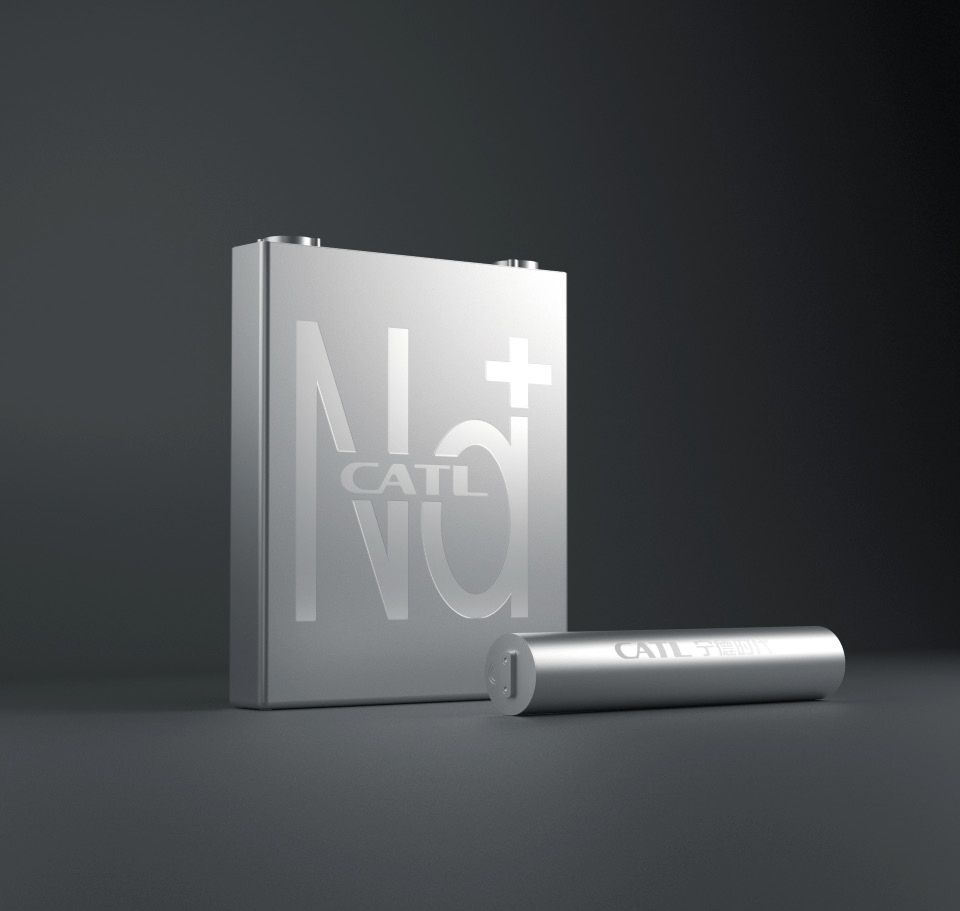
Finally, the Baotou Boerhantu Project marks the large-scale deployment of HyperStrong’s next-generation 7 MWh energy storage system, powered by CATL’s 587Ah high-capacity battery cells. CATL unveiled its next-generation 587 Ah cell in April 2025 and brought the product into large-scale commercialization, with shipments projected to have reached 3 GWh by the year’s end.
The commissioning of these major projects significantly enhances the grid’s capability to integrate wind and solar generation in Inner Mongolia while mitigating peak–valley load fluctuations. Beyond improving grid stability, these projects are expected to provide a scalable blueprint for ultra-large energy storage deployments in China and beyond.
Written by
Comments



Popular Posts