German TSOs introduce maturity-based procedure for grid-scale battery storage connections


Shortly before Christmas, the German government removed battery energy storage systems from the Power Plant Grid Connection Ordinance (KraftNAV), which governs the grid connection procedure for plants with a capacity of 100 MW or more. No alternative procedure was specified. However, the transmission system operators (TSOs) have already agreed – at least internally – on a new approach. They propose that grid connections for large battery storage systems be allocated in the future using a so-called “maturity assessment procedure”. Under this approach, the postmark date of receipt of a grid connection request would no longer be decisive; instead, applications would be assessed on the basis of verifiable criteria reflecting project progress.
The TSOs – 50Hertz, Amprion, TenneT Germany, and TransnetBW – now intend to introduce this procedure for grid connection applications from large battery storage systems and major consumers, as they officially announced on Thursday. The first information and application phase is scheduled to begin on April 1. On the same day, the TSOs also published a 55-page document detailing the procedure and the applicable criteria.
According to the TSOs, grid connection requests submitted during the first phase will be “collected and jointly evaluated in fixed cycles.” If the number of applications exceeds the available grid capacity, priority will be given to the most advanced projects. These projects will then receive an offer from the TSOs, including a proposed timetable for grid connection.
When the maturity assessment procedure was first presented, storage operators and investors in large-scale battery storage projects expressed considerable skepticism regarding the criteria used to determine project maturity. The TSOs have now emphasized that the evaluation will be based on “clearly measurable and transparent criteria.” These include land availability, the status of permitting, the technical plant and connection concept, the applicant’s economic viability, and the project’s contribution to grid and system stability. Based on these factors, the likelihood of project realization will be assessed and applications will be prioritized. The TSOs’ documentation also explains how the individual criteria are weighted.
“The maturity assessment procedure creates the framework for a structured, transparent, and non-discriminatory process that makes the allocation of grid connections more predictable and efficient. Comparable procedures have already proven successful in Great Britain, Norway, and other countries,” the TSOs stated. From their perspective, confirmation of the new procedure’s compliance with European law by the Federal Network Agency would be advisable. In addition, they argue that the procedure should be further specified through statutory legislation.
The TSOs expect that, even under the new procedure, demand for grid connections will continue to exceed the available switchgear and grid capacity. They have therefore called on policymakers to establish legally binding quotas for specific technologies, based on overall system needs. This would ensure that battery storage facilities, electrolyzers, industrial consumers, power plants, and data centers are all given appropriate consideration in grid connection planning.
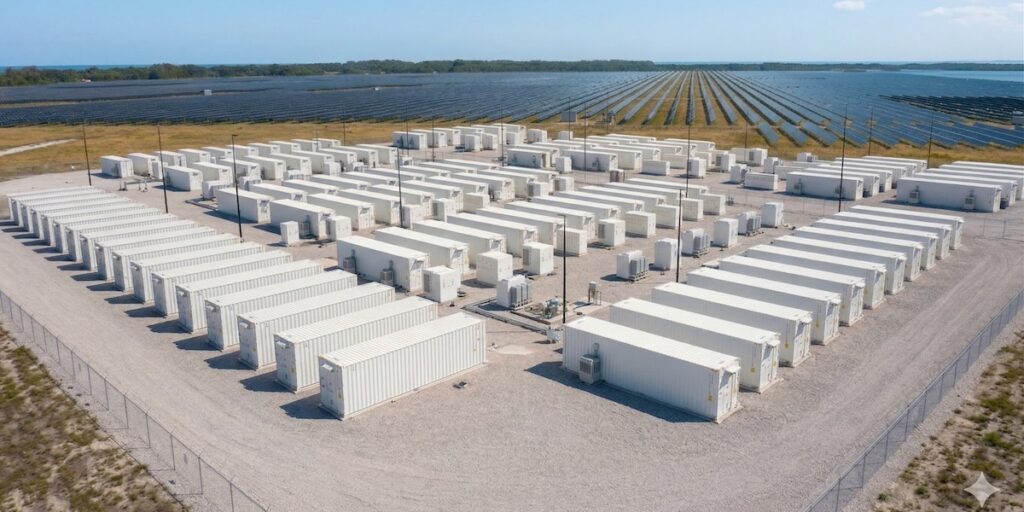
Since 2024, a “storage tsunami” has been hitting grid operators. The number of grid connection requests for large battery storage systems has far exceeded both available grid capacity and the processing resources of grid operators. By the end of the third quarter, TSOs alone had received 717 grid connection requests totaling 270 GW, including 545 applications for large battery storage systems with a combined capacity of 211 GW. In addition, distribution system operators received further applications amounting to nearly 600 GW by last fall.
Under the former KraftNAV procedure, TSOs have already issued grid connection commitments for approximately 51 GW of large-scale battery storage capacity, which is to be connected to the German transmission grid over the coming years. Applications that are still pending and have not yet been finalized will be transferred to the new procedure, according to the TSOs.
From pv magazine Germany
Written by






Popular Posts