Can sodium-ion beat lithium-ion in portable power? The Bluetti Pioneer Na gives it a try

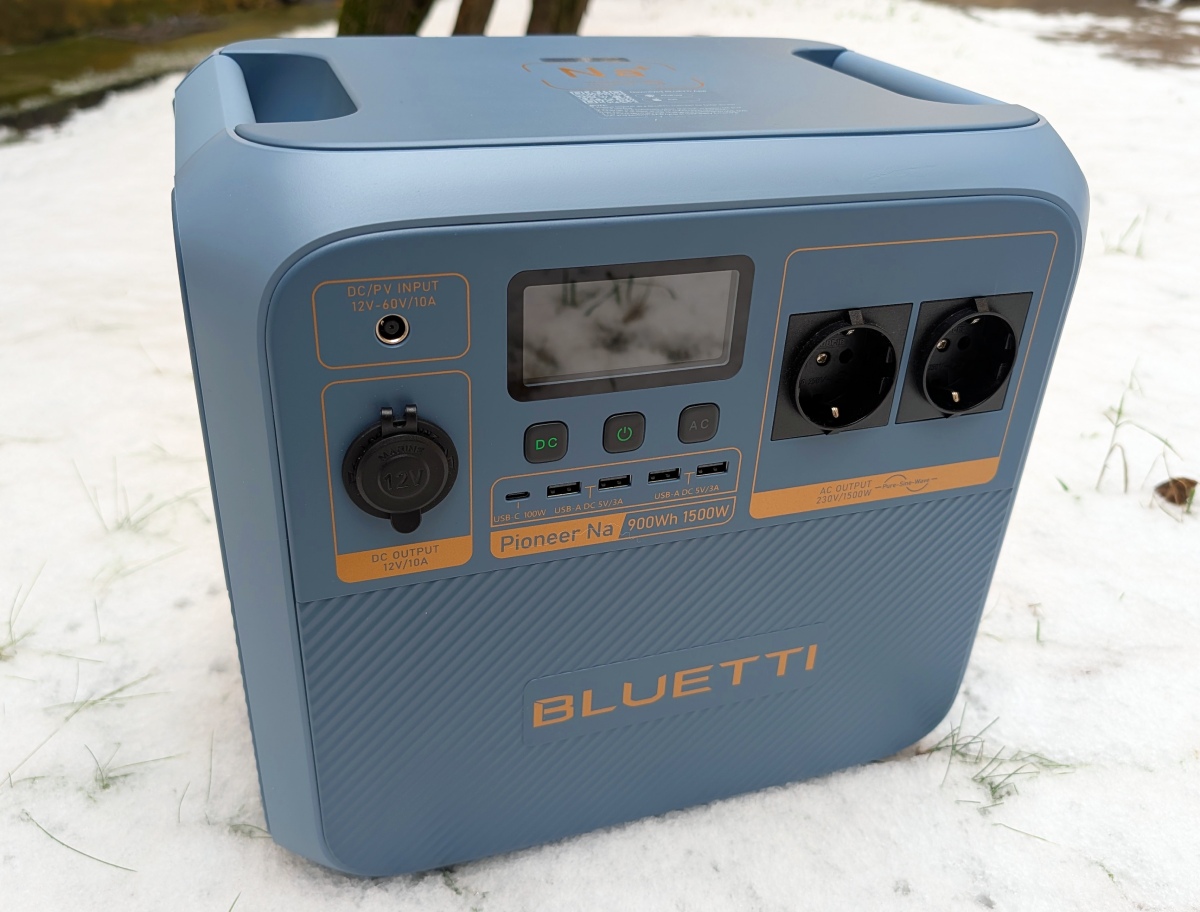
Portable power station manufacturers have been making mature products for some years now. Innovations around lithium products have reached a maturity, and new ideas are coming using other chemistries. Popular Chinese battery maker Bluetti has turned to a sodium-ion basis for its Pioneer Na portable power station, and ESS News had time with the device in cold weather conditions to test it out.
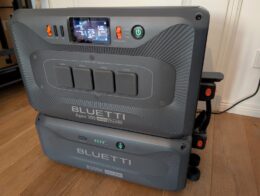
The move to embrace sodium-ion is an interesting one, and the new and very blue power station is an alternative to lithium-ion via its sodium-ion cells.
Bluetti made the choice for the Pioneer Na to go with a NaFeMnO₂ cell, or a layered sodium manganese oxide used as a cathode material in Na-ion batteries. Over on the anode, a hard carbon is used.
Why sodium and what are the tradeoffs?
The use of sodium instead of lithium means a less volatile chemical compound in use. With sodium there is less risk of thermal runaway compared to some lithium chemistries.
But the advantages are more than just relative saftey, and Bluetti is focusing more on the other advantages of sodium in their product descriptions. The company noted that the Pioneer Na has a much wider operating temperate range, which it can charge even down to –15 °C, and discharge (provide power) further down to –25 °C. Compared to conventional lithium iron phosphate-based (LFP) power stations, these cannot be charged at all below 0°C in standard operation and may use heaters to keep warm for operation, which can drain energy from the power station before it is used by the owner.
Bluetti also claims greater thermal stability, and a greener supply chain without the use of cobalt or lithium in the chemistry.
There are one or two caveats though: At -25℃, the Pioneer Na offers 80% discharge capacity with full output, and below -10°C, it can recharge up to 60% SoC.
Specs
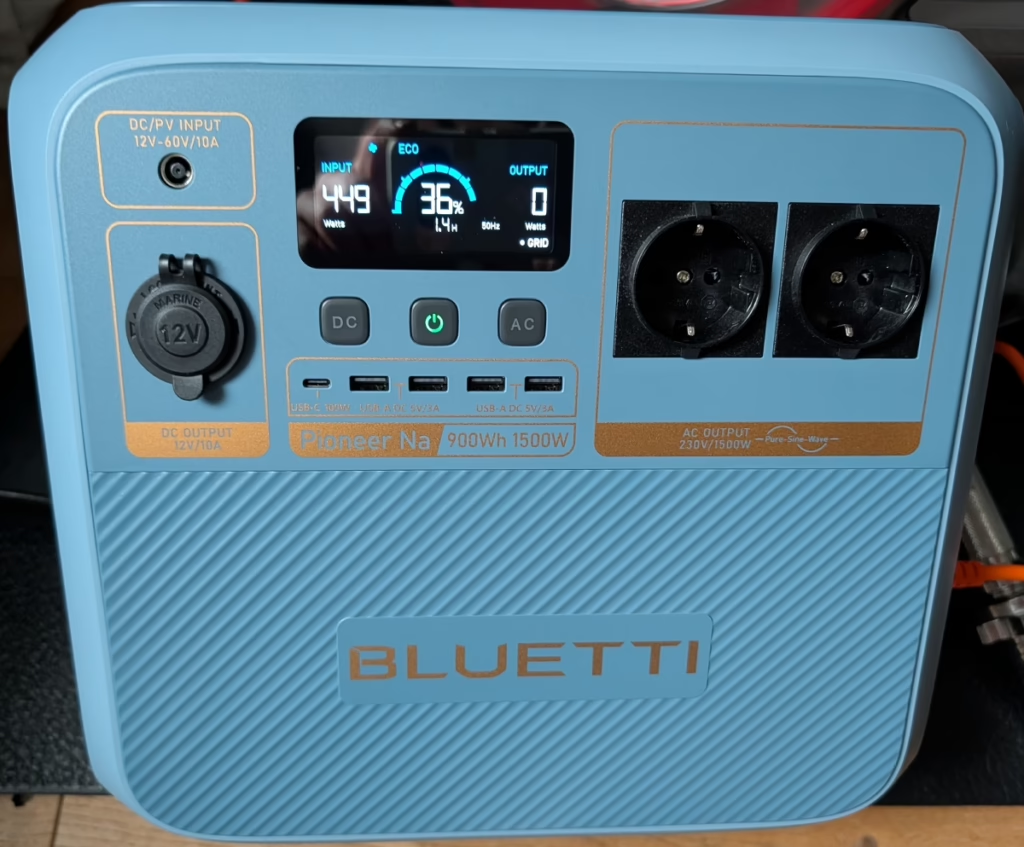
Outside of the headline temperature aspects of the power station, it is a 900 Wh device, offering 1500 W output, 1900 W fast charging, 4000+ cycles, and 10-year battery life. It can handle AC input of 1,400 W, along with 500 W of solar input, or 12V/24V from the car lighter port.
Tradeoffs are worth looking at. One of the compromises is in the weight: the Pioneer Na is16 kg. For a 900 Wh device, that is comparatively not a lightweight option. Bluetti’s own Elite 100 V2, a slightly higher capacity battery at 1,024 Wh weighs 11.5kg, or around 30% less.
The device itself has output ports include AC outlets (4 x 120V in the US, 2 x 220V in EU), 4 USB-A ports (15 W output), and 1 USB-C port (100 W). The over-use of USB-A ports vs more USB-C ports is a negative.
There is also a wireless charging point on top of the device, which you’ll have to activate with the Bluetti app. Pleasingly, the device only consumes 1.5 W of power in standby.
There’s no IP rating on it, which is a touch disappointing: a lot of people will want to use a battery like this in cold places where there’s naturally snow, or for example, take it with you when boating or fishing, or even to certain night events like hunting or squidding.
Test
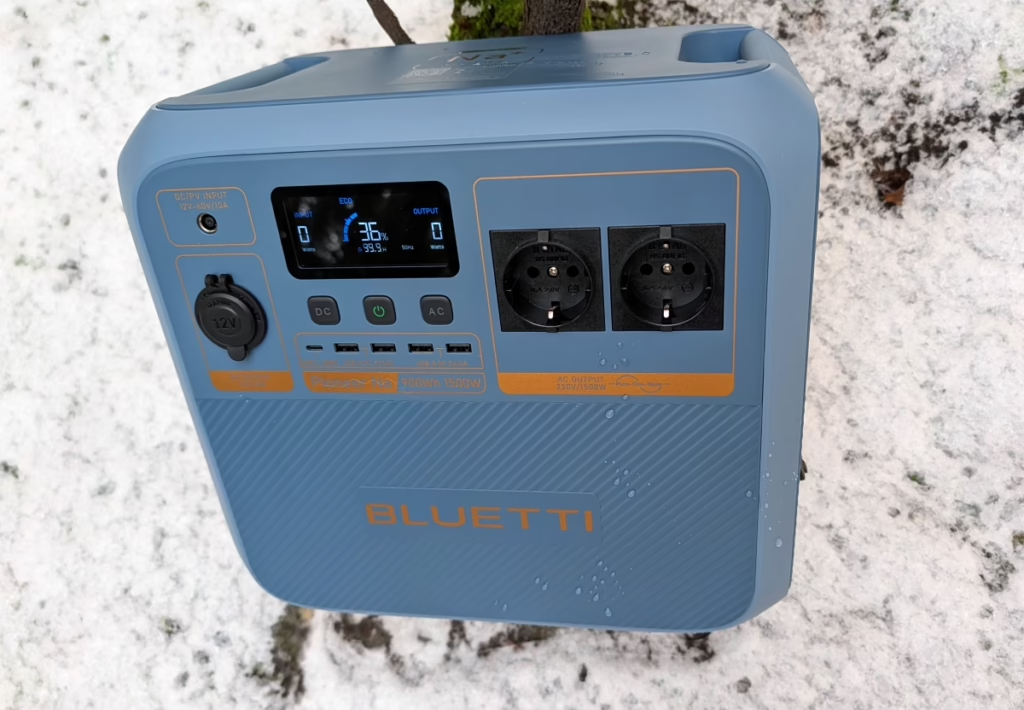
To test, the Pioneer Na was left outside in a dry place overnight in the German winter, with temperature conditions below -10℃.
Come morning and continuing temperatures well below freezing, in operation, the device offered charging and discharging with limitations. Discharging worked as normal in these temperatures.
Charging was a different story though. Bluetti supplied a table detailing that charging speeds are limited depending on the temperature. At -15℃, the device charges at a maximum 132 W. At -10℃ it charges at 159 W, and at -5℃, 211 W.
That’s a step down from normal charging at up to 1400 W at standard room temperatures. The implications are: it works when lithium doesn’t, but there are limits even with sodium.
Bluetti supplied info on charging rates and speeds:
- 10–25°C (Normal Temperature): ≈ 1400W charging
- 0°C: ≈ 245W
- -5°C: ≈ 211W
- -10°C: ≈ 159W
- -15°C: ≈ 132W
- -20°C and lower ≈ Not chargeable
Is lithium unbeatable for most people, most of the time?
Ultimately sodium-ion stands alone for this particular, specific concept: better operation modes and options in very low to extremely low temperatures. In Germany in early 2026, an extended cold winter has shown this indeed could be useful and a viable option.
The problem is that lithium is just a better chemistry for most people, most of the time. As mentioned, comparing Bluetti’s own product line shows that when comparing the sodium Pioneer Na and the lithium Elite 100 V2, and the Elite 100 V2 wipes the floor in capacity, power, and weight. Those three factors are the selling points most people should select for.
An ice fisher in Norway, or someone often in thick winter conditions without heating has very different options, and sodium has massive potential for niche caches like this.
Bluetti should be congratulated for pioneering that path, even if at launch it asked for a price premium over lithium at $1,299, though it did offer launch discounts. A recent price check saw some discounts available below $1000 as well.
Bluetti’s thoughts a few months after launch
ESS News asked Bluetti about the Pioneer Na positioning in the market, and via a spokesperson the company indicated its focus points, while also hinting at improvements to come down the line.
“Pioneer Na was developed to address a critical gap in energy storage—reliability under extreme temperature stress. Achieving stable performance at -25°C is a practical step forward for the industry,” said the spokesperson.
“Beyond its cold-weather resilience, sodium-ion technology offers a dual advantage: it alleviates the global reliance on lithium resources and provides inherent thermal stability for enhanced safety. While this marks a global milestone, Bluetti’s focus remains on the continuous refinement of the technology to ensure it consistently meets the real-world demands of our users for a more resilient energy future.”
Written by





Popular Posts