Author

Lior Kahana
Advertisement
Articles written by Lior Kahana
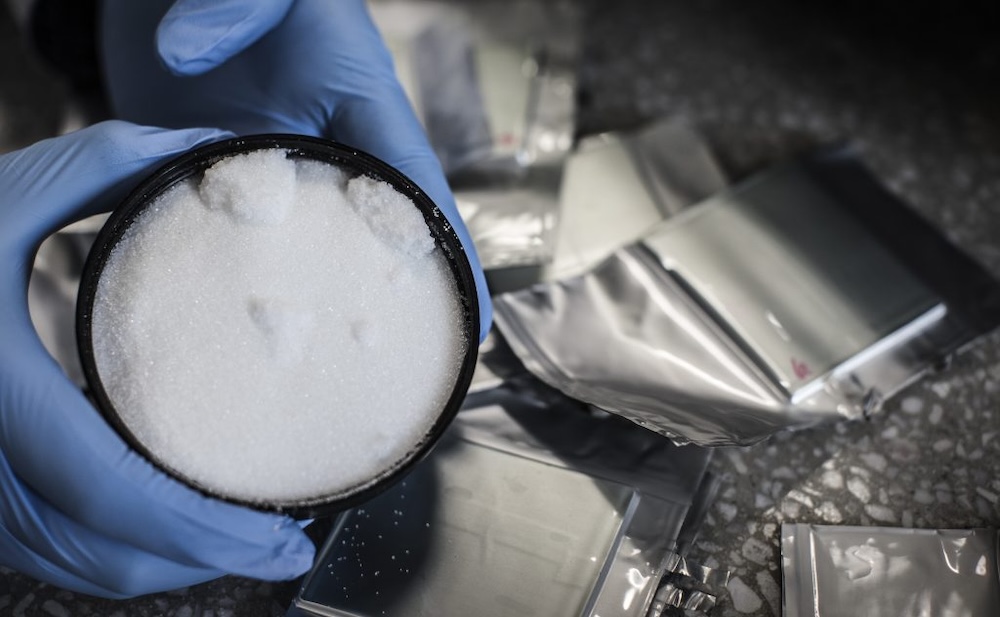
Iron-mediated cathode enables 206 Wh/kg sodium-ion pouch cell
Chinese researchers have developed an iron-mediated strategy that improves the reversibility and stability of lattice-oxygen redox reactions in sodium-ion battery cathodes. A 15.8 Ah pouch cell using the cathode achieved an energy density of 206 Wh/kg, with lattice-oxygen redox reversibility reaching 99%.
Sep 11, 2026
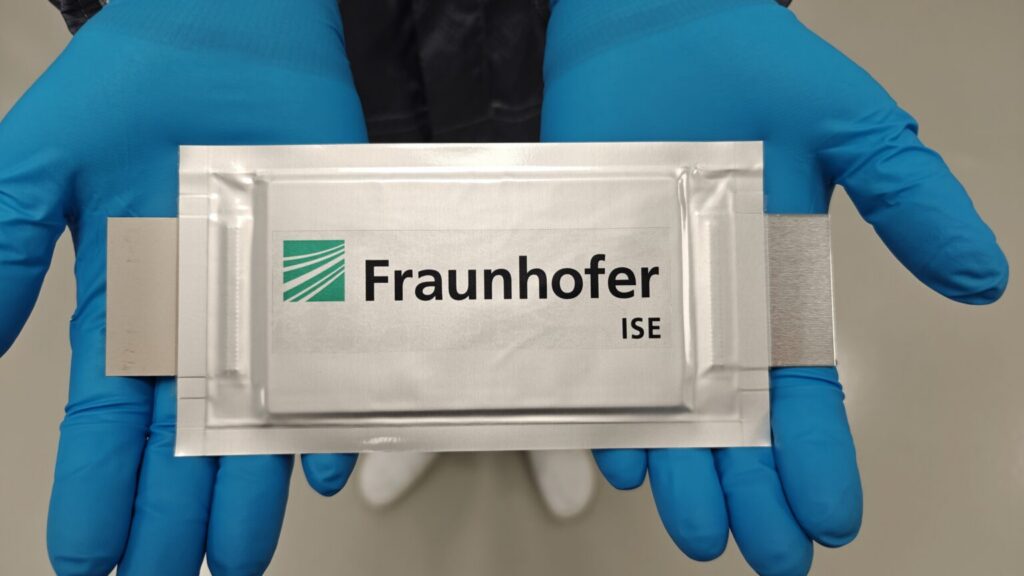
New electrode design by German institutes increases battery energy density by up to 15%
Fraunhofer ISE and its partners have developed thicker electrodes that could increase battery cell energy density by 10% to 15% without adding weight. The PFAS-free, solvent-free concept has been demonstrated in lithium-ion, sodium-ion, and zinc-ion cells and is designed for cost-effective mass production.

Storing renewables with firebrick thermal batteries
Electrified Thermal Solutions is developing a firebrick-based thermal battery that converts low-cost electricity into high-temperature heat for energy-intensive industries. The technology could pair with solar and wind to absorb surplus generation and deliver round-the-clock industrial heat at costs competitive with natural gas.
Advertisement

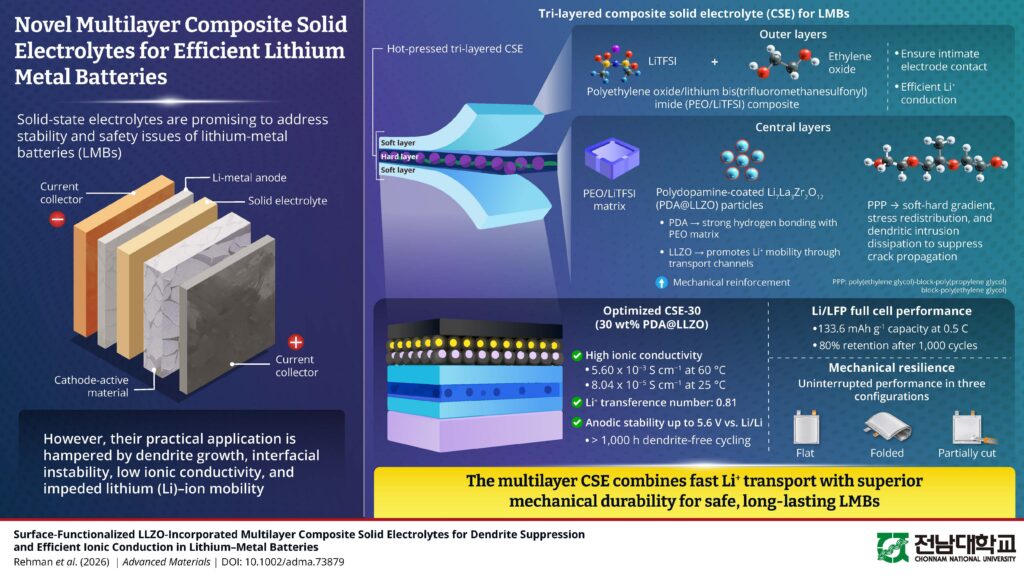
Researchers develop tri-layer electrolyte for lithium-metal batteries
Researchers have developed a PEO-based composite solid electrolyte that combines polydopamine-coated LLZO with a flexible triblock copolymer. The optimized design reached an ionic conductivity of 5.60 × 10⁻³ S.cm−1 at 60 C and enabled LiFePO4|Li cells to retain 80% of their capacity after 1,000 cycles.
Advertisement
Austrian project targets higher-energy LMFP batteries for stationary storage
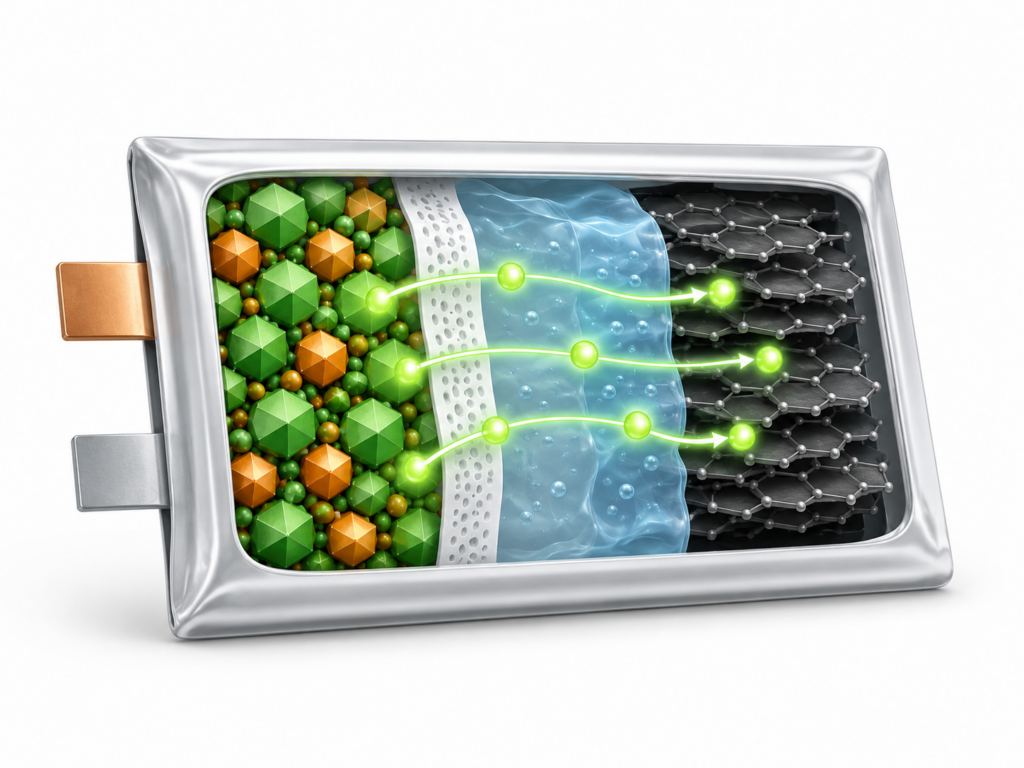
An Austrian consortium has launched a 36-month project to develop lithium manganese iron phosphate (LMFP) cells for stationary energy storage. The PHOENICS project is targeting a 20% increase in energy density and a 40% improvement in service life.

UNSW launches grid protection project for grid-forming BESS and inverters
Researchers at the University of New South Wales have launched a three-and-a-half-year project to examine how inverter-based resources interact with grid protection systems. The AUD 12.9 million initiative will use modeling, simulation and hardware-in-the-loop testing to assess fault-current behavior and protection requirements.
Scandium doping, coating improve cycling stability of sodium-ion battery cathodes
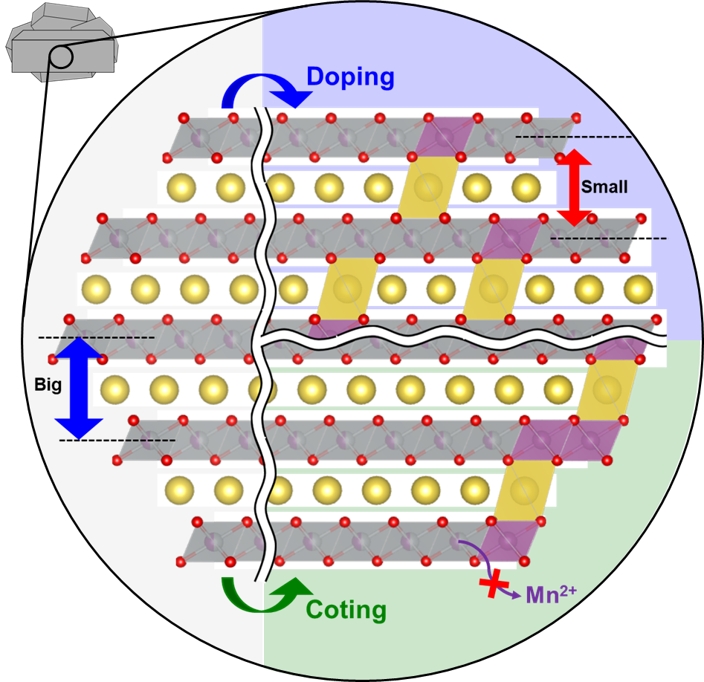
Researchers have compared bulk scandium doping and surface scandium coating in O3-Na[Ni₁/₂Mn₁/₂]O₂ cathodes for sodium-ion batteries. Both approaches improved cycling stability, with the coated full cell retaining 91.2% of its initial capacity after 300 cycles, while structural analyses revealed distinct bulk- and surface-stabilization mechanisms.
Advertisement