Estonia unveils 1.1 GWh heat storage and 250 MWh battery retrofit as 800 MWh project prepares to break ground

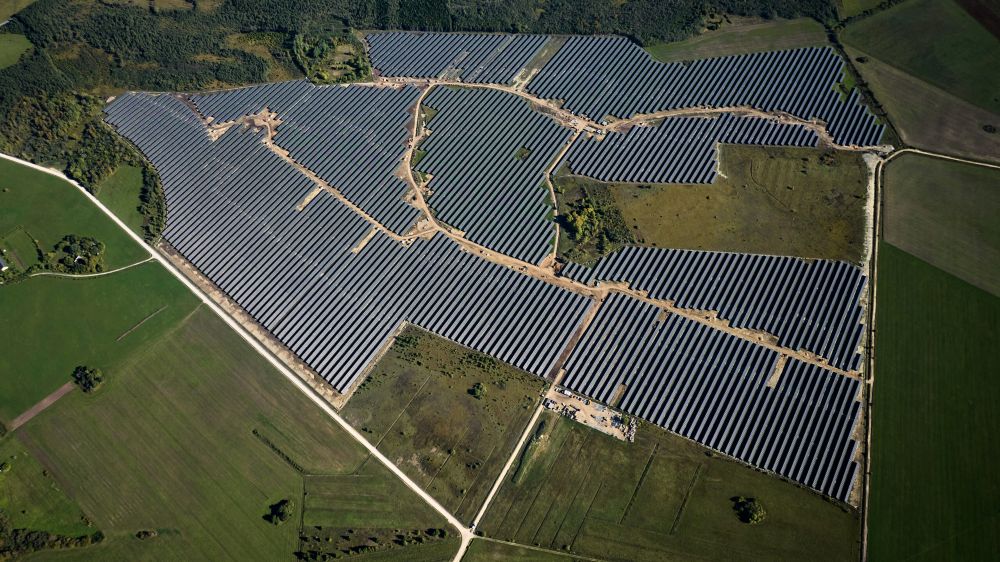
French investment fund Mirova and Estonian renewable energy developer Evecon have announced a series of milestones supporting the acceleration of Estonia’s energy transition. Through their jointly owned Baltic Renewable Energy Platform OÜ (BREP), the partners have delivered the country’s largest retrofitted battery energy storage system, executed the first flexibility power purchase agreement (FPPA) in the Baltics and secured a new €85 million long-term financing package from Swedbank.
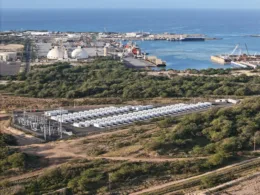
Commissioned in October 2024, the 77.5 MWp Kirikmäe solar PV plant is being enhanced with the addition of a 55 MW/250 MWh battery energy storage system (BESS), under construction since January 2026. WiSo Engineering is acting as EPC contractor, responsible for the full infrastructure and system integration. Batteries, power conversion equipment and medium-voltage components are supplied by Huawei.
Once operational, expected in Q3–Q4 2026, the hybrid system will enable BREP to store solar production and deliver critical grid-stability services following the Baltics’ desynchronisation from the Russian grid, including Frequency Containment Reserve (FCR), automatic Frequency Restoration Reserve (aFRR) and manual Frequency Restoration Reserve (mFRR).
BREP has also signed a 10-year FPPA with Pure Energy, effective January 2026, integrating renewable electricity sales with flexibility optimisation. The agreement covers the full output of BREP’s portfolio, including the Kirikmäe hybrid project, the 15.5 MWp Imavere solar PV plant and the 12.8 MWp Lohu Mets solar PV plant.
Swedbank, which has supported BREP since 2023, has committed to a new €85 million long-term facility. The financing package covers the refinancing of the existing solar PV portfolio, construction of the Kirikmäe BESS and ancillary credit lines, including a VAT facility, a Letter of Credit and a Debt Service Reserve Account (DSRA).
In parallel, energy company Utilitas has inaugurated a 1,100 MWh heat storage facility at its site in Tallinn’s Väo energy complex, now Estonia’s largest heat storage installation. The system was delivered by industrial services provider Bilfinger, which was responsible for the full design, engineering, prefabrication and installation scope.
Following prefabrication at Bilfinger’s workshop in Grodek, Poland, the 42-metre-high accumulator was assembled on site using the spiral method. The structure has a diameter of 26 metres and a volume of 20,700 cubic metres. Based on Bilfinger’s two-zone technology and the Hedbäck principle, the system allows hot water storage at temperatures of up to 98°C while reducing maintenance requirements. The facility is designed to balance daily fluctuations in district heating demand and strengthen the resilience and decarbonisation of Tallinn’s heating network.
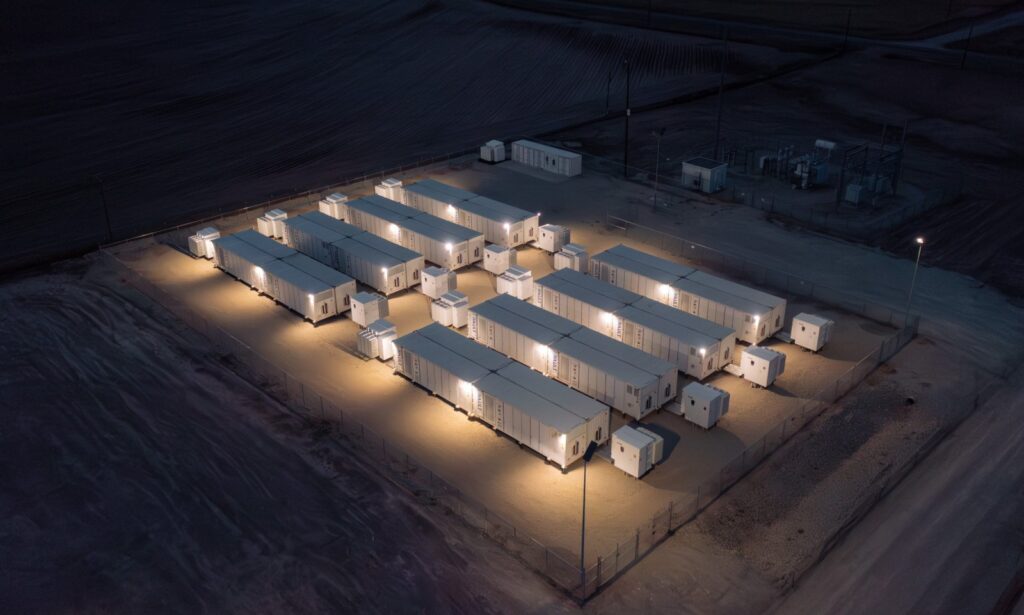
Further south, Diotech OÜ and Transcom AS are preparing to begin construction in February 2026 on a 100 MW/200 MWh battery energy storage facility in Tsirguliina, Valga County. The project, Zirgu, touted as the largest 100% Estonian capital-based battery industrial park is designed to support balancing of the Estonian and Baltic electricity markets while mitigating regional price volatility.
Phase I construction investment amounts to approximately €35 million. The capital required for the initial investment has been secured from the shareholders of Diotech OÜ and Transcom AS, maintaining full Estonian ownership, while offers from Estonian commercial banks are being considered for potential co-financing.
The battery industrial park is designed to accommodate up to 800 MWh of storage capacity. Although Phase I will deliver 100 MW/200 MWh, the high-voltage grid connection and substation infrastructure are being engineered and constructed to enable additional capacity to be installed within less than one year.
Zirgu has secured a high-voltage grid connection from Elering, obtained the necessary land plots and construction permits and completed all permitting procedures, enabling systematic construction works to commence immediately. Phase I is scheduled to be completed no later than March 2027.
The project will be supplied by LG Energy Solution, with whom Diotech previously developed what was at the time the largest battery power plant in the Baltics for Eesti Energia. That facility was connected to the grid prior to the Baltics’ desynchronisation from the Russian electricity system.
In addition, Diotech is currently developing, in cooperation with LG Energy Solution, one of Europe’s largest battery energy storage facilities in Poland, with a planned capacity of approximately 900 MWh.
Written by
Comments

Popular Posts