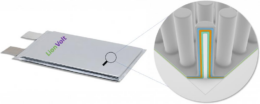
Sodium-ion batteries key to EU competitive edge, says EESC President

Sodium-ion batteries are becoming a new focus for the European Union (EU), and the next EU budget must provide funding for the sodium battery sector, according to EESC President Séamus Boland. “Sodium batteries, and batteries more broadly, are key for the EU’s competitive edge, and it is urgent that the next Multi-Annual Financial Framework (MFF) recognizes this by providing the necessary funds for the sector,” Boland said. The MFF is the EU’s long-term spending plan, typically spanning 7 years. The next cycle runs from 2028–2034.
The EESC considers sodium batteries a strategically important technology for Europe and wants to see the technology become a key element of the European Union’s industrial strategy. The advisory body has argued sodium-ion battery technology can provide a less costly, “environmentally friendly alternative” to lithium batteries.
Updated policy for batteries is needed according to the EESC, which has called for an “industrial pathway” that covers lithium and sodium technologies. This should include investment in skills and businesses, according to the EESC, as well as public support mechanisms ranging from subsidies and tax incentives, to joint public-private research and development.
The European Union is already home to gigawatts of grid-connected lithium-ion battery energy storage system (BESS) capacity, with significant development pipelines for lithium-based energy storage in leading markets such as Germany and Italy. Supporting sodium-based battery energy storage technology would reduce the EU’s exposure to supply chain vulnerabilities, the EESC has argued, as the element is widely available across the continent.
“China is currently the global leader in battery technology, with €1.2 billion invested in [research and innovation] over the past ten years,” said Fabrice Stassin, Secretary-General of the Batteries European Partnership Association (BEPA). “Our journey has just started. We need to build on our existing strengths, ensure that innovation is translated into production and reinforce what works with strategic support.”
The EESC is expected to continue discussing sodium batteries in upcoming opinions and stakeholder debates. It also plans to conduct a dedicated study “aimed at placing sodium batteries firmly on Europe’s industrial agenda.”
More about
Written by
Comments

Popular Posts