When battery imbalance turns 11% of capacity into stranded energy
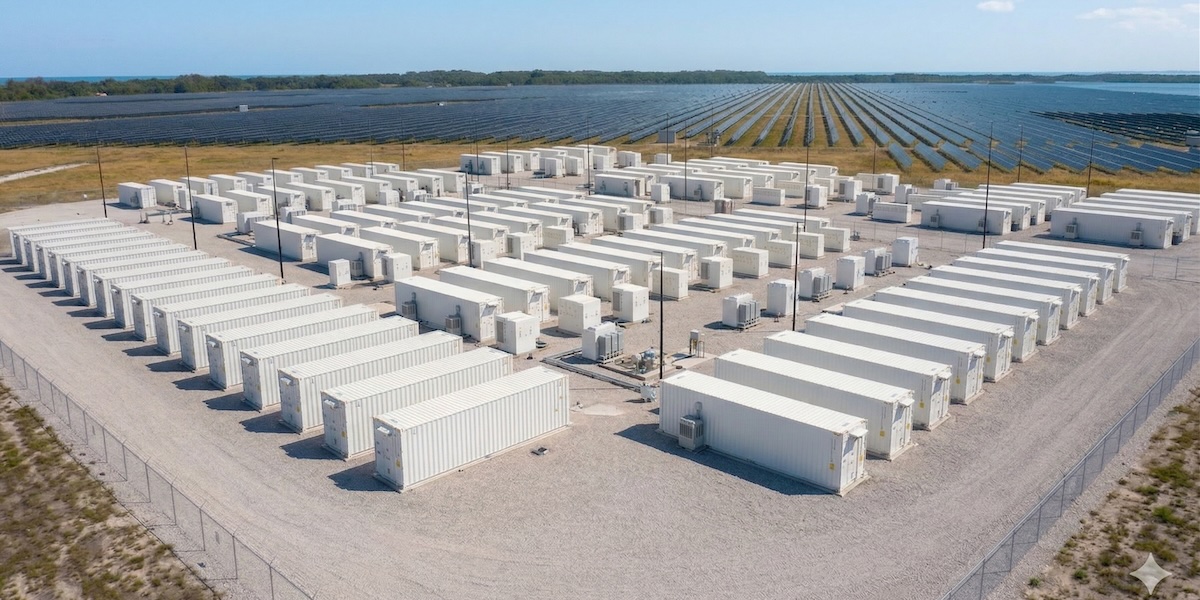
A 350 MWh battery storage facility somewhere in Europe saw revenues fall short of expectations. Subsequent analysis revealed that the situation could have been far worse.
Similar to series-connected photovoltaic modules, the weakest component in a battery storage system ultimately determines overall performance. “Battery analysis showed that in this system, the most fully charged cell was at 100%, while the least charged cell was only at 75%,” says Lutz Morawietz, head of algorithm development at Volytica.
In a series configuration, a cell that has not yet reached full charge cannot be charged further once the most charged cell hits its limit. The same constraint applies during discharge: the least charged cell empties first, prompting the battery management system to terminate the process – leaving unused energy in the remaining cells.
The case study found a daily energy gap of between 15 and 40 MWh, meaning that up to 11% of the installed capacity could not be offered on the market.
A second issue compounded the problem. Determining the state of charge is particularly challenging in lithium iron phosphate (LFP) systems. Using its manufacturer-independent monitoring platform, Volytica identified errors of up to 50% in state-of-charge estimates for individual racks. As a result, the system reported more available energy than it could actually deliver. If this overestimated capacity is traded but cannot be supplied, balancing costs are incurred.
In this project, the marketer estimated that the energy gap translated into a weekly risk of €25,000 to €110,000. In the German energy market, such impacts are typically reflected in balancing energy costs and can erode several percentage points of total revenue.
The issue can be addressed relatively easily through a process known as rebalancing, which aligns all cells to the same state of charge. “The key question,” says Morawietz, “is when to perform rebalancing – and how quickly the cells will drift apart again afterward.”
Discussion of failure cases and mitigation strategies
At the Battery Business & Development Forum, the session “How to Build a Future-Proof Battery Storage Project” on April 1 at 2:45 p.m. will examine this and other real-world failure scenarios in detail, including their impact on revenues and risk exposure.
In a panel featuring Vural Oezcan (developer and operator ju:niz), Mohammed Qudaih (PCS and battery manufacturer Huawei), and Hamid Bardideh (system integrator Hyperstrong), speakers will address key questions such as:
- How significant are revenue losses caused by insufficient rebalancing?
- What design choices can minimize the need for rebalancing?
- What are the most effective methods for detecting these issues?
Darya Rüwald (Accure Battery Intelligence) and Lutz Morawietz (Volytica diagnostics) will present practical case studies from operational projects, covering topics such as temperature management, PCS design, and EMS/SCADA challenges.
This session is aimed at operators, developers, and investors seeking to better understand and mitigate revenue risks in battery storage projects.
For the full program and registration details, please refer to the event website.
Do you have operational issues or failure cases to share? pv magazine is looking for real-world examples for editorial coverage and potential discussion at the conference. Submissions will be treated confidentially and anonymized upon request.
From pv magazine Germany
Written by

Comments






Popular Posts