Spain completes testing of Europe’s largest research vanadium BESS

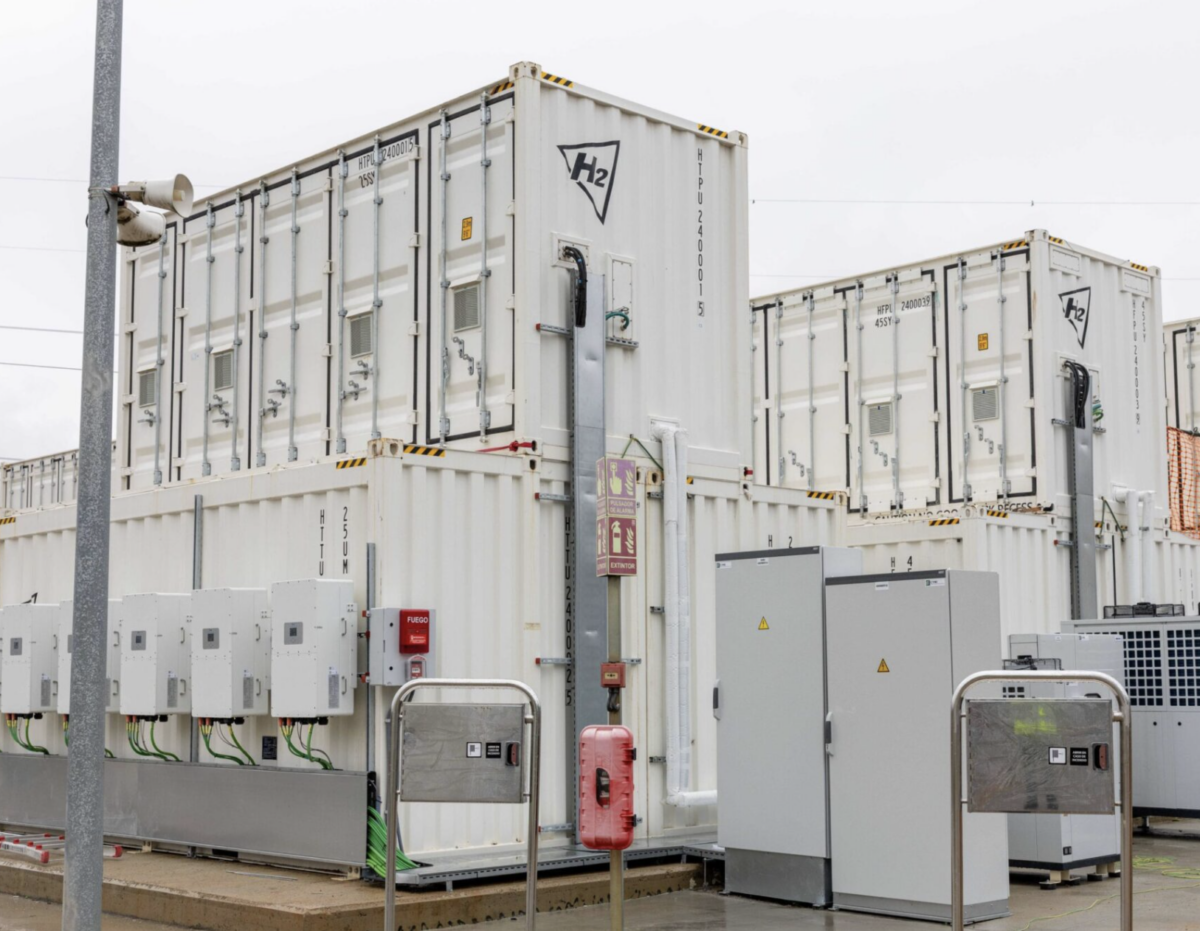
Ciuden, a body under Spain’s Ministry for Ecological Transition and the Demographic Challenge, has completed testing of a VRFB system at its Technology Development Center in Cubillos del Sil, northwestern Spain.
The 1 MW/8 MWh system includes a dedicated 100 kW/800 kWh module for R&D testing under controlled conditions. The contract was awarded to Spanish company CYMI for €6.4 million ($7.4 million), incorporating technology from South Korean firm H2 Inc.
The VRFB system joins two storage technologies already deployed at the site during 2025: a sodium-sulfur (NaS) battery rated at 1 MW/5.8 MWh and a lithium-ion system rated at 600 kW/1.3 MWh. The three systems are hybridized with a 2.2 MWp solar installation, bringing total storage capacity to close to 15 MWh – sufficient to absorb the daily output of the solar plant during periods of high generation. The installation also incorporates two electrolyzers commissioned at the end of 2025: a 300 kW proton exchange membrane (PEM) unit and a 250 kW solid oxide electrolyzer cell (SOEC) operating at high temperature.
Ciuden said the VRFB system offers more than 15 hours of storage autonomy, making it the longest-duration battery system available in Spain for demonstrative-scale R&D testing. The technology uses the redox reaction of vanadium across four oxidation states in liquid electrolytes stored in independent tanks, enabling a service life of more than 20 years and modular capacity expansion by decoupling power and energy ratings.
The project’s primary objective is to generate technical and operational data to support industrial scalability, analyzing efficiency, degradation, integration with renewables, and response to different load profiles.
Ciuden said the multi-technology configuration – combining solar generation, three distinct storage chemistries, and two electrolyzer types – represents a singular experimental environment at European scale for validating advanced storage and green hydrogen solutions.
The initiative is funded under the NextGenerationEU program within Spain’s Recovery, Transformation and Resilience Plan (PRTR).
From pv magazine Spain.
Written by
Comments


Popular Posts