Why BESS insurers are sweating transformers and contractor errors over battery fires


For underwriters insuring gigawatt-scale battery energy storage systems (BESS), thermal runaway is no longer the only bogeyman. It’s the velocity of product development, inexperienced integration, and vulnerabilities in the balance of plant that are keeping the insurance industry on its toes.
Michael Carrington, an underwriter at renewables insurance specialist Tokio Marine GX (TMGX), noted to ESS News that the industry is iterating faster than insurers can build historical models.
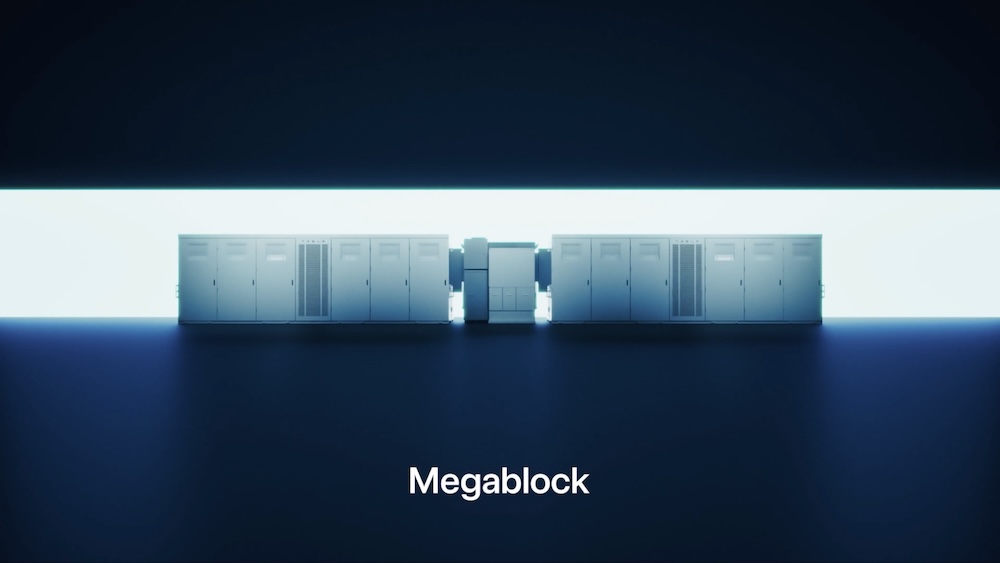
“The launch of the very first Megapack in 2019 was a 3 MWh enclosure,” Carrington says. “Moving to the last year, high-end products such as BYD’s HaoHan are touching 14.5MWh. In that very short timeframe, we’ve seen almost a 500% increase in megawatt-hours per enclosure.”
It’s no surprise that this rapid scaling, along with developments like grid-forming and black-start capabilities limits the actuarial data the insurance market typically relies on.
“We’re venturing into unknown territory where clients and ourselves don’t have a long, robust track record which we can rely on for critical decision making,” Carrington notes. “When you opt for the latest, the newest, and the largest products, it brings about additional risks.”
Carrington adds, with a smile, that insurance is not holding technology back at all, noting, “We almost have a duty to support the green transition and play our part as an enabler of that transition … There are ways, like early engagement and where you’re using products that help us to understand what risk management mitigations you’re taking.”
Where there is a data deficit, insurers are leaning heavily on large-scale fire testing to aid in their comfort with new, high-capacity models. But as thermal risks become better understood, underwriters are shifting their focus to the contractors installing them, and the Achilles heel of the balance of plant that so badly affected the Waratah Super Battery in Australia.
Integration interfaces and unforced errors
The pace of product iteration means Engineering, Procurement, and Construction (EPC) firms are rarely installing the exact same system twice. Carrington notes this lack of product homogenization is driving a significant portion of insurance claims.
“Contractors are working with so many different iterations of battery projects, or even within one manufacturer working with different products, which means the interface is different each time,” Carrington says.
This unfamiliarity at the integration level, where different counterparties, civil contractors, and electrical engineers meet, is at times resulting in costly, unforced errors. Carrington points out that the industry is still guilty of “treating batteries as something simpler than they actually are.”
Seemingly minor issues around this area can quickly snowball into major component losses.
“Battery containers have an IP rating,” Carrington explains, referring to dust and water ingress protections that can be affected either inadvertently or carelessly during install, adding “[i]f you compromise that IP rating, then the batteries themselves are exposed. We see situations where temperature and humidity have been compromised due to failures of the equipment.”
Other easily avoided integration errors hitting the insurance market include fire suppression aerosols “being inadvertently deployed within containers” during commissioning.
“The losses we have seen in the main haven’t been related to the batteries themselves,” Carrington says. “They have been related to ancillary equipment or a lot of contractor error, which speaks to some inexperience around contractors.” He points out then as growth and increasing strain on contractor availability in the market continues, it’s a matter of deciding whether to wait and engage proven and experienced workforces, or whether to push forward utilizing a tier 2 contractor that is less experienced in BESS development.

Sweating the balance of plant
Beyond contractor mishaps, underwriters are closely watching the “single points of failure” within the wider balance of plant. The October 2025 failure at the Waratah Super Battery in Australia, which involved a high-voltage transformer issue during final testing, illustrates this shifting threat profile.
“The loss of a battery enclosure versus the loss of a high-voltage transformer will be hugely different,” Carrington explains. “The high-voltage transformer can act as a single point of failure if there’s only one of them. If you lose it, that can be a huge, huge loss to both the client and to insurers.”
While a localized battery fire is an isolated and manageable loss, replacing a bespoke main power transformer, especially right at the end of construction and days from commissioning, can sideline a project’s revenue for months due to extreme supply chain lead times.
Supply chains and the sodium-ion shift
On the concerns that have hovered around renewable generation and batteries for some time, notably geopolitical supply chain reliance, it remains a major vulnerability for BESS developers. Carrington was keen to emphasize how the continuing emergence of alternative chemistries like sodium-ion are highly attractive to the industry and market.
“Sodium-ion presents an exciting alternative that doesn’t depend so heavily on these cross-border supply chains,” Carrington notes, while adding he sees it as a complementary technology to lithium-ion, not a replacement.
Built with abundant materials like aluminum and sodium, Na-ion significantly reduces the geopolitical and pricing volatility associated with traditional lithium-ion sourcing. As domestic manufacturing for these alternatives spins up in the US and Europe, insurers are watching closely for the performance data needed to back them at utility scale.
Written by




Popular Posts