Five Australian BESS projects totalling 7.9 GWh advance through approvals

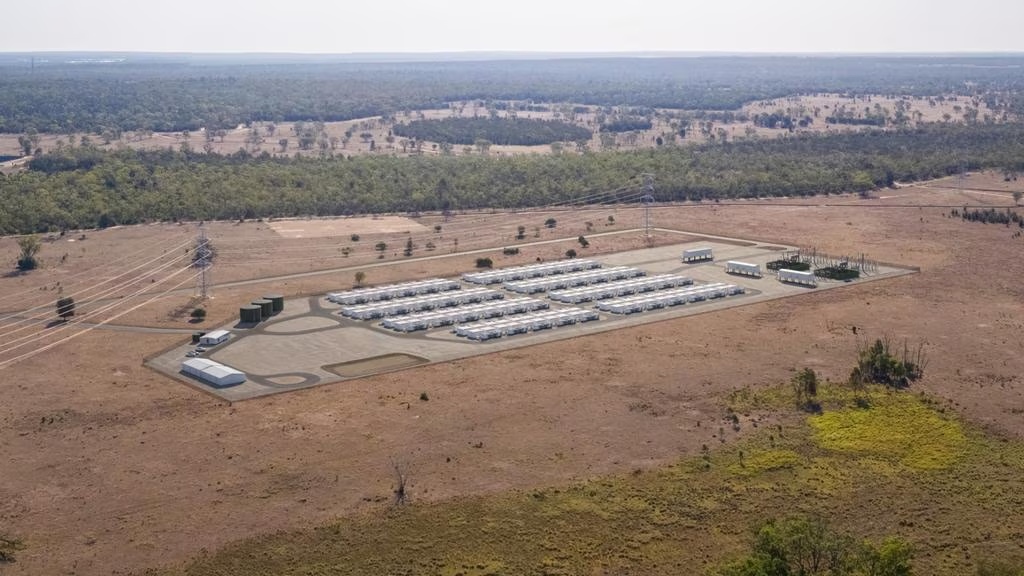
Five large-scale battery energy storage projects representing a combined 7.9GWh of capacity are advancing through approval stages across four Australian states, with three newly filed under the federal Environment Protection and Biodiversity Conservation (EPBC) Act and two others having already cleared it within 19 days in one case.
The five projects are all four-hour duration or longer, as Australia’s growing pipeline of battery projects adjusts to new requirements and business cases as more energy storage comes onto the grid.
Murchs Corner BESS — Victoria, 500MW/2GWh
The largest by power output among the EPBC filings is the Murchs Corner BESS, a 500MW/2GWh project proposed by Tasmanian developer Alternate Path, targeting connection to the existing 500kV Moorabool-to-Mortlake transmission corridor in Victoria. The 500MW/2GWh sizing is at this stage a “conceptual capacity”.
The project is expected across roughly 21 hectares, situated on cleared agricultural land. Operations are expected to run for 20 to 25 years.
Swallow Tail BESS — New South Wales, 375MW/1.5GWh
AMPYR Australia’s Swallow Tail BESS, filed via an affiliated project vehicle dubbed STBESS Projectco, proposes a 375MW/1.5GWh facility near Bannaby, approximately 70km north of Goulburn and south of Sydney.
The project is designed as a grid-forming system, which AMPYR states will contribute to voltage and reactive power management— capabilities increasingly sought by network operators as coal-fired generation exits the grid.
The project would connect to the existing Transgrid Bannaby Substation via new 330kV lines, selected specifically to limit the required transmission infrastructure. A full Environmental Impact Statement is currently in preparation under New South Wales’ State Significant Development process.
Robertstown BESS — South Australia, 500MW/2GWh
Revera Energy’s Robertstown BESS is a 500MW/2GWh system to be built in two 250MW/1GWh stages in South Australia, each independently financed and contracted.
The project benefits from an existing Development Approval dating to 2018, varied in 2023 to accommodate expanded capacity. Of some interest is that a previously co-approved 500MW solar component has been shelved, Revera citing unfavourable economics in the current South Australian market, though the company stated it will continue monitoring conditions for a potential reassessment. Still, the wording in the EPBC application says “Solar farms are not currently assessed as economically viable in South Australia,” which may alarm some in the solar industry.
Revera has also executed a voluntary Cultural Heritage Agreement with the Ngadjuri Nation Aboriginal Corporation following heritage surveys conducted in 2022.
Belah BESS — Queensland, 400MW/1.6GWh
The Belah BESS stands out for speed. The 400MW/1.6GWh project, being developed by Eku Energy and LP Renewable Projects near Chinchilla in Queensland’s Western Downs region, cleared its federal EPBC assessment as a non-controlled action in just 19 days, attributed to its siting on previously cleared agricultural land.
Federal Environment Minister Murray Watt noted the project “can go ahead with minimal environmental impact.” Belah has since formally submitted its development application to Queensland’s State Assessment and Referral Agency (SARA), with a social impact assessment also now underway. This is standard as required under recent changes to Queensland planning regulations that also mandate a community benefit agreement with the Western Downs Regional Council, and involves community engagement.
“We’ll be out in the Chinchilla Western Downs region over the coming months to really understand what are the positives and negatives that people feel about the proposed development,” said Head of Policy at Eku Energy, Rachel Rundle, as reported by the Queensland’s Courier Mail.
Supernode North BESS — Queensland, 780MW
The most recently cleared project is also the largest by power output: Quinbrook Infrastructure Partners’ Supernode North BESS, a 780MW containerised lithium-ion facility in Woodstock, approximately 45km south of Townsville. It will be a 2 – 4 hour duration projec.t
The Australian Department of Climate Change, Energy, the Environment and Water (DCCEEW) determined the project and substation qualified as a “not controlled action” under the EPBC Act on March 17, just over five weeks after Quinbrook submitted it to the federal review queue in early February 2026.
The 41-hectare site spans former agricultural research land previously used for cropping and grazing studies. The project is designed to facilitate electricity supply for the Lansdown Eco-Industrial Precinct (LEIP), including the Northern Quartz Campus, a metallurgical silicon and polysilicon manufacturing facility identified as “strategically significant” for Townsville’s industrial diversification.
Supernode North is Quinbrook’s second major Queensland BESS development, complementing its Supernode project at the South Pine substation near Brisbane, more than 1,000km to the south.
Written by





Popular Posts