Sodium-ion batteries
Advertisement
Advertisement
Advertisement
Latest News
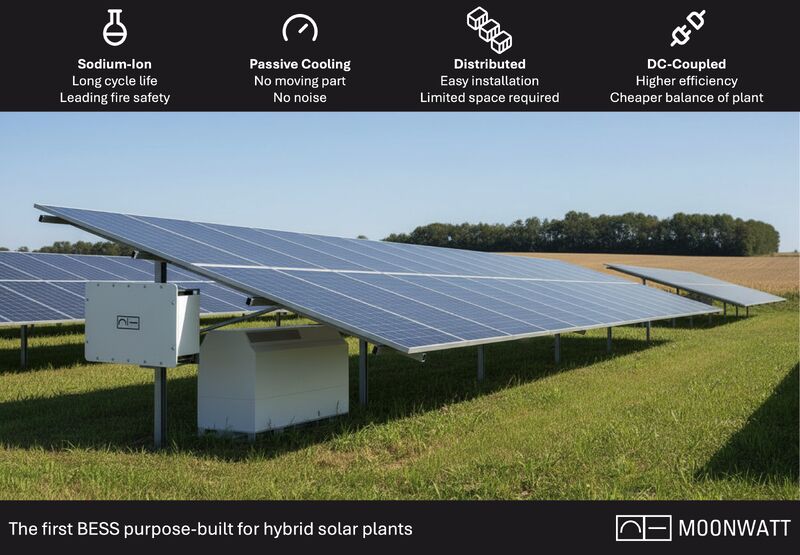
Moonwatt brings DC-coupled, passively cooled sodium-ion tech to solar projects
The Dutch start-up, founded by former Tesla leaders, is taking a novel approach to sodium-ion battery technology, optimizing it for integration with solar power plants. Its technology is set to be deployed for the first time in a Dutch solar-plus-storage project later this year.
Jan 29, 2026
Advertisement
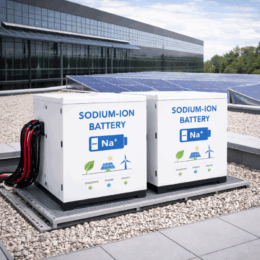
Sodium-ion batteries now competitive in niche markets
Sodium‑ion batteries are emerging as a safer, lower-cost alternative to lithium‑ion, with a recent international study highlighting their competitiveness in stationary energy storage. The research shows that ongoing investment and supply-chain development could enable broader adoption within the next decade.
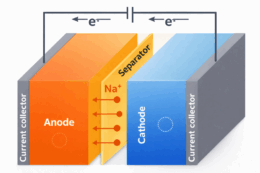
Scientists design low-cost sodium-ion battery with cheap electrode materials
Conceived for stationary energy storage, the proposed sodium-ion battery configuration relies on an P2-type cathode material and an hard carbon anode material that reportedly ensure full-cell performance. Electrochemical testing revealed initial capacities of 200 mAh/g for the cathode and 360 mAh/g for the anode with capacity retentions of 42% and 67.4% after 100 cycles.
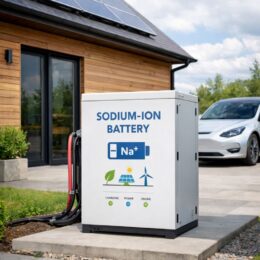
New design specifications for sodium-ion batteries
U.S. scientists used density functional theory to reveal how sodium ions are stored in nanoporous carbon anodes for sodium-ion batteries, identifying dual ionic and metallic storage mechanisms within the pores. Their findings provide practical design guidelines to improve battery voltage, safety, and commercial viability for stationary energy storage.
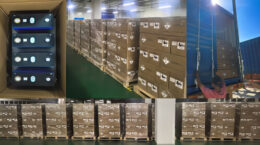
Sodium-ion batteries: Unigrid begins commercial-scale deliveries; Altris and Draslovka partner to scale Europe’s supply chain
With lithium prices reaching a two-year high in early 2026, sodium-ion batteries are once again in the spotlight, as innovators on both sides of the Atlantic announce major milestones.
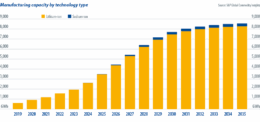
Why sodium-ion can’t yet challenge lithium-ion’s reign
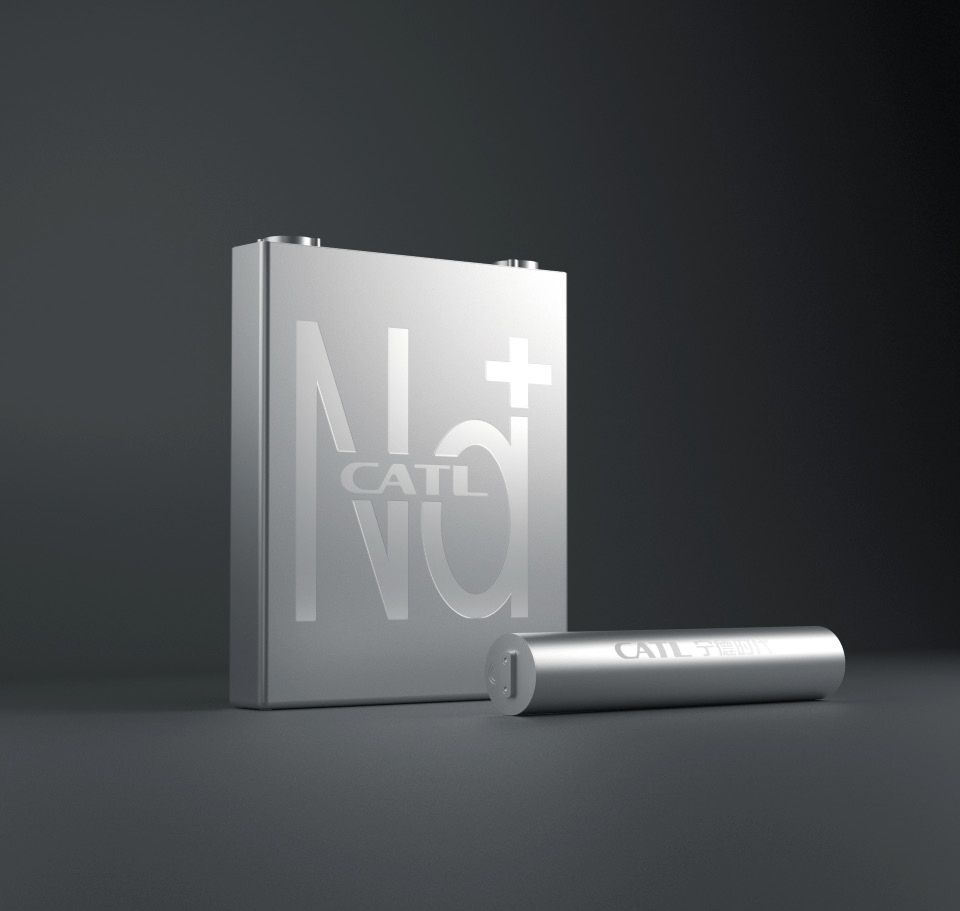
A new generation of sodium-ion (Na-ion) battery cells has been launched as an alternative to the virtual monopoly of lithium-ion (Li-ion). Although the technology is unlikely to displace significant Li-ion market share, recent improvements make Na-ion a viable solution for certain niche applications, with potential for wider usage if cost becomes competitive.
Jan 15, 2026
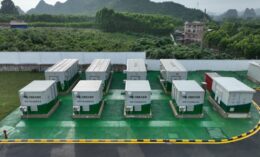
Sodium-ion battery cells already near lithium-ion cost parity, set to get cheaper
By 2050, sodium-ion batteries with fast learning rates could deliver storage at 11–14 €/MWh – cheaper than lithium-ion at 16–22 €/MWh – while also offering higher energy-to-power ratios and high cycle durability, a new research finds.


Advertisement
All Sodium-ion batteries news

Advertisement
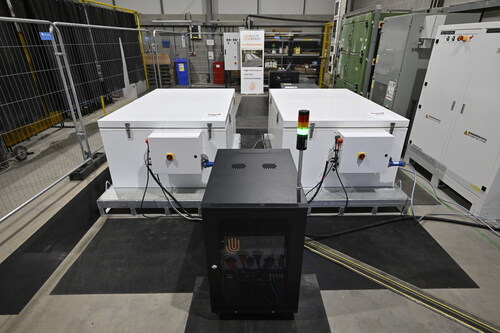
Inlyte proves out first full-scale iron–sodium battery system in factory test, paving way for 2026 US production
According to Inlyte, the tested unit incorporates what it describes as the world’s largest sodium metal chloride battery cells and modules built to date, with each module capable of storing more than 300 kWh of energy.
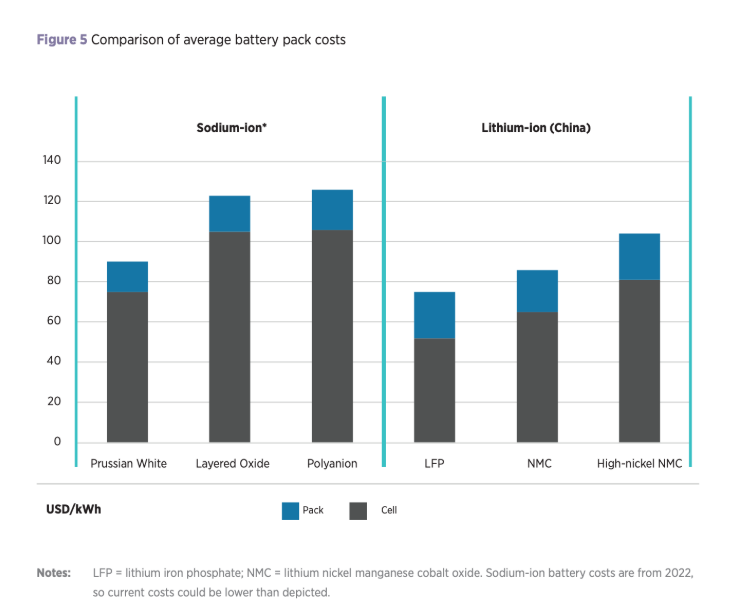
Sodium-ion battery cell cost could drop to $40/kWh, says IRENA
A report from the International Renewable Energy Agency (IRENA) notes that while it is still uncertain whether sodium-ion batteries will become a disruptive alternative to lithium-ion technology, they could offer significant cost-saving opportunities in applications such as electric vehicles and large-scale energy storage.
Advertisement


Sodium-ion battery storage for ultra-low temperatures
US researchers have developed a sodium-ion pouch cell that operates reliably at temperatures as low as -100 C. The battery was tested with simulated and real renewable energy sources, including wind and solar, and maintained stable performance in both laboratory and field conditions.
Advertisement