Biwatt launches commercial sodium-ion energy storage product

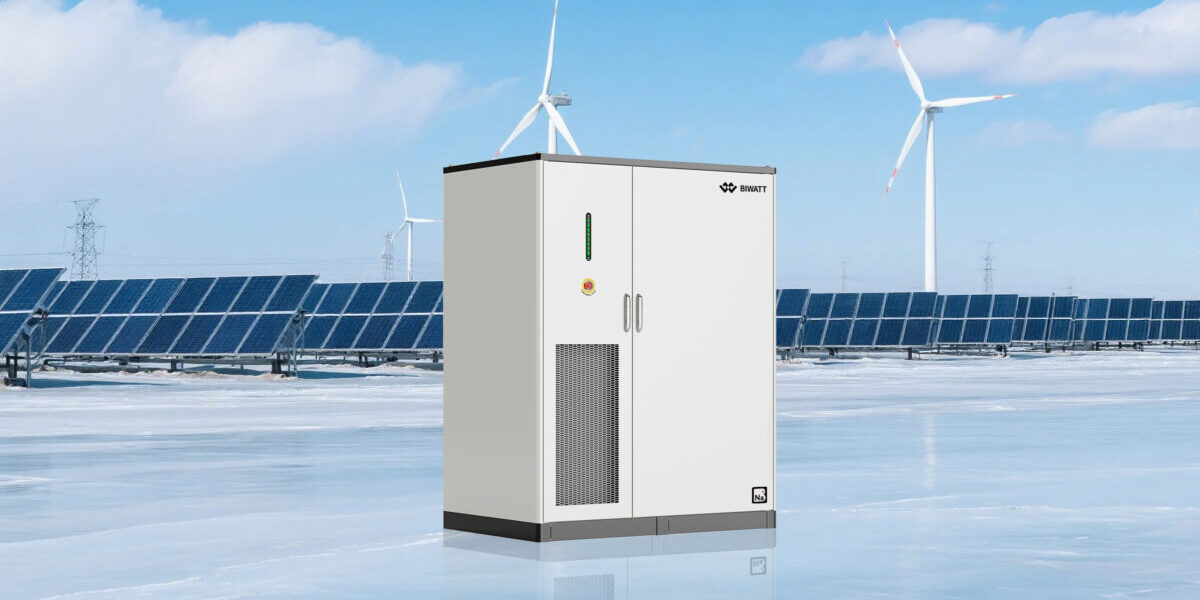
Chinese energy storage manufacturer Biwatt has introduced a C&I product based on sodium-ion cells. The Powerlake I2 is said to be safer than rival energy storage systems because its cells are thermally inert – meaning they won’t self-ignite.
The Powerlake I2 is an all-in-one system with energy storage and an inverter housed in a single control cabinet. Operation is designed to remain stable even under extreme temperature conditions – from -30 C to 55 C. In the event of a power outage, the system can switch to off-grid operation in less than 20 milliseconds, ensuring uninterrupted power supply.
The battery consists of 230 Ah cells interconnected into 11 kWh modules. Each Powerlake-I2 system contains 14 modules. The input voltage range is 448 V to 885 V. At 25 C; a depth of discharge of 80%; and a two-hour charge/discharge “C-rate” rate of 0.5; the battery can be charged and discharged up to 6,000 times. The discharge power at a 0.5 C-rate is 148 A, and maximum direct-current power is 100 kW. Output voltage is 400 V.
The air-cooled system can be operated up to an altitude of 4,000 m, with a power reduction starting at 2,000 m. The control cabinet weighs 2.2 tons and measures approximately 1.6 m by 1 m by 2 m. With an IP54 protection rating, the system is protected against external influences but is not suitable for outdoor installation.
Sodium-ion batteries are considered an interesting alternative to lithium systems. According to cell manufacturers, they promise high cycle stability, lower costs, and ecological advantages, since sodium is available worldwide as a raw material and could potentially be mined in a more environmentally friendly way than lithium.
From pv magazine Deutschland.
Written by




Popular Posts