nTeaser: Investors increasingly interested in solar-plus-storage in Italy


pv magazine Italia spoke with Carmen Izquierdo Serrano, CEO of nTeaser – a platform that connects developers and investors for the purchase and sale of renewable energy projects and assets – to understand how many projects are moving toward incentives.
nTeaser explained standalone four-hour systems appear to strike the best balance between cost and flexibility, especially considering MACSE, which is driving the market toward bankable, technically optimized BESS. Currently, according to nTeaser, 20% to 30% of utility-scale BESS are colocated with solar, particularly in southern Italy, and that percentage is expected to increase.
pv magazine: On nTeaser you have several investment opportunities regarding BESS projects to submit to MACSE in Italy. Can you describe them?
Carmen Izquierdo Serrano: Through our marketplace, nTeaser is currently showcasing and supporting the commercialization of several utility-scale BESS projects across Italy, many of which are aiming to participate in the 2025 MACSE auction for delivery in 2028. These projects range from 20 MW to 200 MW, with four-hour storage capacity, and have been prepared to meet Terna’s technical and regulatory requirements, including ramp-up capability, high round-trip efficiency, and grid code compliance.
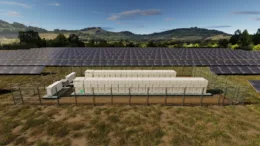
Many of the projects featured on nTeaser are pioneering. A prime example is our recent Marconi Portfolio, an extraordinary colocation opportunity combining 28 MW of solar PV and 46 MW of BESS, spread across three hybrid plants located in Campania, in the Central-Southern Electricity Area of Terna’s grid. What’s unique about this portfolio is that the solar PV components will be eligible for the FER X tariff scheme, while the BESS units have been structured to participate in the MACSE auction: this makes it a particularly attractive colocated investment opportunity.
And what about the geographical distribution of these projects? Where are they most concentrated?
A clear trend we’ve observed, through project uploads and investor interactions on nTeaser, is the strong geographic concentration in southern Italy. Over 50% of the MACSE-targeted BESS projects currently on our platform are located in these areas, reflecting both Terna’s zonal allocations and the region’s grid needs. Although the North is more saturated and plays a lesser role in MACSE, there are still significant opportunities beyond zonal allocations. At the same time, we’re keen to highlight the diversity of developers active across the Italian market. On nTeaser, we showcase portfolios in regions such as Basilicata, Puglia, Sicily, and Piedmont. This not only reflects the broad geographic spread of project activity but also confirms investors’ strong interest in supporting energy storage projects across the country.
How do grid connections affect the BESS projects you have visibility over?
Grid access defines the projects’ feasibility. MACSE developers prioritize sites near 350 kV to 380 kV substations with available capacity. Saturated nodes, especially in the North, lead to delays, while southern and island regions offer better access opportunities. Fast-ramp capability and responsive support are further differentiating factors when evaluating MACSE [attractiveness] and ancillary mechanisms.
What are the earning opportunities? Can you explain what you’re seeing on your platform?
We observe that investors on nTeaser evaluate BESS projects in Italy through a combination of regulated and commercial revenue streams. The main ones include:
- MACSE capacity payments: Fixed payments, indexed to inflation for 15 years; expected to be €34,000 [$39,800] to €47,000 per megawatt, per year depending on efficiency and duration. This is often considered the financial anchor for standalone BESS projects.
- Ancillary services: Revenues from fast reserve and MSD (the dispatching services market), particularly relevant in the northern nodes with greater system balancing needs.
- Trading arbitrage: Capturing spreads between the intraday and day-ahead markets. Southern regions, particularly Sicily and Sardinia, exhibit spreads 42% higher, resulting in a significant increase in trading value.
- Capacity Market payments: Applicable to selected projects outside of MACSE zones. The February 2025 auction was awarded at approximately €47,000/MW/year, offering an alternative route to bankability.
- Hybrid solar colocation: Colocation of BESS with PV offers additional benefits by capturing curtailment, optimizing internal consumption, and reducing grid stress.
These revenue streams are already factored into investor models and indicative offers developed by nTeaser. However, it’s important to note that many of these offers are contingent on the outcome of the upcoming MACSE auction. Investors often base their preliminary assessments on the assumption of guaranteed MACSE revenue. Any deviation in auction results or participation can directly impact the projects’ bankability and investor appetite.
Furthermore, some investors, particularly larger and institutional ones, are actively exploring power purchase agreement (PPAs) for PV generation. Medium- to long-term PPAs are considered an effective tool for reducing asset risk and ensuring predictable returns. However, for standalone BESS, PPAs remain relatively rare due to limited market precedent and the lack of clarity in structuring such agreements. Consequently, the opportunity to enter into PPAs is often more attractive – and more feasible – for colocated PV-plus-BESS projects, where PV generation provides a stable contractual basis that can improve the bankability of the entire hybrid asset.
Could you describe a typical project? What percentage of revenue would come from MACSE in this case?

Image: nTeaser
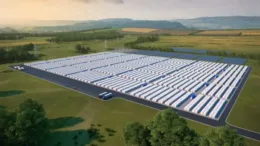
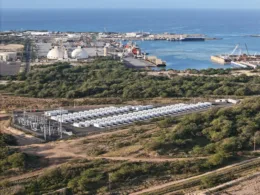
The average MACSE-targeted project listed on nTeaser is a 50 MW to 100 MW standalone BESS with a four-hour runtime, designed to balance fixed capacity revenue with exposure to ancillary and commercial markets.
While developers and investors don’t typically share full financial models with us, the revenue split they report during conversations and negotiations on our platform tends to follow this pattern: MACSE: around 30% to 40%, ancillary services: around 30% to 40%, arbitrage: around 20% to 30%.
These ranges are consistent with external benchmarks from Aurora Energy Research, Rabobank, and several technical consultants operating in Italy. For most projects on nTeaser, MACSE revenues are seen as a financial anchor, enabling predictable cash flows and improving access to structured debt. It’s important to note that many of the indicative offers submitted through nTeaser are conditional on successful participation in MACSE, highlighting the central role of this mechanism in de-risking BESS investment and making projects bankable.
Can you explain further what the effect of MACSE will be on prices and structure?
From our perspective, at nTeaser, MACSE is already impacting the way developers structure their BESS projects and how investors evaluate them. The mechanism introduces a clear minimum revenue threshold, which encourages developers to optimize their projects to make them competitive, especially in terms of roundtrip efficiency, degradation profiles, and network compliance.
On our platform, we see a consistent trend toward standalone four-hour systems, which appear to strike the best balance between cost, flexibility, and alignment with Terna’s auction coefficients. Developers prioritize grid availability, location within MACSE’s preferred zones, and permit clarity – factors that nTeaser investors value highly during the early stages of their engagement.
Although the [MACSE] auction has not yet taken place, the pay-as-bid structure and zonal quotas are already influencing technical and commercial decisions. Some investors are postponing final commitments until the auction results are clearer while others are submitting indicative bids explicitly conditional on successful participation in the MACSE.
In short, the MACSE is clearly driving the market toward bankable, technically optimized, and well-prepared BESS assets, and we expect this discipline to increase as the auction date approaches.
What is the percentage of solar-BESS colocation?
While exact data is not public, our estimates (based on listed projects and public information) suggest that 20% to 30% of utility-scale BESS projects are colocated with solar PV, particularly in southern Italy. These hybrid configurations are gaining traction due to their ability to:
- Reduce curtailment by storing excess production during peak hours;
- Optimize grid usage by sharing infrastructure such as grid connections, transformers, and land;
- Enable value accumulation by combining internal consumption, ancillary services, and dynamic participation in the energy market;
- Improve project economics, as fixed costs are shared between two technologies, reducing the overall levelized cost of energy (LCOE) and increasing the internal rate of return (IRR);
- Improve permitting and land management efficiency by consolidating permits and operations into a single location;
- Strengthen bankability, as PV revenues offer predictable cash flows that help reduce the risk of exposure of commercial BESS.
On nTeaser, colocated projects are attracting increasing investor interest, especially from long-term infrastructure funds and institutional investors seeking to maximize site returns and reduce commercial risk. A prime example of this trend is the Botticelli Project currently being commercialized on nTeaser. It offers an attractive opportunity to acquire a hybrid project combining a 32 MW PV plant with a 10 MW BESS, located in Palermo, Italy. This project exemplifies the growing investor interest in well-structured hybrid assets in regions with high solar yields and solid grid fundamentals.
More generally, what is the relationship between BESS projects and the photovoltaic projects you have visibility on? Are there any significant trends in this field?
At nTeaser, we’re seeing a clear convergence between BESS and solar PV in several markets, not only in Italy, but also in Spain, Poland, Portugal, and other countries where we operate. Storage is increasingly seen as a natural extension of PV development, both for new greenfield projects and for the retrofitting of existing operational plants.
Are there any significant trends in this field? Can you describe them?
The key trends we observe across our platform include:
- Solar retrofitting: PV developers and owners are actively evaluating the addition of BESS to existing PV systems, especially in cases where grid connection and land permits can be repurposed or expanded.
- Regulatory incentives: Policy frameworks such as the FER X auctions in Italy increasingly favor hybrid PV-plus-BESS configurations, making them more attractive to both developers and investors.
- Synergy-driven hybridization: Many developers selling PV projects on nTeaser are considering hybridization of these facilities. Combining both technologies allows for infrastructure sharing, improved grid utilization, increased project flexibility, and the ability to generate multiple revenue streams including arbitrage, ancillary services, and emissions mitigation.
- Developer pipeline alignment: We are observing that many utility developers are structuring their pipelines with BESS as the core component, especially in high-irradiation regions or areas with grid constraints.
- Shifting investor preferences: Investor interest is increasingly shifting toward hybrid assets. On nTeaser, PV-plus-BESS projects are consistently among the most viewed and selected, particularly by institutional investors seeking stable returns and regulatory compliance.
- Strategic project repositioning: Some standalone PV projects are repositioned as hybrids prior to sale, to increase their attractiveness and potential valuation. Hybridization improves commercial risk mitigation and aligns with national decarbonization and energy storage goals.
These trends are reflected in both project prices and investor behavior on nTeaser. As regulatory frameworks evolve and market signals strengthen, we expect hybridization to play a central role in achieving national storage targets – such as Italy’s 50 GWh by 2030 – and in improving the financial viability of large-scale renewable [energy] assets.
From pv magazine Italia.
Written by





Popular Posts