Suena whitepaper: Solar-plus-storage sites can compete with standalone storage in revenue potential

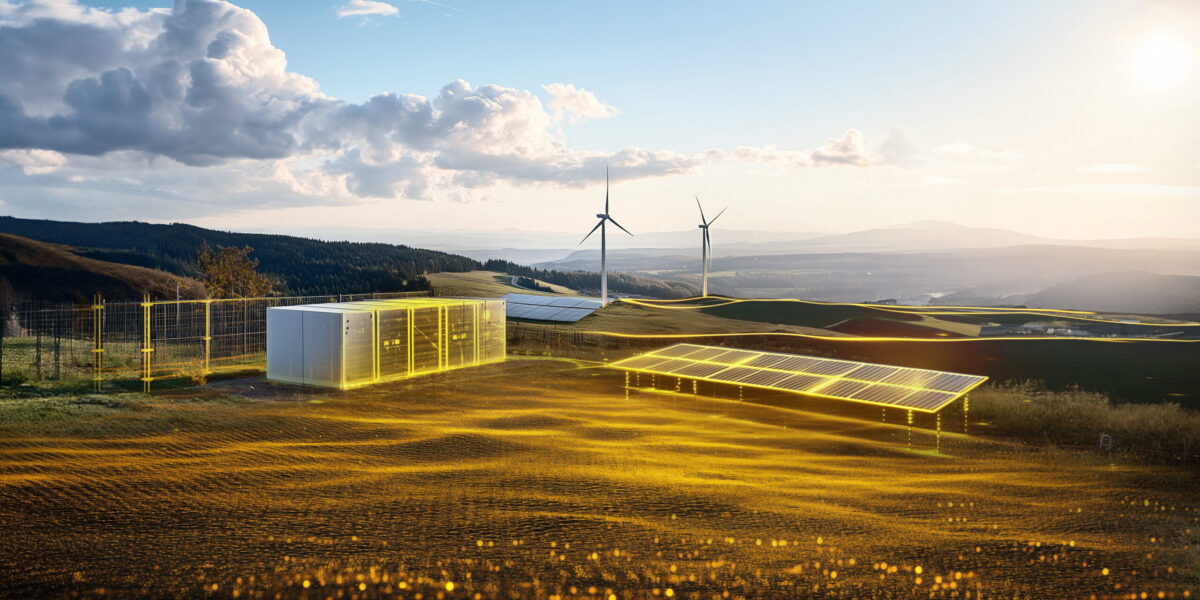
With grid connections for large-scale battery energy storage systems in short supply – and therefore easier to secure for storage facilities co-located with renewables sites – Suena has investigated how profitable various co-located set-ups can be.
The company, a battery storage marketer that uses algorithms and artificial intelligence for optimization, has calculated renewables-plus-storage sites whose storage capacity is 75% to 100% the size of their generation capacity offer the greatest revenue potential. Suena’s 30-page “Marketing Co-Located Storage Projects Properly: A Comparison of Technical Setups, Market Strategies, and Revenue Models” white paper adds, however, that is only the case if the marketing of the energy from such sites is automated and data-driven across multiple electricity markets.
The white paper, published on Tuesday, includes technical configurations, regulatory frameworks, and estimated revenue potential for various types of hybrid project.
Suena used a standalone 30 MW/60 MWh storage system as a reference case with assumed revenue potential of €287,000 ($335,000) per megawatt, per year.
The battery marketer then considered “co-location,” “hybrid,” and “innovation-tender” scenarios, differentiated by storage capacity and always associated with a 30 MW solar site. In the co-location scenario, the operation of the energy storage system depended on how much electricity was fed into the grid by the solar array at the joint grid connection. The hybrid model assumed optimized use of storage and solar feed-in, to maximize revenue, and also enabled the storage system to draw down power from the grid. The innovation-tender case involved charging the storage system solely from the solar array, with no storage participation in trading markets.
Suena modeled a 30 MW/60 MWh, “100%” storage system; a 22.5 MW/45 MWh, “75%” case; and a 15 MW/30 MWh, “50%” scenario. The 75% and 50% models were not considered for the innovation-tender model with Suena instead modeling a 10 MW/20 MWh, “33%” case.
The company found the 50% co-location model could generate 98.5% of the revenue of the standalone base case but, in that model, larger storage capacities reduced revenue potential to the extent a 100% set-up could generate only 92.2% of base case income.
Suena calculated the 50% hybrid model offered 99% of the revenue potential of the base case, falling to 94.3% as the size of the storage system rose.
By contrast, the innovation-tender model offered revenue potential of only 47.8% to 36.5% of the standalone set-up.
“Anyone who wants to successfully operate and market storage and generation needs a marketing partner who can consolidate technical specifications, grid restrictions, volatile prices, and generation forecasts in real time and translate them into an implementable trading strategy,” said Lennard Wilkening, CEO of Suena Energy. “Our white paper provides the necessary guidance and shows how data-driven multi-market strategies can become a key lever for yield, flexibility, and risk minimization.”
From pv magazine Deutschland.
Written by


Popular Posts