Elon Musk says Tesla’s energy storage business “very strong”, actual forecast for 2026 is weak

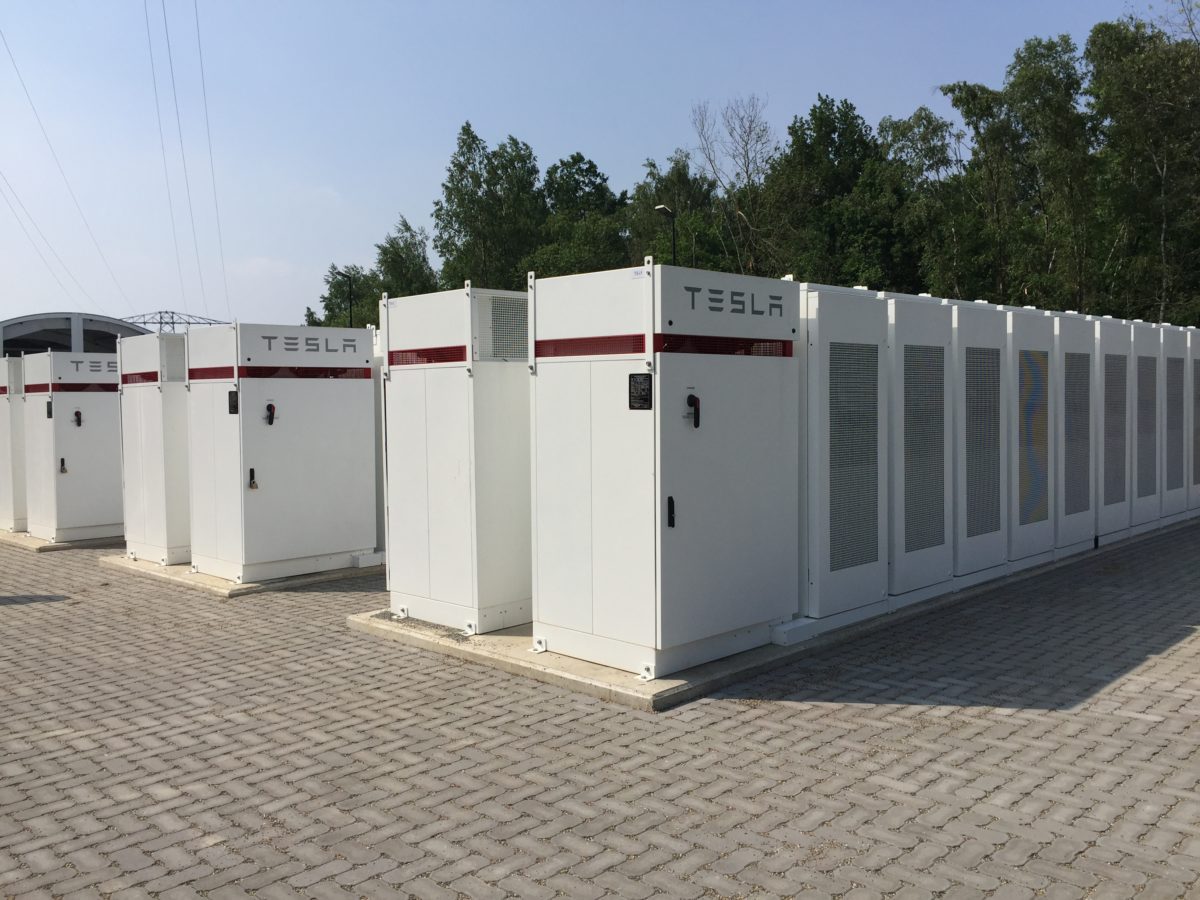
The energy storage industry is in a huge ramp-up, and with war affecting energy costs and security, the battery business is full steam ahead. One of the pioneers in the industry has been Tesla, but the first signs are that its energy storage business isn’t dominating as strongly as it was in the past – and new comments overnight have shown little hope for further growth.
Tesla’s energy storage business has capably sold its utility-scale Megapacks (and the new Megablock) across the globe, and residential all-in-one Powerwall products. But its latest results have surprised to the downside.
The data around Tesla’s energy storage business in its last earnings report was worse than analysts had hoped: energy storage deployments, as Tesla reports them, fell from 14.2 GWh installed in Q4 2025, to 8.8 GWh in Q1 2026, down 38%.
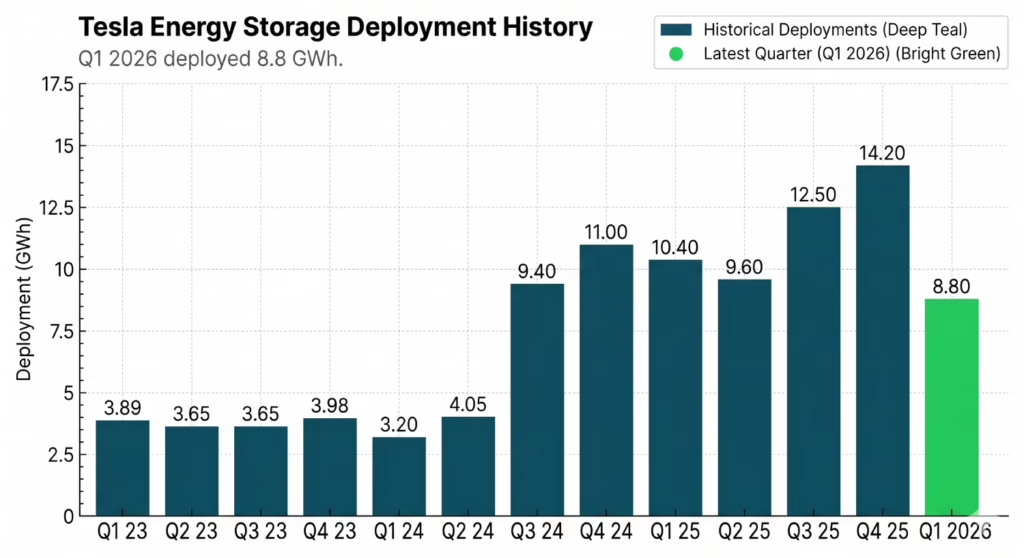
Those numbers do see seasonal variations, with Q4 numbers generally better than Q1 numbers through the recent history of the business. But even year-on-year data was poor: Tesla’s statements showed deployments fell 15% from the same period last year, having deployed 10.4 GWh in Q1 2025. Overall, energy generation and storage revenue fell 12% to $2.41 billion.
After market close last night Tesla held its earnings call where it announced capital expenditure increasing to $25 billion in its 2026 financial year, centering on Tesla vehicles, self-driving tech, humanoid robots, and its ambitions to manufacture its own chips via a new Terafab. But the energy storage business was also addressed as well.
And while Tesla executives including Musk put on a brave face, Tesla’s energy business wasn’t given too many encouraging words, with Tesla CFO Vaibhav Taneja allaying some fears of sustained downturn, but not projecting growth for the business either.
Q1 2026 earnings information on energy storage
In his opening remarks, CEO Elon Musk said:
“On the energy front, the United States and the whole world will need a lot of energy storage to meet growing electricity demand. Demand for our Megapack is very strong. We’re excited to begin production of Megapack 3 later this year in our new world-class factory outside Houston.”
That confirms what was already known without giving away more information on dates or timings for the Texas-based Megapack 3 factory, which will use LFP cells from LG Energy Solution.
CFO Vaibhav Taneja said more, and in his prepared statements, he pointed to a “lumpy” business where deployments fluctuate depending on projects and construction progress:
“As we have noted previously, the energy storage business is inherently lumpy, tied to customer deployment timelines. In Q1, we deployed 8.8 GWh of energy storage, a 38% sequential decline. However, we still expect 2026 deployments to be higher than 2025,” said Taneja.
While improving on last year’s 46.7 GWh installed sounds promising, competitors are reporting much more significant growth. JinkoSolar’s energy storage business, JinkoESS, is expecting to double its deployments, though off a smaller base. Earlier in the year, Sungrow, a major competitor to Tesla, said its energy storage system business in 2025 showed year-on-year growth of 49.4%, and it will report more data in the coming weeks.
Margins
On margins, or how profitable the energy business is, Taneja added: “We set yet another record with gross margins in this business over 39.5% due to some one-time benefits from certain tariff recognitions of more than $250 million from certain tariffs which we had paid in prior quarters. On a normalized basis, we continue to expect energy compression from here with increasing competition and tariff impacts. As previously discussed, tariffs in this business can have outsized impacts as most of the battery cells are procured from China. Our order backlog for this business is robust, and we’re doing our best to build not just based on existing demand, but also on expected demand.”
While the tariff recognitions showed good news on the surface, the margin compression Taneja hints at means that further competition is eating into margins. This isn’t bad news for project developers and financiers looking for better deals, and shows the maturing battery industry producing more credible alternatives to Tesla products.
Residential solar and storage
Outside of prepared remarks, one question asked via retail shareholders, who can vote on questions to Tesla executives, was as follows:
“What is Tesla doing to scale the energy generation business with solar? Residential roof deployments have stalled. Will Tesla move to regional solar and battery farms, perhaps coupled to Superchargers? Will we deploy solar through utilities?”
Mike Snyder, VP of Tesla Energy, responded, touching on the downturn in US residential solar.
“The overall US residential solar market is going through a bit of a correction after the loss of the homeowner tax credit last year. We still see strong demand shaping up for the second half of the year. Tesla introduced a lease product this year that allows us to capture the tax credit ourselves and offer competitive pricing for homeowners. We have also debuted our own solar panel with superior performance and aesthetics, as well as our own best-in-class mounting system that gives us a fully integrated home energy ecosystem. We strongly believe that solar and storage markets globally will continue to grow at both residential and utility scale, and we will continue to invest in that growth.”
Written by



Popular Posts