UNSW tests passive, wireless battery thermal-runaway alert

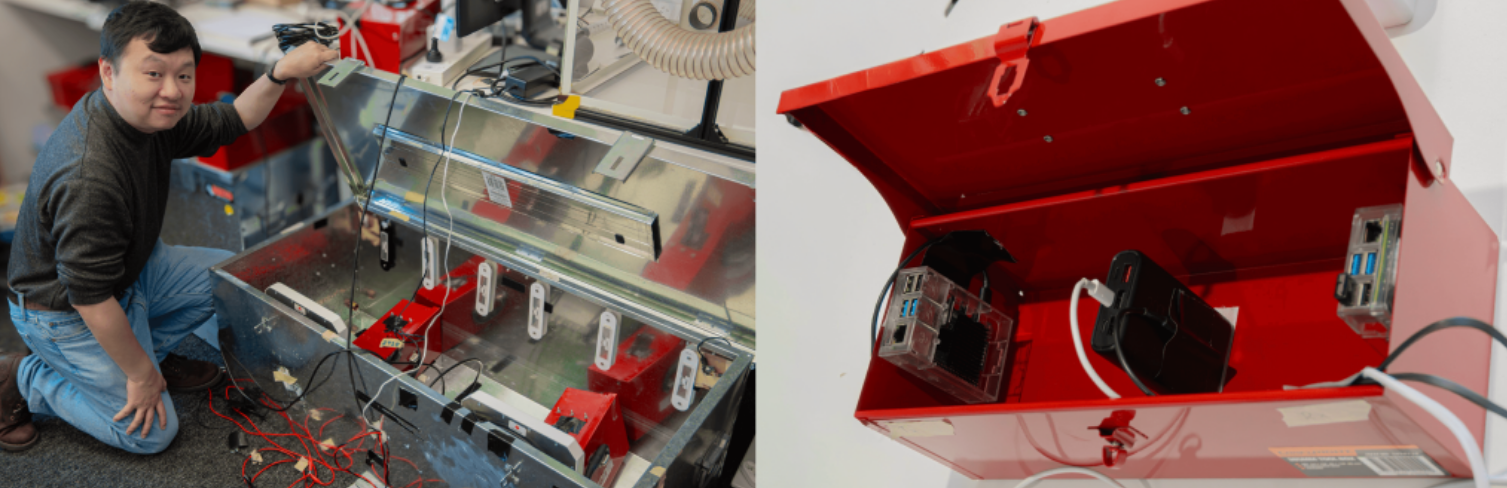
Researchers at Australia’s University of New South Wales (UNSW) are validating a prototype of an artificial intelligence-enabled wireless, real time sensing system that can spot dangerous heat in lithium-ion batteries before it potentially becomes thermal runaway.
The system uses existing wireless signals like wifi and mm-wave radar alongside AI algorithms to detect small shifts in surface battery temperature instead of using physical probes or wiring.
As the radio signals interact with the surrounding environment, subtle shifts caused by heat are analysed by AI algorithms to identify early signs of abnormal heating.
Early lab tests have shown the system can detect thermal anomalies with over 97% accuracy without touching the battery or opening the unit.
UNSW Professor Aruna Seneviratne said the collaboration allows the team to fast-track a technology that could change how battery safety is managed.
“By combining cutting-edge AI with low-cost, passive wireless sensing, we’re creating a solution that’s both technically robust and highly deployable in real-world environments,” Seneviratne said.
By leveraging pre-existing wireless infrastructure, the researchers say systems can be affordably retrofitted to existing systems, from households to remote installations in high-density storage units and transport containers, offering a highly scalable path to improved battery safety while reducing installation and maintenance costs.
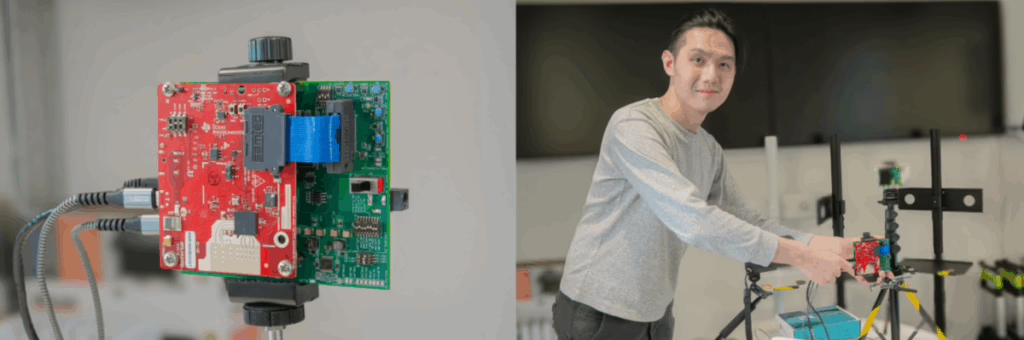
In collaboration with the joint Trailblazer Recycling and Clean Energy program – an AUD 280 million ($182 million) joint venture between UNSW and the University of Newcastle to promote research commercialization – the UNSW wireless system researchers have partnered on the project with Sydney solutions companies GinigAI, Trantek MST, and DeepNeural AI.
GinigAI is contributing its patented embedded wireless sensing platform to the research, which underpins the system’s passive detection capabilities.
Trantek MST is providing the sensor interconnection system to link, manage, and monitor the platform, with the UNSW researchers given access to Trantek’s developers and technology.
DeepNeural AI is refining and scaling the algorithms for real time performance.
DeepNeural AI Managing Director Saksham Yadav said the company is pioneering advanced AI algorithms that will drive the next generation of wireless battery monitoring systems.
“Our research focuses on utilizing machine learning to identify subtle, hard-to-detect patterns in wifi and mm-wave signals, enabling the prediction of thermal runaway events before they occur,” said Yadav. “Through our collaboration with UNSW and other key industry partners, we’re transforming cutting-edge AI research into a practical, scalable solution, with the goal of establishing a new global standard for proactive, real-time battery safety monitoring.”
Written by






Popular Posts