Electricity spot market switch to 15-minute intervals boosts battery revenue

Since Oct. 1, the wholesale “spot” market for electricity – which determines prices 24 hours in advance – has been displaying prices at 15-minute, rather than hourly intervals.
French business-to-business battery storage company Storio Energy has analyzed the impact the change has had on revenue from battery arbitrage: charging batteries when energy prices are low to discharge and sell when prices rise.
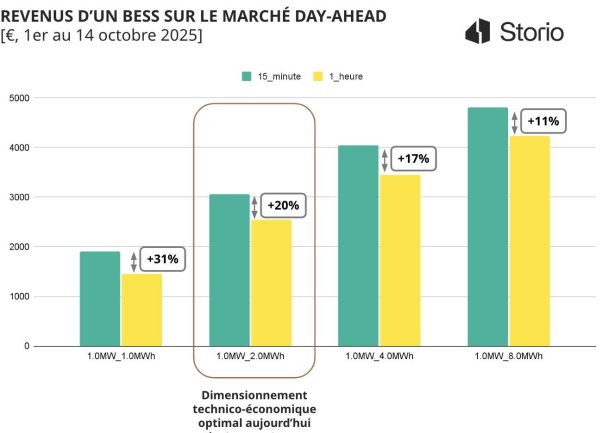
Storio’s figures for Oct. 1 to Oct. 14 indicate a 20% rise in revenue for two-hour batteries.
The company said that was down to more granular capture of price extremes and more daily battery cycles under the new system.
Storio said that while daily loading and discharge cycles remain the same, the 15-minute intervals disclose more extreme price swings that were previously cloaked under the one-hour system. The company also observed two-hour batteries are now operating 1.2 cycles per day, rather 1.1 daily cycles, because they are configured to charge and discharge only when specified economic values are triggered by the prices reported.
The increased price volatility offered by 15-minute reporting creates new opportunities, new cycles to seize.
“The passage of the spot market price [to reporting] every 15 minutes allows batteries to respond more precisely to the supply and demand imbalance on the electricity grid,” said Jean-Yves Stephan, CEO and co-founder of Storio Energy. “This increased granularity is, therefore good news for our customers but it is also good news for the electricity grid, which is becoming more efficient overall with this change. The more accurate the day-ahead spot market, the less the power grid needs to rely on expensive balancing mechanisms.”
From pv magazine France.
Written by





Popular Posts