EU funding ban on high-risk inverters, including Chinese suppliers, extends to BESS PCS [UPDATED]

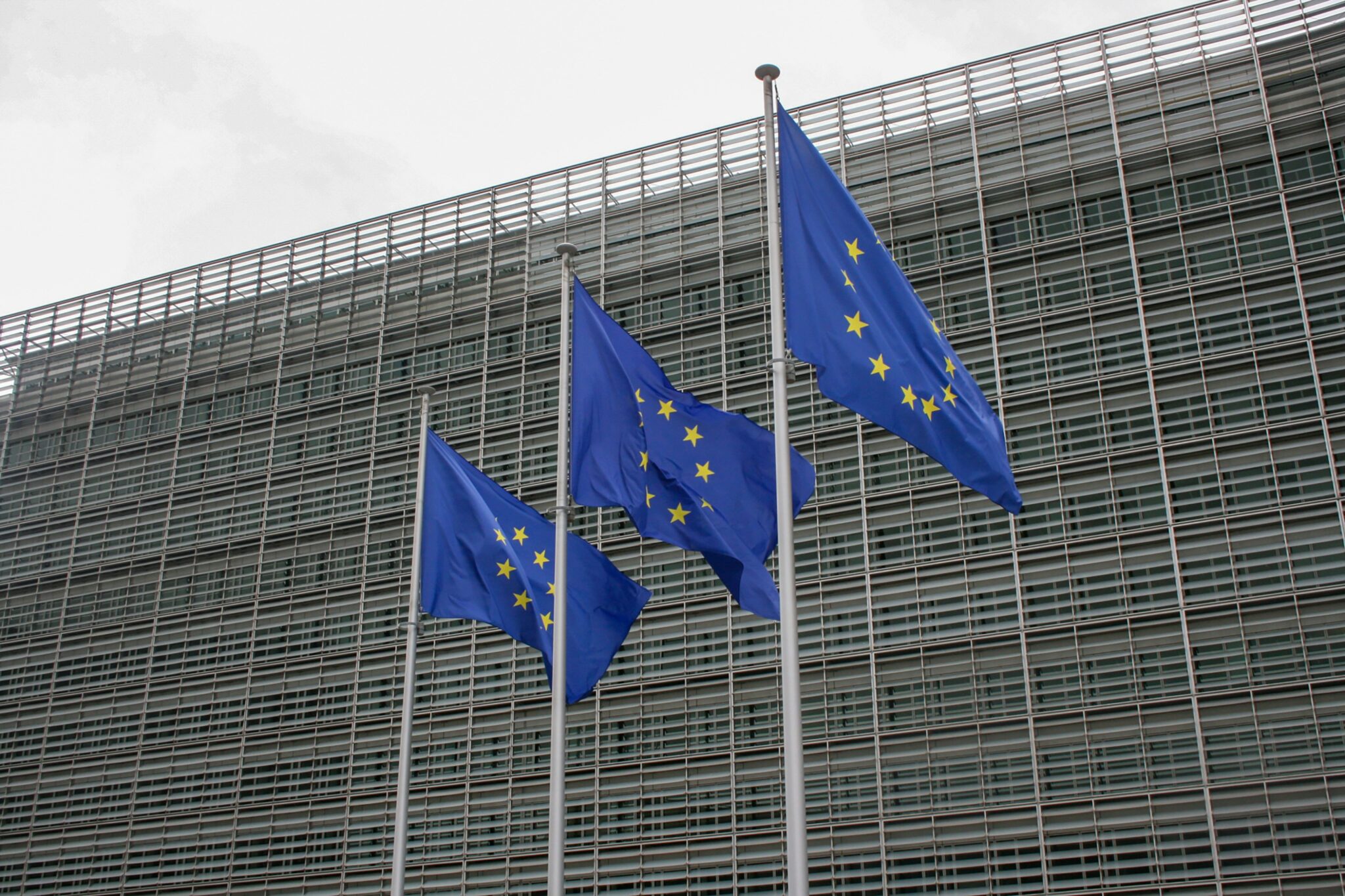
The European Commission has decided to restrict EU funding, including through the European Investment Bank and European Investment Fund, for solar, wind, and energy storage projects using inverters from so-called high-risk countries, namely China, Russia, Iran, and North Korea, citing cybersecurity risks.
Media reports have highlighted the limits on funding for photovoltaic solar projects; however, battery energy storage systems are now also confirmed to be included in the guidance.
Official publication of the new guidelines is awaited by the industry, though the process began on May 1 2026, having been communicated to financial institutions. For now, according to sources seen by ESS News, the Commission isn’t planning a public announcement or press release either.
Earlier reports, including by pv magazine, indicated timelines for the internal policy decisions, and according to documents seen by ESS News, those details have firmed further, and focus on inverters on all renewable energy applications.
Key deadlines and transition provisions are as follows for financial institutions with EU projects:
- “1 May 2026 – Notify the Commission of all pipeline projects.”
- “1 September – Grandfathering exemptions for projects approvable by 1 November 2026.”
The grandfathering clause notes: “Financial institutions may notify their most advanced pipeline projects by 1 May 2026. Only projects sufficiently mature to be approved by 1 November 2026 qualify. Projects at an early enough stage to still switch inverter suppliers are not eligible for exemption.”
For projects outside the EU and not connected, or planned to be connected, to the EU grid, inverters from high-risk suppliers should be phased out by 15 April 2027. Technologies covered include inverters across all renewable energy applications. The rules also apply globally to companies owned or controlled by those countries.
Commission document confirms BESS PCS included in bans
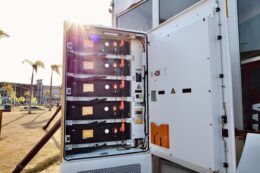
According to the documents, the Commission notes “Energy storage systems / Power Conversion Systems (PCS) are explicitly included,” which places EU-backed battery energy storage projects on notice, particularly those relying on integrated PCS supply from Chinese and other suppliers.
In terms of sourcing, many batteries that are supplied from Asian sources include all-in-one options that package the batteries and cells with the PCS. For those projects that are now facing bans on inverters, sourcing lists may be constrained or require changes.
Christoph Podewils, Secretary General of the European Solar Manufacturing Council (ESMC), confirmed to ESS News that the decision doesn’t have exemptions based on power class.
“It’s really a strict regulation, without many loopholes… It also concerns inverters supplied from entities under control of the high-risk countries, so for instance, a company producing, in Europe, inverters belonging to a Chinese entity.”
In terms of supply chain limits, the European Commission doesn’t appear to be addressing the sourcing of passive components; inverters typically made in Europe may source some key components, such as IGBTs or MOSFETs, involved in the high voltage DC-AC switching process from Chinese manufacturers.
In a press release from the ESMC, Podewils said, “This decision sends a clear signal on the security of critical infrastructure in Europe. Inverters are the heart of every solar and energy storage installation and, as internet-connected devices, a potential gateway for cyberattacks. It is right that EU funding should no longer flow to technology from high-risk states. European manufacturers are ready to meet this demand.”
European Investment Bank places limits on billions in financing
The European Investment Bank (EIB) has announced a new financing envelope of €2 billion ($2.17 billion) specifically dedicated to supporting renewable energy projects across the European Union. That funding will also not be able to be used for participating in projects with inverter suppliers originating from the countries deemed “high-risk”.
According to the Commission, the EIB alone funded approximately 20% of EU solar deployment in 2025. If that trend continued, the bans would be impactful.
Update: China’s response
After a short delay, the Chinese government has issued an official statement regarding the EU’s recent ban on Chinese inverters in EU-funded PV projects.
“Without any factual evidence, the EU has for the first time designated China as a so-called ‘high-risk country’ and, on this pretext, banned financial support for projects using Chinese inverters,” said China’s Ministry of Commerce (MOFCOM).
“The EU’s designation of China as a ‘high-risk country’ will undermine mutual trust between China and the EU, disrupt bilateral economic and trade cooperation, destabilize industrial and supply chains both within the China–EU context and globally, and even carry the risk of decoupling and further supply chain disruption,” the statement reads.
“China urges the EU to immediately cease the stigmatization of China by designating it as a ‘high-risk country,’ and to lift the unfair and discriminatory practices targeting Chinese products,” the MOFCOM added. “China will closely monitor the situation, carefully assess the impact of the EU’s policies on the interests of Chinese enterprises and on China-EU industrial and supply chains, and take necessary measures to safeguard the legitimate and lawful rights and interests of Chinese enterprises.”
MOFCOM also stated that the new measures excluding Chinese products may harm the EU itself, jeopardizing its green transition and energy security.
No details about potential countermeasures were revealed.
Written by


Popular Posts