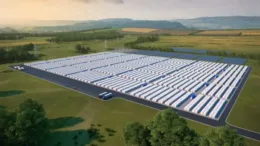
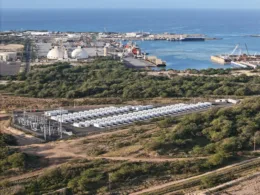
Shifting global battery storage trends could open the door for European growth


BESS has quickly evolved from an emerging technology into a cornerstone of the green transition. Deployment is accelerating across Europe and North America as grids integrate more renewables, and recognition of the need for flexibility grows.
At NORD/LB, we’ve witnessed this shift firsthand. In just a few years, BESS has matured from a relatively niche asset class into a mainstream component of the clean energy system, attracting investors, policy frameworks, and a growing pool of lenders. As an example, we have financed over 6 GW of storage in the United States to date, ranking among the top five lenders, and closed eight BESS deals across Europe in 2025 alone.
Despite this progress, deployment remains uneven. Contracting, grid connections, and policy frameworks continue to shape which projects succeed and where. Future growth hinges not only on deployment rates, but on how effectively developers, grid operators, and financiers collaborate to balance the risk and reward of projects.
Diverging journeys across the pond
The US market has matured faster than Europe’s, thanks largely to clarity around revenue models and strong state-level incentives. In California and Texas, for example, batteries have become critical to grid stability, helping balance the peaks and troughs of renewable electricity generation. More recently, states such as Massachusetts and New York have joined the expansion by introducing targeted incentive programmes designed specifically for BESS assets.
Policy consistency, combined with falling lithium prices and tax credits introduced by the Inflation Reduction Act, means BESS has become mainstream infrastructure in many areas.
Progress in Europe has taken longer. Early projects encountered long lead times and faced uncertain offtake structures. Before closing its first European BESS deal, NORD/LB spent several years deliberately building market knowledge and relationships — a foundation that has positioned us to capitalise as the landscape matures. New models have recently emerged to address the question of revenue certainty, providing examples that can be replicated across other European markets.
The UK has led with the introduction of floor agreements, which guarantee a minimum income level to the asset owner and provide partial protection against market volatility. Meanwhile, our financing of Germany’s first tolling agreement deal, Project Stendal, helped set a precedent for how such structures can attract long-term debt in Europe.
From bottlenecks to bankability
Despite growing sophistication in contracting, deployment across Europe remains stunted by regulatory bottlenecks, particularly grid connection delays. Closer collaboration between lenders, developers, and floor/tolling providers is critical. Unlike renewable energy projects, where power purchase agreements are standardised, each BESS contract differs. The more tolling providers, banks, and developers build common frameworks, the faster BESS can scale. Successful BESS financing relies on balancing revenue certainty for lenders (ensuring bankability) and upside for sponsors.
Lessons from the US and opportunities for Europe
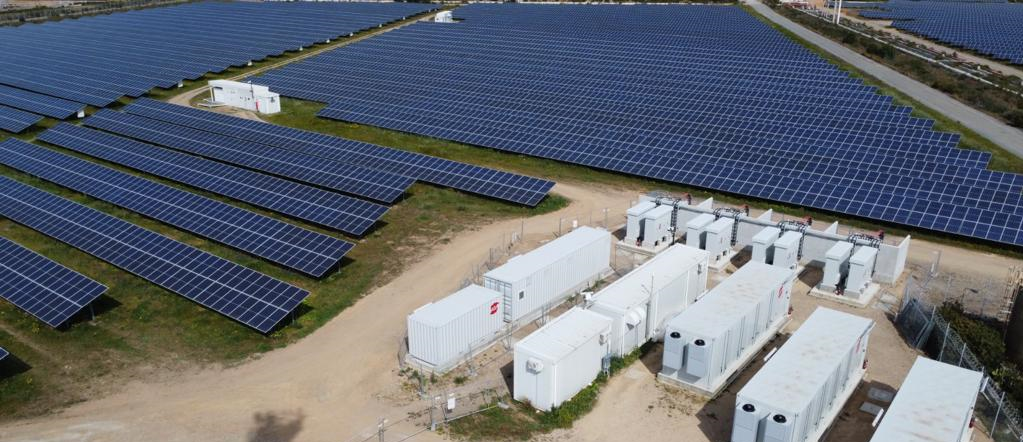
The US market offers valuable insights into the opportunities that project hybridisation provides. Solar-plus-storage projects are increasingly common and often operate under long-term tolling agreements with grid operators. These models are highly bankable — providing fixed lease payments, requiring only basic performance guarantees, and eliminating a large amount of operational risk for developers.
Europe is beginning to follow similar pathways for hybridisation and long-duration storage. Countries such as Romania – still early in their renewables journey – are embedding storage from the outset, showing that newer markets are learning from those that didn’t roll out batteries in conjunction with their renewable projects. In markets with very high renewable penetration, like Spain, managing load shifts has become a daily challenge. These systems urgently need flexible assets like batteries to stabilise supply and balance the grid.
To unlock the next wave of European projects, policy frameworks must evolve. Long-term capacity markets could provide stable revenue, while pan-European ancillary service markets would increase liquidity and efficiency.
Grid fees also play a crucial role. In some countries they account for a large portion of operating costs, while in others they are completely waived. Developers need clarity and consistency on when batteries are rewarded for supporting flexibility and when they will be charged for using the grid. The US market shows when policy is correctly administered, BESS is deployed efficiently.
Looking ahead: scale, duration and innovation
As equipment costs fall and regulation matures, the question is no longer whether to deploy storage, but how to do so efficiently and at scale. Developers will need to match storage duration to varying market conditions and build in flexibility so systems can evolve as technology improves.
Technological innovation will continue reshaping the sector. We expect new chemistries beyond lithium, such as zinc-bromine, to become commercially viable within five years, opening new possibilities for lenders and developers.
Battery storage is undoubtedly entering a rapid phase of expansion. As Europe’s renewable capacity grows, flexible systems are essential to stabilise the grid and protect consumers. Policy clarity, strong contracting, and effective grid planning can unlock the next wave of investment. At NORD/LB we remain committed to leveraging our market experience to turn technological progress into bankable financial structures that make the energy transition investable.
Authors:
Florian Hock is a Senior Director in the project finance division for renewables at NORD/LB. He coordinates the bank’s BESS efforts in Europe and specializes in structuring financing solutions for storage projects, focusing on risk allocation, revenue stability and the importance of robust contractual frameworks. Florian regularly works with developers and investors on financing strategies for grid-scale storage across Europe. Notable recent transactions include the first tolling agreement project in Germany (Stendal, 109MW) and financings for one of the largest UK BESS portfolios financed to date (Constantine, 612MW) as well as a BESS project on a former coal power plant site in Wales (Uskmouth, 120MW). He is currently involved in a multitude of BESS projects at various stages across the UK, Germany, Italy, Benelux and Eastern Europe.
Pablo Cervo is an Associate Director in NORD/LB’s Energy Origination Europe team, specializing in financing battery energy storage systems (BESS). Before joining NORD/LB, he gained development experience with a leading French IPP. Pablo has led landmark transactions, including the largest BESS project in France (240 MW / 480 MWh) and the largest UK operational portfolio with Gresham House (1 GW / 1.7 GWh).
Brandon Faber, Director at NORD/LB
Written by




Popular Posts