Italy’s new energy provisions could boost gas use, undermine renewables and storage competitiveness

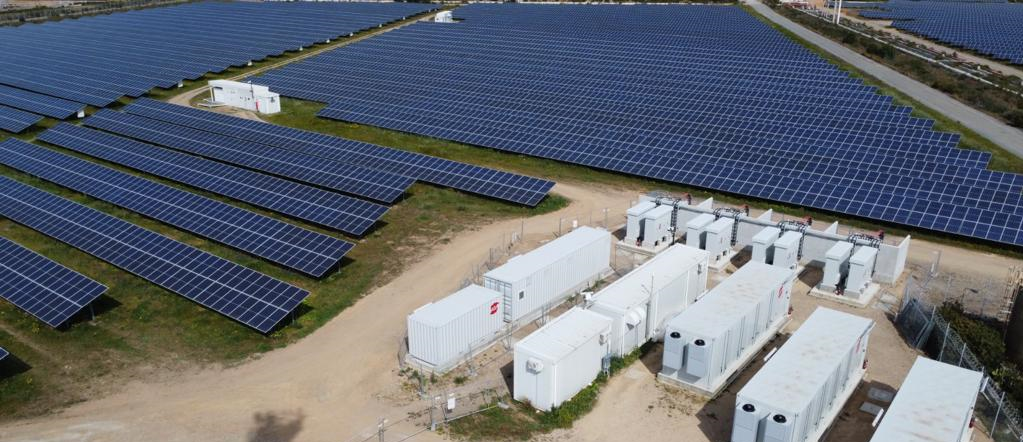
On 24 February, the Italian government approved a new energy decree, the so-called Decreto Bollette, introducing several measures aimed at lowering electricity bills for consumers. However, industry representatives have criticized parts of the decree, arguing that they effectively reimburse gas-fired power producers for gas transmission tariffs and EU Emissions Trading System (EU ETS) costs, to the detriment of the renewable energy and storage sectors.
According to Luca Urbanucci, an analyst at Italian market research company ICIS, the measures could significantly affect photovoltaic plant revenues, with capture prices for solar technology potentially falling by more than 30%. “Such a reduction would directly impact all business models not supported by government incentives, namely merchant renewables and the power purchase agreement (PPA) market, and could also have indirect effects by increasing competition in auctions,” he told pv magazine.
The impact would vary across business models: pure merchant plants would feel the effect immediately, already financed assets more gradually, and new projects, particularly those still in development, could face barriers to financing. A decline in capture and baseload prices would also make solar-based PPAs less economically attractive.
“If the proposed measures are implemented, we expect a sharp slowdown in Italy’s PPA market. Beyond the economic impact, the decree raises concerns over regulatory risk: if such a high-impact measure were approved, the Italian market could appear less predictable, and consequently riskier, to investors,” Urbanucci said.
Battery energy storage systems could also be affected, as well as all those technologies with lower marginal costs than gas-fired plants.
“Our estimate for 2027 indicates a contraction of roughly 10% in the average daily spread on the day-ahead (MGP) market, due specifically to the implementation of the decree’s measures,” Urbanucci explained. “It is logical to expect that the impact on daily spreads—and therefore on battery profitability from energy-only arbitrage—will grow year by year as solar penetration rises and hours with zero or even negative prices increase.”
The measure could constitute state aid, and Italy is required to notify the European Commission (EC) within 20 days. The EC then has two months to assess the proposal, though an in-depth investigation could extend the process and create uncertainty.
“In our view, the proposal to reimburse EU ETS costs is unlikely to be approved in its current form under state aid rules,” Urbanucci said. “The Clean Industry Deal State Aid Framework allows energy-intensive industries to receive support to offset part of their electricity costs, provided a portion of the aid is earmarked for investment in decarbonization projects. The proposed mechanism, however, goes well beyond these criteria.”
According to Urbanucci, reimbursing gas transport tariffs would reduce electricity market supply from gas-fired power plants, with the effect varying by plant efficiency. Overall, the measure would lower the average annual electricity price – the Single National Price (PUN) – by just over €6.3 ($7.4)/MWh. Including the ETS reimbursement, the total impact on the PUN would reach roughly €26.1/MWh.
“It is important to note that the reduction in gas-fired supply does not translate directly into an equivalent drop in the PUN; the actual effect is smaller—around 80%—since gas does not set the marginal price at all times of the year,” Urbanucci said. The new provisions, if implemented, would also drive a sharp increase in gas consumption. “We estimate the measure could lead to a roughly 33% rise in gas-fired generation in Italy, resulting in a corresponding increase in gas consumption for thermoelectric power,” he added.
From pv magazine Italy.
Written by





Popular Posts