Hithium says ‘world’s first’ open-door first test of its 6.25 MWH BESS was completed

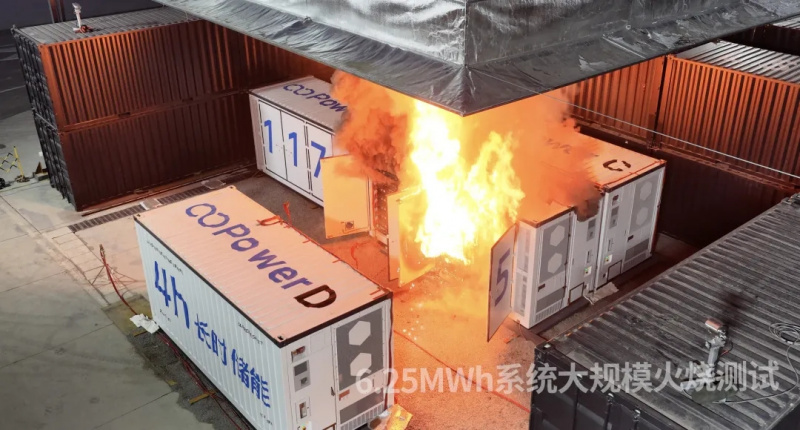
Hithium has announced the completion of a large-scale fire safety test on its ∞Power 6.25 MWh long-duration energy storage (LDES) system. The testing focused on the company’s 1175 Ah “kiloampere-hour” (kAh) battery cells and was reportedly conducted under the supervision of UL Solutions, U.S. Authorities Having Jurisdiction, and fire protection engineers.
According to Hithium, the program was executed in compliance with the upcoming requirements of UL 9540A 2025 and NFPA 855-2026.
The company described the test setup as an “open-door” scenario, where container doors were left fully open to maximize oxygen supply and remove barriers to propagation. This configuration was intended to create a higher combustion intensity than standard closed-enclosure tests.
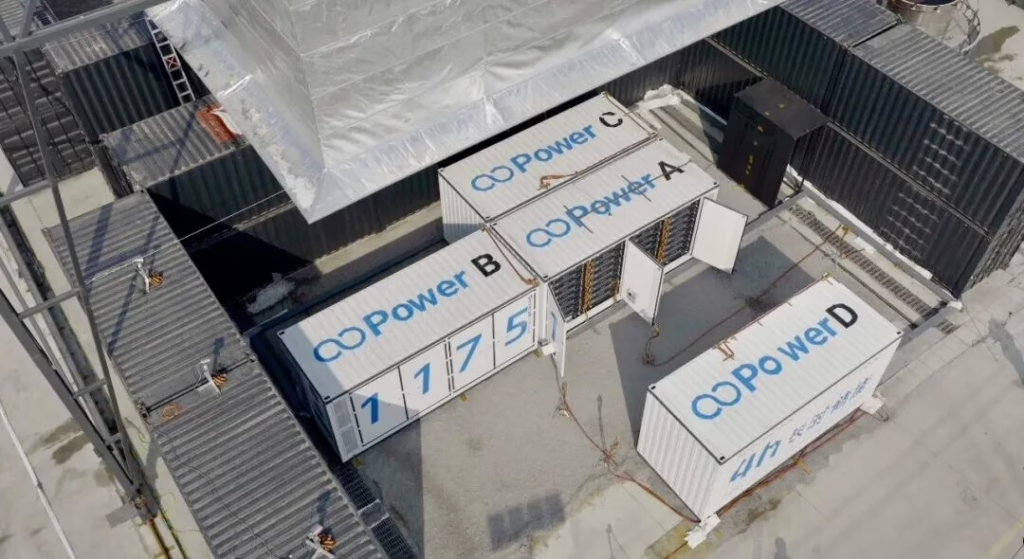
The test arrangement placed adjacent containers back-to-back and side-by-side with a spacing of 15 centimeters. Hithium stated the system was at 100% state of charge (SOC) with all active fire suppression systems disabled to test the unit’s passive safety design features.
Hithium reported that the initiation container remained structurally intact following the event. The company said that thermal propagation was contained to the single unit and that cell temperatures in the neighboring containers did not exceed safety thresholds.
To address the thermal release potential of the large-format 1175 Ah cells, Hithium utilized a specific venting design. The company described a “three-dimensional airflow channel” and dual pressure relief valves intended to vent gas at the cell and module levels, while combining dual physical barriers and high-strength steel frames and stiffeners. Hithium stated that no debris ejection or explosions were observed during the test.
In the press release, Hitium stated, “Under the most severe conditions of open-door combustion and minimal spacing conditions, the system endured direct flame exposure and intense heat transfer. Fire-resistant module covers, reinforced steel enclosures, and insulated multi-layer container structures confined the fire to a single battery system with no thermal propagation across the containers, and temperatures of cells in adjacent containers remained below safety thresholds.”
The representatives from UL, U.S. Authorities Having Jurisdiction, were not quoted.
The companies released four images of various stages of preparation and a burning system, showing four systems in proximity including back-to-back and alongside.
The photos are included below, all supplied via Hithium, including the quoted titles:
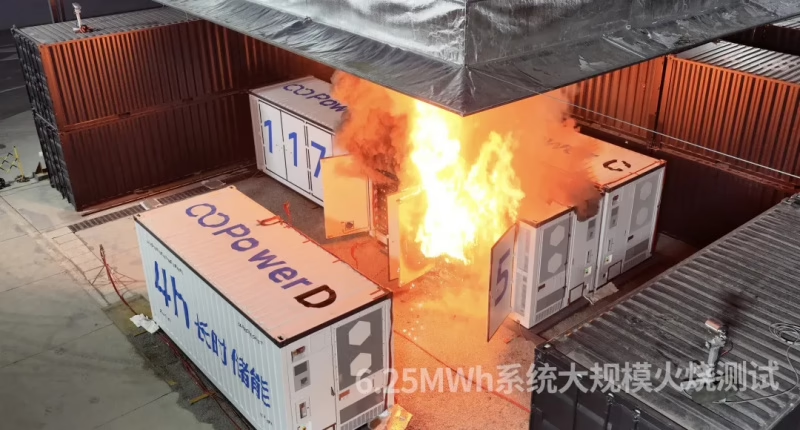
“Open-door Large-scale Fire Test”
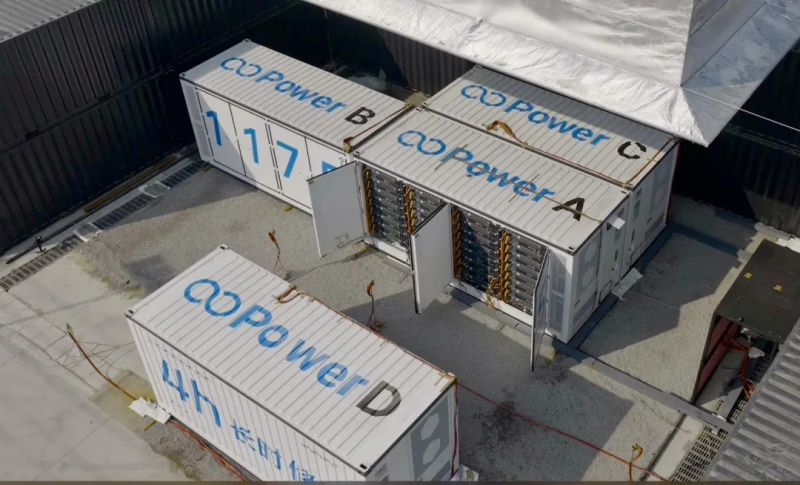
“Fire test site”
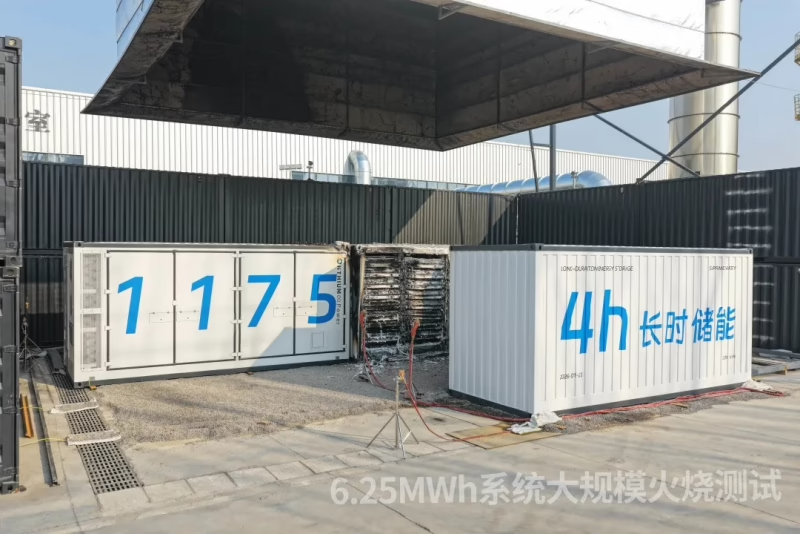
“The main structure remained intact after fire test.”
Written by





Popular Posts