From cell production to energy trading: Volkswagen launches its first large-scale battery storage project

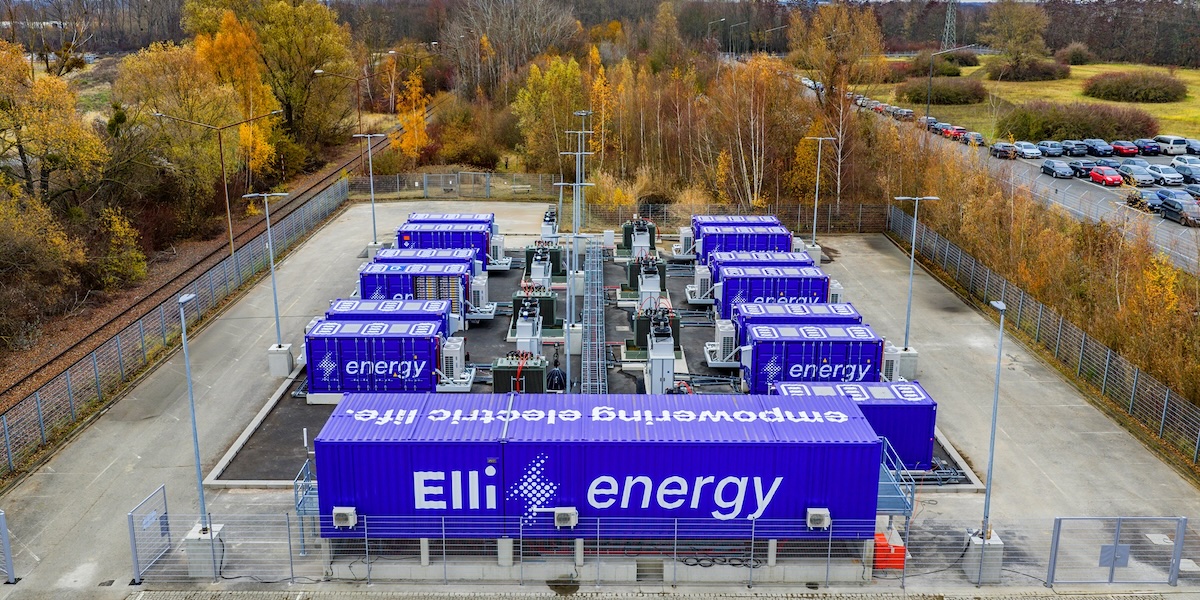
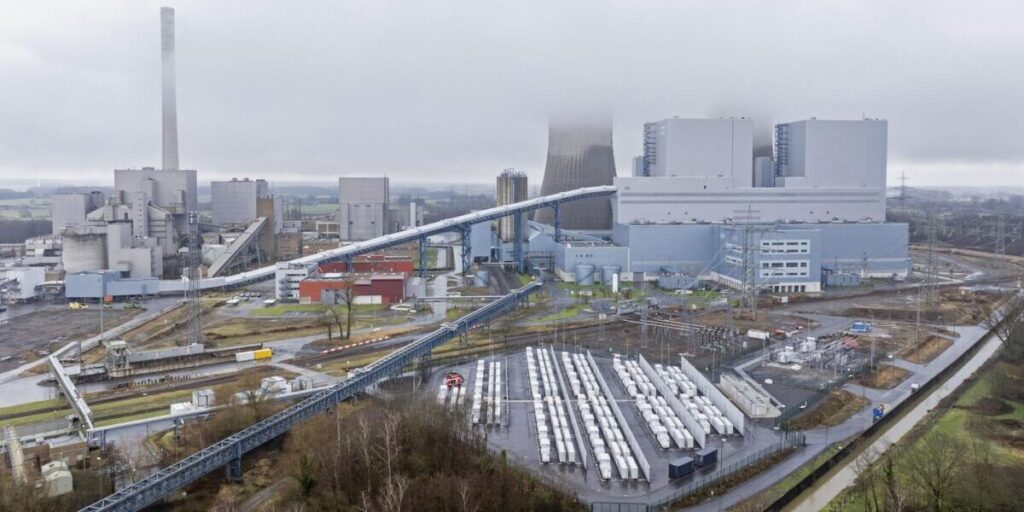
Volkswagen is entering the market for stationary battery storage systems. The move was marked by the grid connection of the “Elli PowerCenter” in Salzgitter, announced on Monday by the group’s subsidiary Elli (Volkswagen Group Charging GmbH). After several months of construction, the provider of energy and charging solutions for electric vehicles has commissioned a system that, while modest in scale with a capacity of 20 MW/40 MWh, is nevertheless notable. Although Volkswagen has not yet disclosed concrete figures or timelines, it has outlined ambitious plans for the project.
The facility is the Volkswagen Group’s first battery storage system. According to the company, it marks another step in expanding its role “from automotive manufacturer to integrated energy player,” bringing together activities ranging from battery cell production to energy trading under one corporate roof. The project exemplifies a group-wide approach that combines cell production, battery system expertise, large-scale stationary storage, and digital energy platforms. Volkswagen says this integration creates “synergies along the entire energy value chain – at a level of integration that only the Volkswagen Group can achieve in this form.”
The technological foundation for the project comes from Volkswagen’s battery subsidiary PowerCo. Its Energy Storage Solutions (ESS) division develops and manufactures industrial-scale storage systems based on the “Unified Cell,” the group’s standard battery cell for electromobility. With the Salzgitter project, PowerCo is delivering energy storage solutions for industrial applications for the first time. According to Volkswagen, this will establish a “closed battery ecosystem” at the site, combining cell production, stationary storage, and energy marketing.
The project also marks Elli’s operational entry into the energy storage and energy trading markets. Performance tests for trading electricity on the European power exchange EPEX are already underway. Volkswagen describes the “Elli PowerCenter” as a key component of its e-mobility strategy: the ramp-up of electric mobility requires not only vehicles and batteries but also “a stable, flexible, and market-ready energy infrastructure.” Additional storage projects are already in preparation.
Oliver Blume, CEO of Volkswagen AG, described energy storage and energy trading as “a new strategic business area with growth opportunities.” As the group electrifies its vehicle lineup, he said, it is increasingly focusing on the broader energy system. “With PowerCo, we are strengthening our technological sovereignty – while Elli manages, stores, and trades energy in a market-oriented way.” He sees this as a technological step on Volkswagen’s path to becoming a “global automotive tech driver.”
For Thomas Schmall, Volkswagen Group Chief Technology Officer, the PowerCenter also contributes to expanding renewable energy. At the same time, he said, it is creating “a completely new industrial ecosystem.” The Unified Cell, he added, serves as “the global technology platform for both worlds: mobility and energy.”
The PowerCenter itself consists of 13 storage containers and is designed for a multi-market operating strategy. An Elli trading team is responsible for optimization and market operations, with algorithm-driven trading conducted via a dedicated market access point. “This is the first time we are taking on the role of an active storage operator in the European energy market,” said Giovanni Palazzo, CEO of Elli. “It marks the launch of our Managed Battery Network – a platform designed to intelligently link large-scale storage systems and, in the future, vehicle batteries and other assets.”
In this way, Elli aims to evolve “from a charging provider into an energy company that trades and provides flexibility on behalf of our customers.”
From pv magazine Germany
Written by
Comments


Popular Posts