Entrix secures €43 million investment, eyes growth for flexibility services in Iberian market


Entrix has secured a €43 million ($46.4 million) investment from a consortium of backers including BNP Paribas’ Solar Impulse Venture Fund, Allianz, Junction Growth Investors, AENU, Enpal, Abacon, Korys and Arvantis Group. The consortium’s investment will enable the battery optimization company to further expand into Europe.
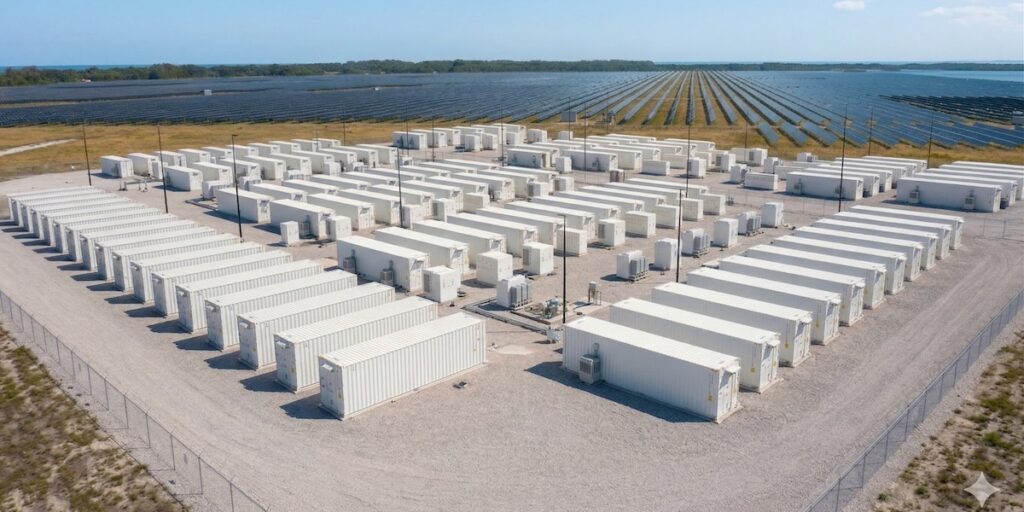
Entrix is already very active in many European markets, with more than 70 battery energy storage systems under management. The company said it has reached 3 GW/8.5 GWh of contracted battery storage capacity. Of the contracted portfolio, Entrix expects that 2 GW will be live and operational by the end of 2026.
Its portfolio includes standalone projects as well as co-location solar plus battery models and virtual power plants. Germany is Entrix’s largest market by capacity. The Munich-headquartered company operates one of Germany’s first large-scale battery systems and counts independent power producers, municipal utilities and companies such as Deutsche Bahn Energie, MEAG, and Encavis among its clients.
As well as its German operations, Entrix has teams and offices in Spain, Italy, and Poland. In September 2025, Entrix signed an agreement with Greenvolt Power for 1.3 GW/5.2 GWh of BESS projects in Poland, with these projects scheduled to go live this year, the company said. In June 2025, Entrix entered the Italian market intending to provide a dedicated management service for merchant battery owners participating in the MACSE auction scheme.
It is also active in the Portuguese market. The company anticipates significant growth and demand in the Iberia market as flexibility comes more into focus following the April 2025 Iberian grid blackout.
Commenting on the funding milestone, Entrix founder and CEO Steffen Schülzchen said that the scale of projects entrusted to the company reflects a structural shift in the energy system: “Flexibility has become critical infrastructure. Our role is to translate technical performance into stale, risk-adjusted revenues for investors while strengthening grid resilience and enabling renewable integration at scale.”

Written by
Comments






Popular Posts