Italy needs 50 GWh of new storage as solar nears 82 GW by 2030

Italy’s installed solar capacity is expected to rise from 43.5 GW at the end of 2025 to 82.3 GW in 2030, reaching 100 GW to 111 GW in 2035 and 114 GW to 137 GW in 2040. Solar generation is forecast to increase from 44 TWh to 110 TWh by 2030, accounting for more than 52% of renewable generation and about 37% of national electricity production, before reaching 156 TWh to 185 TWh in 2040.
The projections come from the 2026 Scenario Description Document, prepared by Italian electricity transmission system operator Terna and gas network operator Snam as a basis for their respective electricity and gas network development plans.
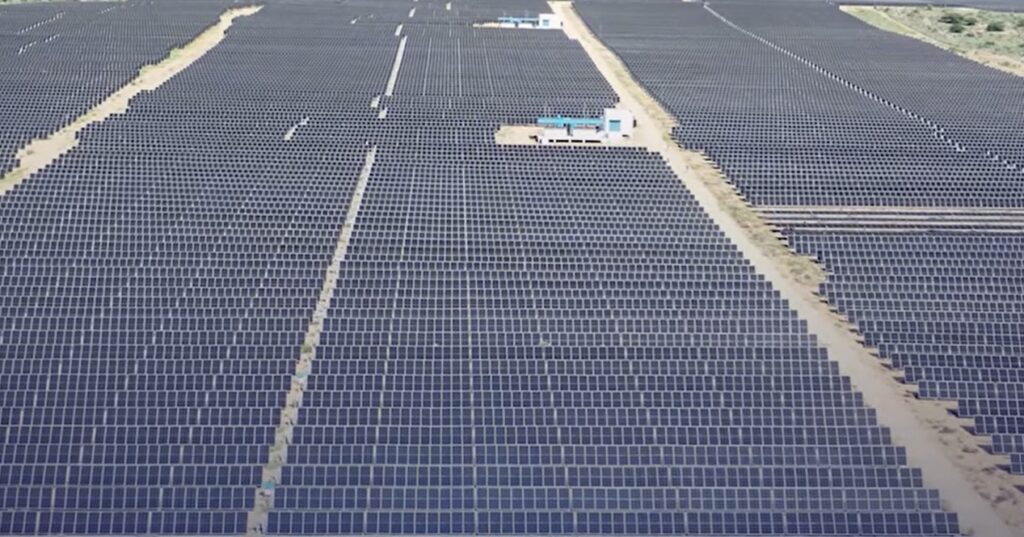
Utility-scale solar capacity is expected to more than double from 24.5 GW to 54.1 GW between 2025 and 2030, while distributed solar grows from 19 GW to 28.2 GW. The operators use a single “Best Estimate” scenario for 2030, which they describe as closer to a forecast than a scenario.
Solar and wind capacity combined is expected to reach about 103 GW by 2030, an increase of 45 GW from 2025. Around 23 GW of the additional capacity is already allocated through renewable energy support schemes, including FER 1, agrivoltaics, Agrisolare, FER X Transitorio, and Energy Release 2.0. More than half of this capacity is concentrated in southern Italy and Sicily. A further 7 GW to 10 GW is expected from upcoming FER X auctions, against a maximum auction volume of about 37 GW, while smaller installations are expected to add 2.5 GW to 3 GW annually.
Renewables are forecast to meet 63% of Italy’s electricity demand in 2030, up from 41% in 2025, in line with the country’s National Energy and Climate Plan. However, electricity demand is expected to reach only 338 TWh, below the plan’s 362 TWh target, reflecting slower electrification of buildings and transport. Data centers will partly offset this trend, with projected consumption of about 15 TWh in 2030 and 48 TWh in 2040.
After 2030, solar and wind capacity additions diverge between two scenarios. Under “Energy Integration,” annual additions slow to about 4 GW, slightly more than half the pace recorded between 2023 and 2026, and renewables meet 68% of demand in 2040. Under “Power Development,” favorable auction and permitting conditions and the start of offshore wind development lift annual additions to about 8 GW. Renewables then meet 77% of demand, while gas-fired generation falls to 53 TWh.
Storage requirements
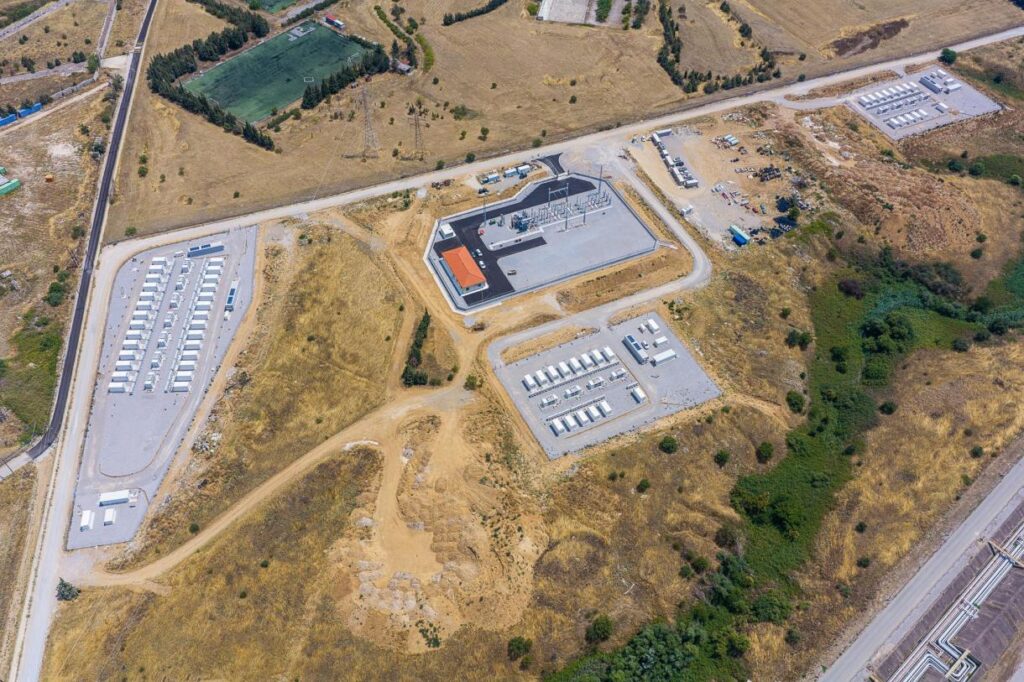
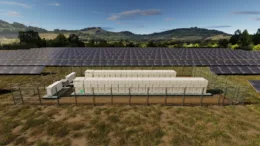
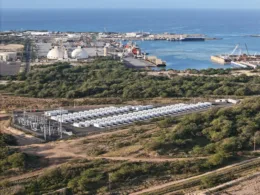
Meeting the 63% renewable electricity target for 2030 will require about 50 GWh of additional utility-scale energy storage capacity compared with 2026, including 24 GWh beyond capacity already envisaged under the Capacity Procurement Mechanism for Electricity Storage (MACSE).
The first MACSE auction, held in November 2025, contracted about 10 GWh for delivery in 2028, with 70% allocated in southern Italy. A second auction, scheduled for November 2026, offers up to 16 GWh for delivery in 2029.
Excluding existing pumped hydro storage, which provides 50 GWh of capacity, total storage capacity is forecast to increase from 17.9 GWh in 2025 to 80 GWh in 2030, including 19 GWh of distributed storage. By 2040, total capacity is expected to reach between 116.5 GWh and 169.5 GWh.
After 2030, storage requirements will extend to northern and central-northern Italy as renewable deployment widens electricity price differences between periods of low and high prices. The operators also expect renewable electricity to account for more than 90% of energy charged into storage in nearly all market zones in 2030, with the northern zone the exception.
Storage is also expected to help manage overgeneration, which is forecast to rise from negligible levels to about 6 TWh in 2030 and between 8 TWh and 25 TWh in 2040. The operators expect curtailment to concentrate in the middle of spring days and become a structural feature of the electricity system.
The number of Italian homes primarily heated by heat pumps is forecast to rise from 2.5 million in 2025 to 3.8 million in 2030, reaching between 4.9 million and 6.5 million in 2035 and between 6.1 million and 9.8 million in 2040. The upper estimate under the Power Development scenario represents about 35% of homes using heating systems.
Together with electric mobility, heat pumps are expected to increase electricity’s share of final energy consumption from 22% in 2025 to between 30% and 35% in 2040. Electricity demand is forecast to reach between 408 TWh and 439 TWh. The document says the greater efficiency of electrification technologies will reduce total final energy consumption for equivalent energy services.
Grid flows
The concentration of new renewable capacity in southern Italy is expected to change electricity flows across the country. On the South–Central South connection, the historical flow direction is forecast to reverse, moving from minus 12.3 TWh in 2024 to 21.2 TWh in 2030 and as much as 43.5 TWh in 2040 under the Power Development scenario.
Flows between the Central South and Central North zones are forecast to rise from 3.2 TWh to 10.7 TWh in 2030 and 26.5 TWh in 2040. Terna and Snam expect transfer capacity between Italy’s seven electricity market zones to increase, with planned interventions to be updated in the 2027 development plan.
Internationally, Terna is counting on expanded interconnection capacity at the northern borders with Slovenia and Austria, the renewal of the direct-current Sardinia–Corsica–Italy link, and a new interconnection between Sicily and Tunisia.
Interconnections are expected to play an increasing role in integrating renewable generation. Electricity exports are forecast to triple from about 5 TWh to 15 TWh by 2030, while net imports remain broadly stable at 43 TWh, compared with 47 TWh previously, equivalent to 13% of electricity demand.
From pv magazine Italia
More about
Written by
Comments



Popular Posts