INTERVIEW: Hithium’s sodium-ion storage push, where it could win, where it won’t, and path to bankability

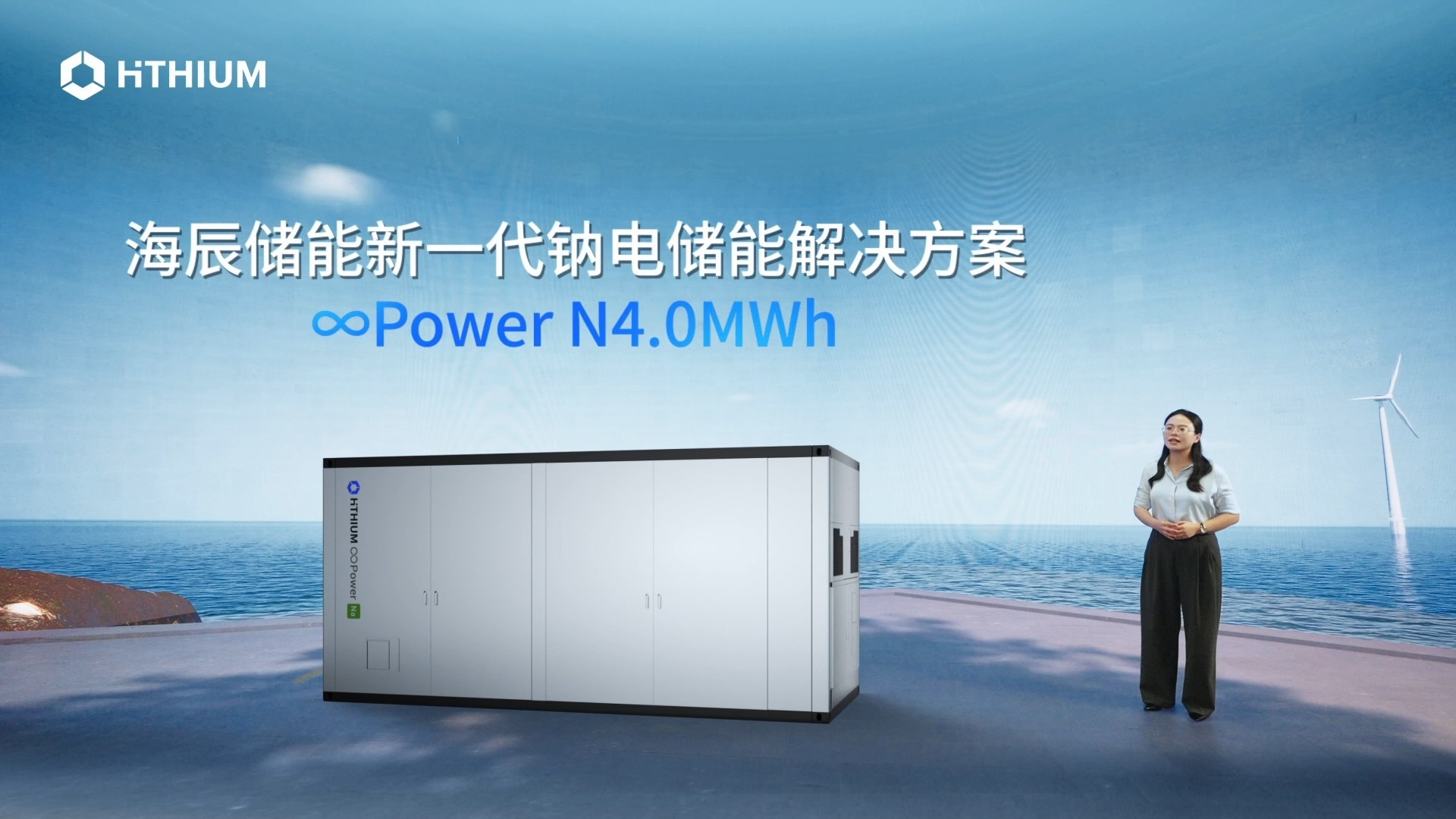
After Chinese manufacturer Hithium launched its new 4 MWh sodium-ion BESS alongside its new 785Ah cell for energy storage, in response to questions, Leb Lan, senior product manager, Hithium, spoke with ESS News to discuss not only the technology developments but also where and when a sodium-ion BESS cabinet will better suit the market than LFP-based battery cell technology.
ESS News: Your company has progressed rapidly in sodium-ion cells and energy storage systems. Is this the major step the technology needed, or do you expect advances of this significance to continue at a similar pace?
Leb Lan, senior product manager, Hithium: We see this launch as an important step in moving sodium-ion energy storage from technology validation toward large-scale deployment. As materials, manufacturing processes and the supply chain continue to mature, we expect further improvements in both performance and economics.
The motivation goes beyond introducing another battery chemistry. As global energy storage deployment expands, the industry is paying closer attention to the concentration of lithium resources, cyclical lithium carbonate prices, and the availability and predictability of materials over the 20- to 30-year life of energy infrastructure.
Sodium is abundant and widely distributed. This can reduce dependence on concentrated critical resources. Sodium-ion technology also has strong potential for long cycle life, which can reduce replacement and augmentation requirements over the project lifetime and lower the cost of delivered energy. This supports energy equity by making reliable storage more accessible and affordable across different markets.
Further progress will come from coordinated improvements in materials, cells, manufacturing and system design. We expect continued gains in energy density, manufacturing consistency, system efficiency and supply-chain scale. However, the most important measure of progress is not the size of each technology announcement. The real measure of progress is our ability to translate laboratory performance into energy storage products that can be manufactured consistently, validated thoroughly and deployed at a bankable scale.
How much of the new cell and system has been validated outside the laboratory and in real-world conditions?
We separate validation into two levels.
Our first-generation sodium-ion platform allowed us to complete the engineering chain from materials and cells to system integration. This work included safety testing, manufacturing-process validation and real-world project application. It also gave us practical experience in system integration, thermal management, BMS control, manufacturing consistency and supply-chain coordination. Some project details and operating data remain subject to customer confidentiality agreements.
For the new-generation product, we are planning a staged validation program covering the cell, module, system and real-world operating environment. The validation work will progress in line with product development and demonstration-project schedules, providing a basis for future customer evaluations and large-scale deployment.
Regarding fire-safety standards, what tests have you completed?
For our first-generation ∞Cell N162Ah sodium-ion cell, we completed the relevant safety tests under GB/T 44265. These included drop, crush, external short circuit, overcharge, over-discharge and thermal-runaway testing.
At the material level, we use a polyanion cathode chemistry with high thermal stability. We have also optimized the separator, electrolyte, pressure-relief design and gas-generation characteristics. However, material stability alone does not justify an absolute safety claim. Safety must be verified at the cell, module and system levels.
Building on the validation of our first-generation product, we are now conducting further safety testing on the new cell and system. The current work focuses on thermal propagation, gas release and pressure relief, fire-protection coordination, thermal management and transportation safety to verify reliability under practical energy-storage operating conditions.
How does pricing compare with your LFP products? What would the capital expenditure (CAPEX) look like for a theoretical ‘Project A’ 100 MW / 200 MWh BESS using LFP versus sodium-ion?
Giving a single price without defining a common project boundary could be misleading. The CAPEX of a 100 MW / 200 MWh project includes much more than the batteries. It also includes the PCS, medium-voltage equipment, civil works, grid connection, fire protection, installation, commissioning and any planned augmentation.
At today’s industrial scale, mature LFP supply chains will generally retain an initial CAPEX advantage for a conventional two-hour project. The economic value of sodium-ion should not be assessed only by the initial purchase price. The comparison also needs to consider cycling frequency, project life, efficiency, degradation, augmentation, operating costs and exposure to raw-material price volatility.
For projects with frequent cycling, long operating lives or a strong need for predictable long-term costs, sodium-ion has the potential to deliver a competitive LCOS through higher lifetime energy throughput. Its initial cost can also decline as the material ecosystem and supply chain scale.
For a theoretical ‘Project A’, we would prefer to provide a transparent CAPEX and LCOS comparison using the same assumptions for PCS, grid connection, EPC scope, operating profile and project life, rather than offering a headline number without those conditions.
Do you expect sodium-ion to beat LFP for utility-scale customers in certain scenarios? If so, which ones?
We do not position sodium-ion as a technology that will replace or defeat LFP across every application. The two chemistries will serve different customer needs.
LFP has a mature industrial base, higher energy density and significant economies of scale. It will continue to serve a large share of mainstream storage projects. Sodium-ion is more likely to create value first in projects with frequent cycling, long operating lives, or a strong focus on material availability and long-term cost stability.
For a utility-scale customer, the most important comparison is not simply cell price or energy density. It is the amount of energy the system can reliably deliver over the project lifetime and the total cost of delivering that energy. If sodium-ion can reduce LCOS through longer life, potentially lower augmentation needs and more predictable material costs, it can become the better choice for those specific operating profiles.
Our role is to match the technology to the project’s operating conditions and economic model, rather than claiming that one chemistry is universally superior.
Is sodium-ion bankable? Have you worked with insurers to demonstrate that?
For an emerging technology such as sodium-ion, bankability needs to be established for each product and project. It depends on independent testing, long-term operating data, manufacturing consistency, warranty terms and long-term service capability.
Our first-generation product has provided a foundation of evidence at the cell, manufacturing and system-engineering levels. For the new generation, we are building the technical basis required for future third-party evaluation, project application, warranties and service support.
We do not publicly comment on discussions with individual insurers or financial institutions. Our focus is to build a complete body of evidence that customers, technical advisers, lenders and insurers can assess independently.
What still needs to happen before customers will order sodium-ion systems at scale?
Large-scale sodium-ion deployment requires technology, manufacturing capacity and the supply chain to scale together.
First, the industry needs to further expand the stable, large-scale supply of key materials, including hard-carbon anodes, so that material availability can grow alongside sodium-ion production capacity and support large-scale cell and system production.
Second, cells and systems need continued testing and real-world project experience to build further evidence of performance, safety and reliability. Manufacturing capability, supplier quality management, product certification, warranty structures and long-term service capabilities also need to develop alongside production capacity.
Finally, customers, technical advisers, lenders and insurers need sufficient, verifiable data to assess technical risk and lifecycle economics. As material supply expands, manufacturing capability improves, project experience accumulates and economic performance is validated, sodium-ion technology will be increasingly ready to support larger customer orders.
Written by
Comments

Popular Posts