Deye announces Brazil battery factory, first outside China

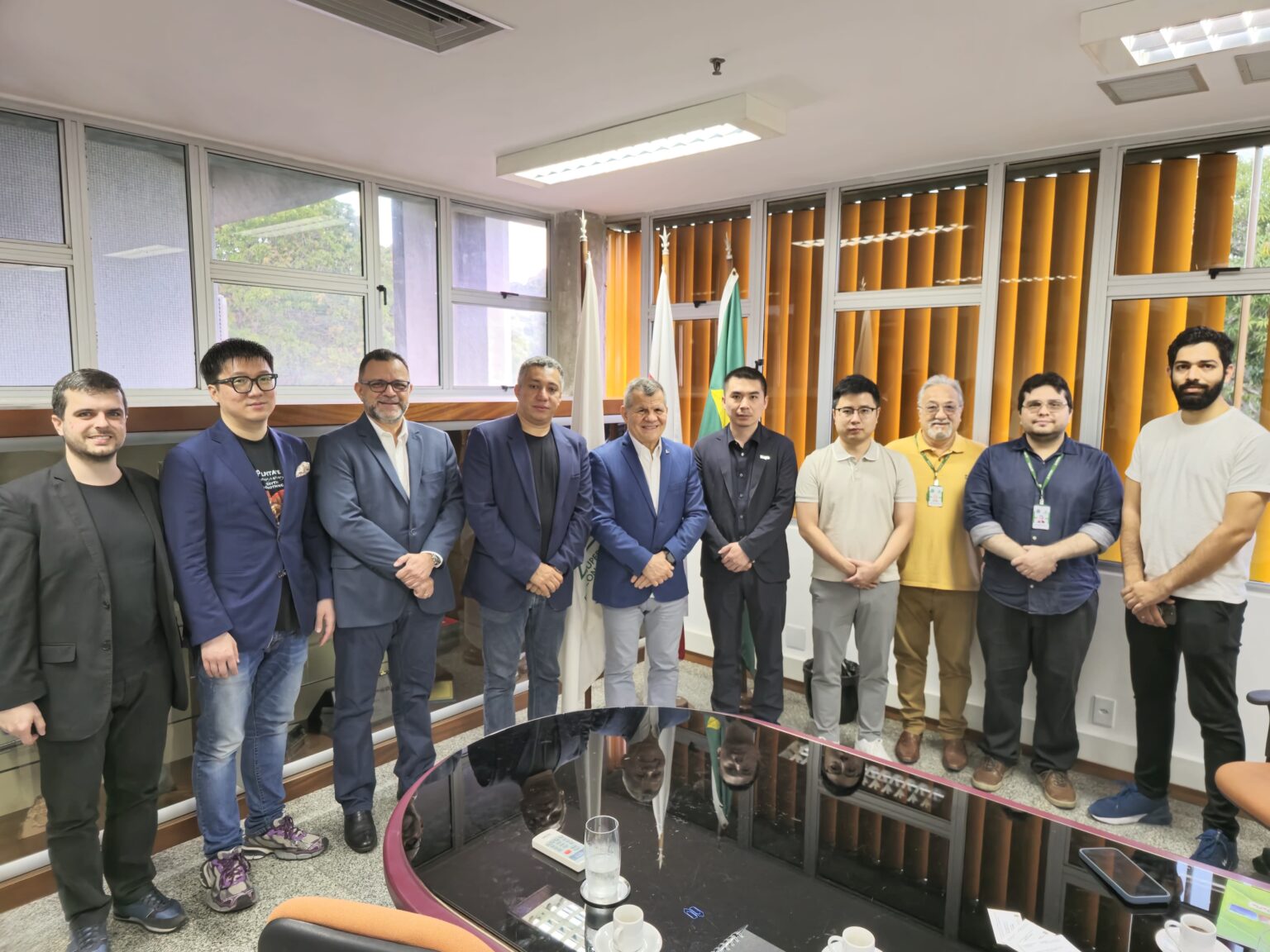
Deye, a Chinese manufacturer of photovoltaic inverters, batteries, and air conditioning units, has announced that the Manaus Industrial Complex, in the Brazilian state of Amazonas, will host its first factory outside China.
The announcement was made during a meeting of the Superintendence of the Manaus Free Trade Zone, abbreviated to Suframa, on Sep. 3, 2024. The choice of location for the new factory is largely due to tax and logistical benefits provided by the Manaus Free Trade Zone.
The new factory is part of Deye’s global strategy, which seeks to expand production capacity and regionalization. Deye expects to begin operations in the first quarter of 2025, starting with the assembly of stationary batteries with up to 150 kWh of capacity. A second stage will bring the manufacture of microinverters, string inverters, and hybrid systems. The goal is to make the price of batteries more competitive, enabling greater penetration of storage systems in Brazil and South America.
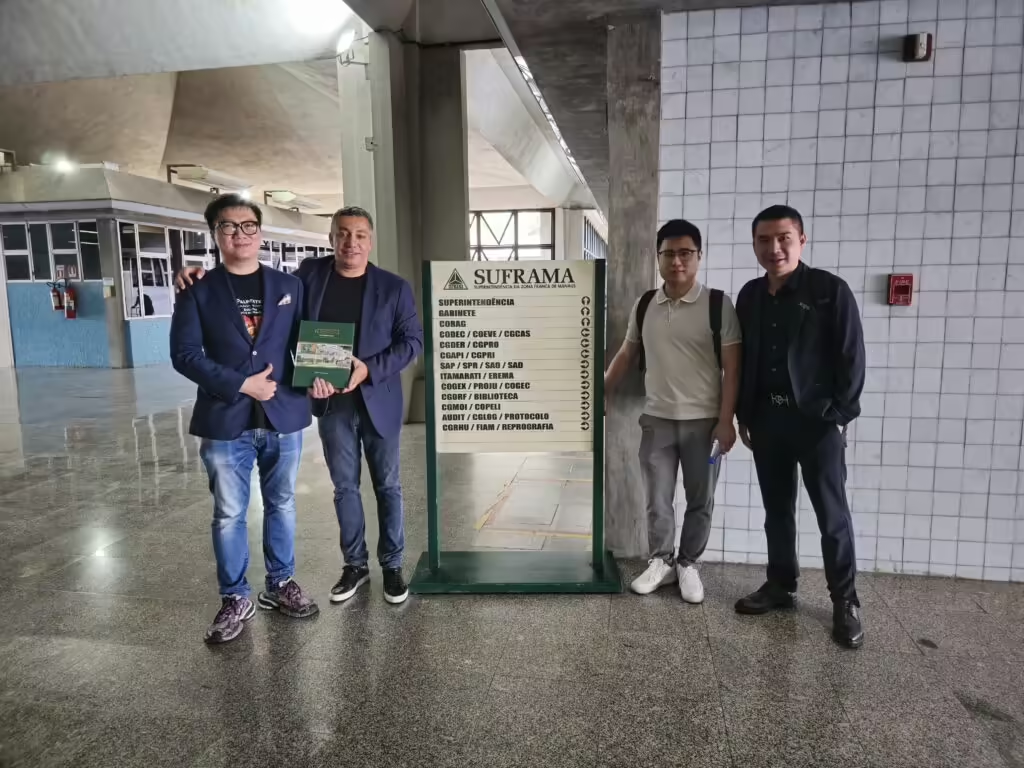
According to Deye’s country manager for Brazil, Italy, and Spain, Thiago Gomes, “The new factory will enable us to become more competitive in the local market, offering batteries that are up to 30% cheaper than imported ones. Furthermore, this initiative reiterates the brand’s commitment to the Brazilian market. We will be even closer to our customers in Brazil, one of the largest photovoltaic markets in the world and where we are leaders, reinforcing our credibility and the certainty that we will be here to provide technical support and warranty throughout the equipment’s useful life.”
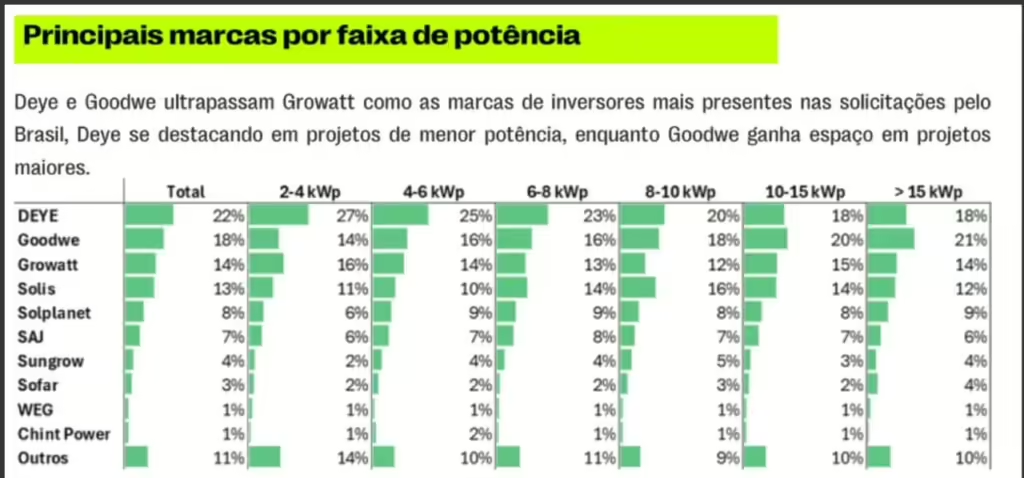
The executive said that Deye was listed by Radar Solfácil as Brazil’s inverter market leader with 22% market share. Gomes added, during an interview with pv magazine, that the company has been selling 6,000 batteries per month and that this number continues to grow steadily.
Gomes estimated that 200 jobs will be created for Brazilian professionals during the first phase of the factory project. Later, when production of inverters begins, the total number of direct and indirect jobs will reach 1,000, both in the manufacture and assembly of the equipment, in addition to 10 Chinese staff who will be responsible for management. The assembly line will be staffed entirely by women.
In addition to importing cells for lithium batteries, the machines that will be part of the surface mount device assembly line –which will connect electronic components directly to the surface of printed circuit boards – and the welding line will also be imported from China. Deye is in the process of approving domestic suppliers to manufacture other parts of the equipment, such as cabinets, screws, cables, supports, and packaging.
From pv magazine Brasil.
Written by



Popular Posts