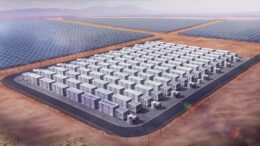
Spotlight on Brazil: A market ready for takeoff

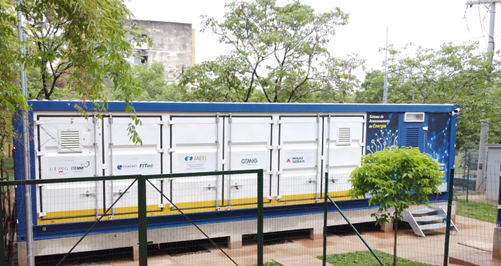
As the share of solar power in Brazil’s electricity matrix grows on both transmission and distribution grids, so does the need for flexibility and management of non-simultaneous generation and consumption. This is one of the main arguments for deploying batteries in the country, from residential applications to large-scale Battery Energy Storage Systems (BESS).
The share of photovoltaic power in Brazil’s electricity matrix is projected to reach 32.9% by the end of 2029, up from 22.2% in December 2024. During this period, installed capacity will increase from 51.7 GW to 88.2 GW, a growth of 36.5 GW. This forecast, which includes both utility-scale and distributed generation, is part of the 2025-2029 Energy Operation Plan presented in July by the National System Operator (ONS).
Simultaneously, solar energy storage could attract R$44 billion (USD $8.46 billion) in investments by 2030, according to a study by ABSAE. This volume would be distributed equally among off-grid applications, utility-scale systems, and commercial and industrial (C&I) applications.
A significant portion of this investment potential is held back by a lack of clarity regarding remuneration and operating rules for these systems, which is only expected to be resolved with forthcoming regulations from the National Electric Energy Agency (ANEEL). [Update on August 13th: that decision was delayed.]
However, the market is not standing still. Demand for BESS components increased by 89% in 2024, with many systems expected to come online in 2025, according to Greener’s Strategic Energy Storage Study.
The consulting firm expects the market to generate R$22.5 billion (USD $4.33 billion) in investments by 2030 in consumer-side applications alone, which excludes projects from the capacity reserve auction.
By the end of 2024, the country had accumulated 685 MWh of installed capacity, 70% of which is in isolated (off-grid) systems. In 2024 alone, 269 MWh were added, a 29% jump compared to the previous year’s additions. Energy reliability is the main driver of this advance: frequent power outages, reaching up to 190 hours in some regions, are leading consumers to seek safer and more durable alternatives.
Potential in Energy Frontiers and High Tariffs
Greener has developed an attractiveness map for the high-voltage segment in both the free and regulated markets. The state of Pará stands out: the utility Equatorial Pará shows the greatest potential for reducing peak-hour consumption, with a tariff difference of R$1,743.56 (USD $335.30) per MWh, the highest in the country.
In the productive sector, agribusiness is emerging as a major beneficiary of BESS. Using batteries with solar energy can replace diesel generators, reduce costs, and contribute to decarbonization goals. But challenges remain. “The agricultural sector is conservative. It’s necessary to educate them about the technical and economic benefits of storage,” notes Greener CEO Marcio Takata.
An emblematic example is in the far west of Bahia, a leader in the use of irrigation pivots, with a 43% increase in the last two years. Despite this growth, the region faces serious electrical power limitations. With substations operating at their limits, agricultural expansion depends on alternatives like energy storage.
Most of Brazil’s storage is still in isolated systems, especially in the North. Since 2018, over 62,000 consumer units with intermittent sources have been registered, with 70.7% in Pará and 10.2% in Acre. Universalization programs like “More Light for the Amazon,” launched in 2020, have made little progress, achieving less than 5% of their goal. To accelerate energy inclusion, the government has unified the program with the “Light for All” initiative, setting a new target to serve 226,000 consumer units by 2028.
BESS as a Service
Companies like Matrix Energia and Brasol are banking on the energy storage-as-a-service model to enable new projects for C&I clients. A pioneer in this model, Matrix has a deal with Huawei to deploy 750 MWh of storage by 2027. In June, the company announced an agreement with the city of Sao Paulo to supply storage for electric bus depots, multiplying the current recharging capacity by up to six times.
A 4.5 MWh BESS module integrated with ultra-fast chargers can charge at least 29 buses. Adopting this technology will help overcome grid infrastructure limitations, enabling the city’s goal of replacing diesel in public transport.
Energy Autonomy in Homes
The demand for batteries is not limited to corporate or agricultural sectors. A study by Descarbonize Soluções analyzed the performance of BESS in Brazilian homes. Considering typical population profiles and consumption scenarios, the analysis showed that with the right configuration, it is possible to keep essential appliances running even during long outages.
“Energy autonomy is no longer a luxury. With technological advancements and the frequency of blackouts, it has become a necessity,” explains Antônio Lombardi Neto, CTO of Descarbonize. “The combination of a battery and solar power brings comfort, security, and independence.”
The study was based on a 4.8 kWh LiFePO₄ lithium battery with a lifespan of 6,000 cycles. The analysis showed that even households with four people can keep lights, internet, refrigerators, and laptops running for hours, even in high-consumption mode.
Brazil still faces obstacles: high capital costs, a tax burden that can reach 79% on the system, and regulatory gaps. But the expectation is that by 2030, the country will establish itself as a regional leader in storage, driven by auctions, federal programs, and greater awareness of energy risk.
The challenge now is to accelerate this movement by expanding technical knowledge, adapting business models, and creating a perception of real value for the end consumer.
From pv magazine Brazil.
Written by




Popular Posts